
AI Fitness Coach vs Personal Trainer: An Honest Comparison
A personal trainer watches your form and shows up on the day you'd skip — for a price. An AI coach is free and always on, but can't see your squat. Here's the honest comparison, and which one your goal actually calls for.
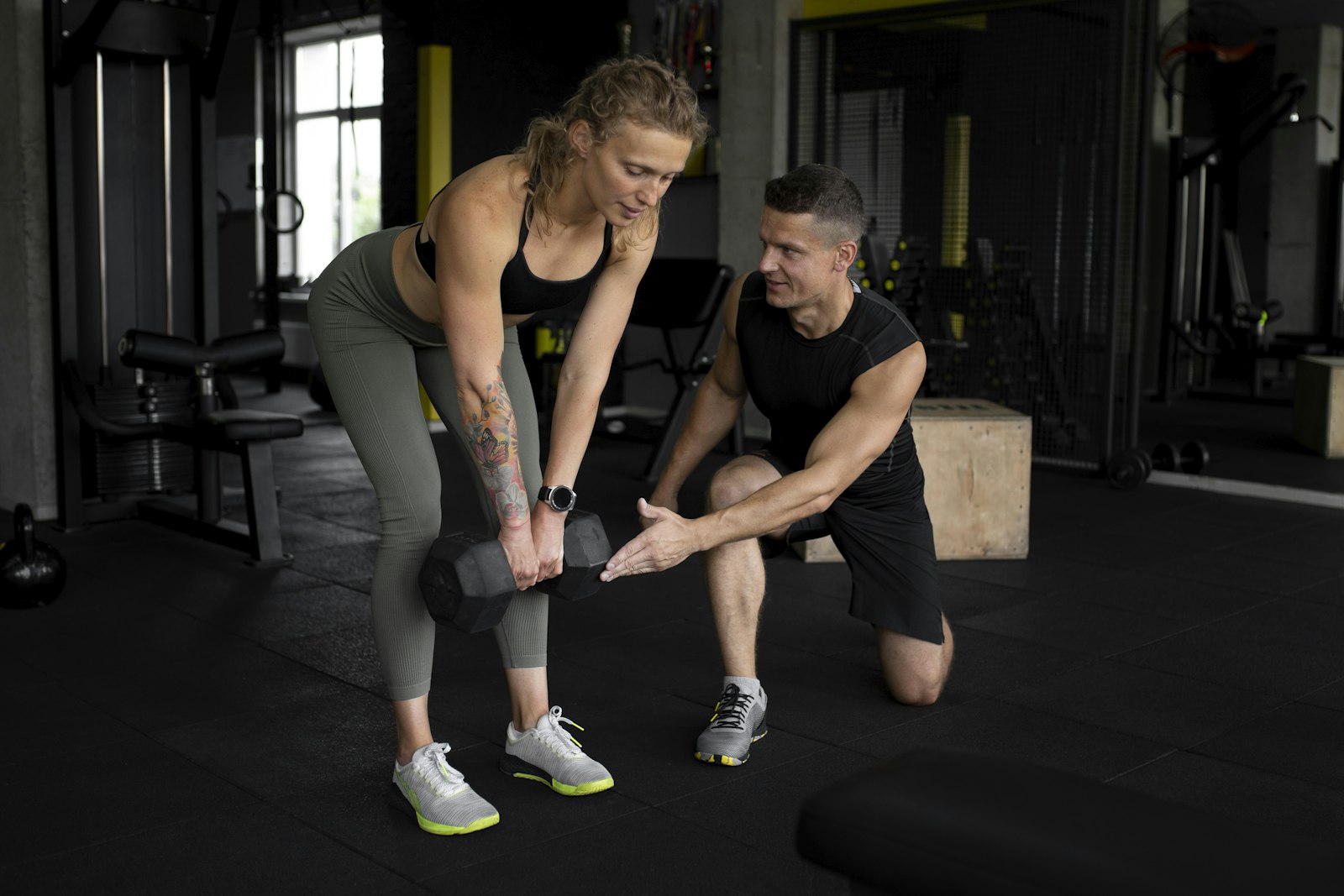
A good personal trainer is one of the most effective things money can buy in fitness. They watch your form, build a plan around your body, and — maybe most importantly — they’re standing there on the Tuesday you’d rather skip. The catch is the price tag: a session or two a week, often $50–100 each, on a calendar you book in advance.
So when an app promises an “AI fitness coach” for free, the fair question is: what are you actually giving up, and what — if anything — do you gain? Here’s the real comparison, without the hype.
What a personal trainer does better — full stop
Start with the things no app should pretend to match.
- Form and technique. A trainer sees your squat from the side and catches the knee that’s caving in. An AI coach can’t watch your body. If you’re learning a barbell lift or rebuilding after an injury, that real-time eye is worth paying for, and nothing on your phone replaces it.
- A human read. A good trainer notices you’re moving stiffly today and dials the session back — judgement from watching a real person in a real room.
- Genuinely complex cases. Advanced lifters chasing specific numbers, sport-specific prep, or anything medical or rehab-shaped — that’s expert, human territory.
This is the honest tradeoff, and we’ll say it plainly because most “AI coach” pitches won’t: if your bottleneck is technique, or you have a medical or rehab situation, a human wins. No app — ours included — is a medical service or a substitute for one.
What a coach really sells — and most of it isn’t the workout
Here’s the reframe. Strip coaching down to parts and the exercise selection turns out to be the small piece. What you’re really paying for is everything around it: someone who notices when you vanish, nudges at the right time, and is there when you have a question at 9pm. Researchers who study behaviour change keep landing on the same point — the bottleneck for results is rarely knowing what to do; it’s consistency, the doing-it-repeatedly part. A large meta-analysis of goal-monitoring studies found that simply being monitored toward a goal reliably improves the odds you reach it.
And those consistency-protecting jobs — notice, nudge, be available — are exactly what software is good at delivering cheaply, to everyone, at any hour. That’s the narrow, real claim behind an AI coach: not “it replaces a trainer,” but “it does the accountability parts a trainer also does, minus the cost and the calendar.” We walked through the studies in detail in what the research actually says — the short version is that well-timed nudges and goal-monitoring genuinely move adherence.
Where the AI coach actually wins
- Always-on, no schedule. A trainer catches your booked Tuesday. An AI coach catches the random Wednesday you’d talk yourself out of — the right moment, not a fixed appointment.
- Cost. The accountability layer that’s normally locked behind a per-session fee, available for free.
- The whole picture. A trainer sees your gym hour; an app that tracks workouts, meals, and fasting together can check in about your week, not one slice of it.
That’s the role Ogi plays in OgamicX. It isn’t a trainer in your pocket and we don’t pretend it is — it checks in when your behaviour changes, points you at a small next step, and keeps the streak alive. Be clear-eyed about one limit: an honest AI coach gives you structure and accountability, not a plan that secretly rewrites itself based on your mood. If an app claims the latter, be skeptical. And on this one it’s free to use — no trial countdown on being kept accountable.
So which should you choose?
For most people it isn’t either/or. The honest cut:
- Need your form fixed, or working around an injury? Hire a trainer. That’s what the money buys.
- Know roughly what to do but can’t string the weeks together? That’s an accountability problem, not a coaching one — and it’s the part an AI coach can genuinely deliver, free, between sessions or instead of them.
Most people who quit fitness apps don’t quit for lack of a perfect plan. They quit because nothing noticed when they drifted — the same gap that makes a fitness app actually stick or not. If that’s you, the accountability layer matters more than the coaching credential. Want to meet the version we built? Say hello to Ogi — free to download, no card.
Keep going:

Written by
The OgamicX Team
Tips, guides, and insight on fitness, nutrition, fasting, and building habits that last — from the team behind OgamicX.
About OgamicXFound this useful? Share it.