
At Home Workout Plan for Women to Feel Stronger
At home workout plan for women who want to feel stronger: a simple 2–3 day beginner routine, easy progression, and zero body-composition nonsense.
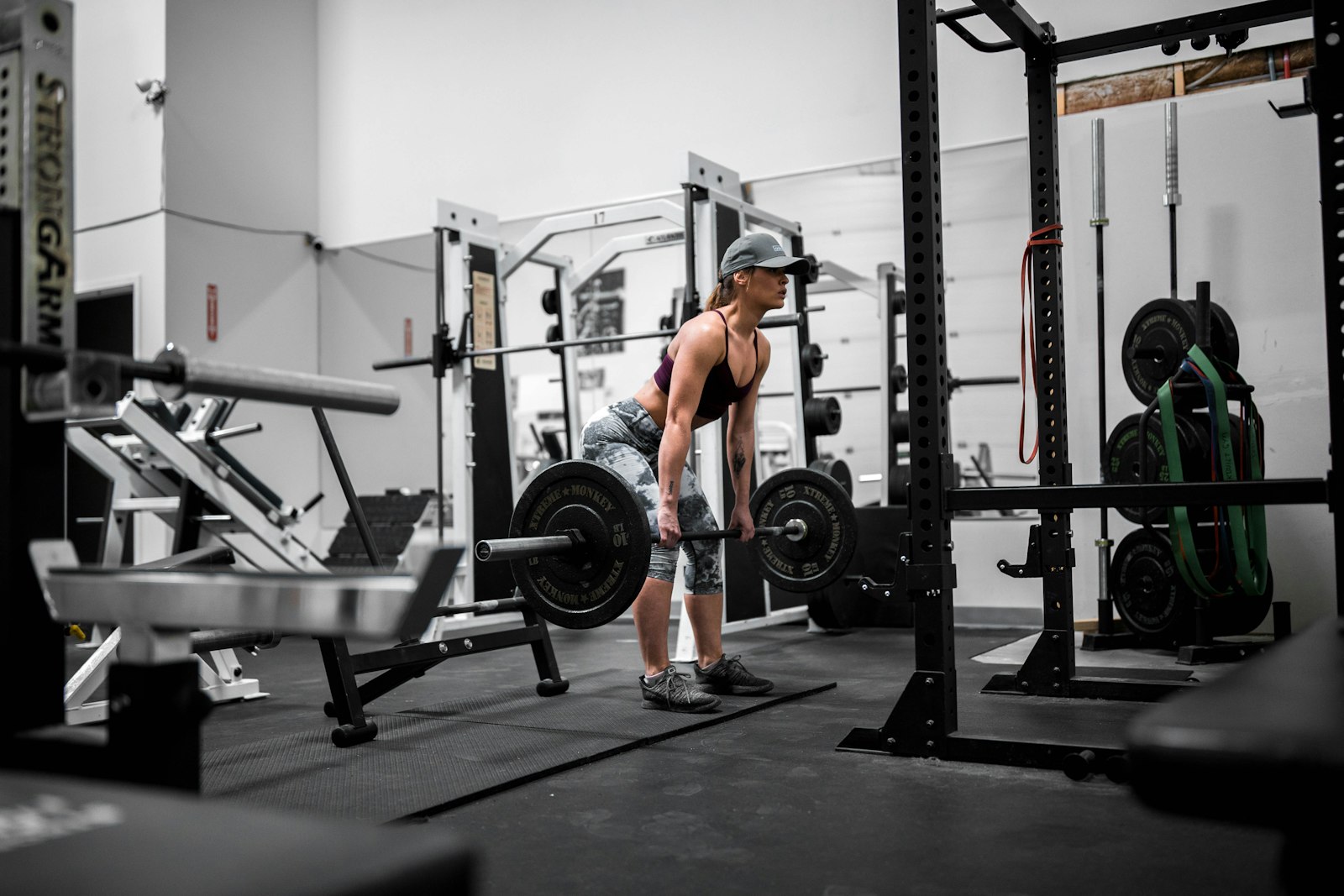
If you want an at home workout plan for women who want to feel stronger, the short answer is this: start with 2 to 3 full-body strength sessions per week, keep the exercises simple, and repeat them long enough to actually improve. For most beginners, that is more useful than chasing variety or trying to “feel destroyed” after every session. Public-health guidance recommends muscle-strengthening work on 2 or more days per week, and recent ACSM guidance lands in a similarly unsexy place: train the major muscle groups, build gradually, and pick a plan you can actually stick with.
That is what this plan is for: women starting at home, with beginner-friendly sessions, clear progression, and zero body-composition talk. The goal is not to become a different person by next Tuesday. The goal is to finish each week feeling a little steadier, a little more capable, and a lot less intimidated by strength training.
The short answer: what your weekly plan looks like
Start with 3 strength sessions per week, about 30 to 40 minutes each, on non-consecutive days.
A simple week looks like this:
- Monday: Workout A
- Wednesday: Workout B
- Friday: Workout A
- Next week: B / A / B
If three days feels like too much right now, do two days per week and keep the same A/B structure. That still lines up with baseline strength guidance for adults from the WHO.
Why this kind of at home workout plan works
Beginners usually do better with repeatable movements they can learn, recover from, and gradually make harder. ACSM’s 2026 position-stand summary makes the case plainly: train all major muscle groups at least twice per week, build gradually, and do not assume fancy programming beats straightforward resistance training for the average healthy adult.
For women specifically, the broad takeaway from the current literature is refreshingly normal: resistance training works, women get stronger from it, and the core programming principles are mostly the same as for everyone else. A recent narrative review on women and resistance training walks through that without turning it into a pink-dumbbell TED Talk. recent review on resistance training in women
So the plan below keeps things boring in the best way:
- squat pattern
- hinge pattern
- push
- pull
- core
- carry or stability work if you have space
That is enough to build a real base.
The feel-stronger rules before you start
1. Leave a little in the tank
Your sets should feel challenging, but not like a full-body emergency. A practical beginner target is finishing most sets with about 1 to 3 reps left in reserve. Reps-in-reserve scales are useful because they give you a simple way to judge effort without taking every set to failure. A review in Strength and Conditioning Journal describes RIR-based RPE as a valid way to estimate resistance-training intensity, especially near failure. RIR-based RPE overview
In plain English:
- Too easy: you could do 8 more reps
- About right: you could do 1 to 3 more
- Too hard: your form falls apart and you barely survive the set
2. Repeat the same exercises long enough to improve at them
Do not swap your whole workout every week. Run this plan for 6 to 8 weeks before making big changes. Strength likes repetition.
3. Progress one small thing at a time
You are progressing if you:
- add 1 to 2 reps
- add a little resistance
- slow the lowering phase
- improve range of motion
- feel more stable and controlled
Not every win has to be “I used heavier dumbbells.”
The 6-week at home workout plan for women who want to feel stronger
You can do this with:
- bodyweight only
- a pair of dumbbells
- or a long resistance band
If you have both dumbbells and a band, even better.
Warm-up: 5 minutes before every session
Do 1 round:
- 30 seconds marching in place
- 8 bodyweight good mornings
- 8 sit-to-stands or air squats
- 8 wall push-ups
- 20 seconds dead bug hold or brace
- 20 seconds glute bridge hold
The warm-up is not where you prove anything. It is just there to get your joints moving and your brain online.
Workout A
1. Squat or sit-to-stand
3 sets of 8 to 12
Choose one:
- chair sit-to-stand
- goblet squat
- bodyweight squat
2. Glute bridge or hip thrust
3 sets of 10 to 15
Pause for 1 second at the top.
3. Push-up variation
3 sets of 6 to 10
Choose one:
- wall push-up
- incline push-up on couch or bench
- knee push-up
- full push-up
4. One-arm row
3 sets of 8 to 12 each side
Use a dumbbell, backpack, or resistance band.
5. Dead bug
2 to 3 sets of 6 to 10 each side
Move slowly. The goal is control, not speed.
6. Optional finisher: suitcase carry or march
2 rounds of 30 to 45 seconds
Hold one dumbbell or a loaded tote bag on one side and walk, or march in place.
Workout B
1. Romanian deadlift or hip hinge
3 sets of 8 to 12
Choose one:
- bodyweight hinge
- dumbbell Romanian deadlift
- banded hinge
2. Reverse lunge or split squat
3 sets of 6 to 10 each side
Hold onto a wall or chair if balance is part of the challenge. That still counts.
3. Overhead press
3 sets of 8 to 12
Use dumbbells, bands, or even light household weights if needed.
4. Band pull-apart or supported row
3 sets of 10 to 15
This balances your pressing work and helps you feel stronger through the upper back.
5. Side plank
2 to 3 sets of 15 to 30 seconds each side
Start with bent knees if needed.
6. Optional finisher: step-up or stair march
2 rounds of 30 to 60 seconds
Steady effort. Nothing heroic.
How hard should each workout feel?
A good beginner session should feel like:
- you worked
- your muscles noticed
- you could probably have done one more set if you had to
- you are not wrecked for three days
That last part matters. The point is to build a routine you can repeat next week.
A simple progression plan for 6 weeks
Here is how to make the plan work without overthinking it.
Weeks 1–2: learn the moves
- Stay at the lower end of the rep range
- Rest 60 to 90 seconds between sets
- Focus on control and range of motion
Weeks 3–4: add reps
- If all sets feel solid, add 1 to 2 reps per set
- Keep the same exercise choices
Weeks 5–6: add challenge
Pick one:
- increase resistance slightly
- add one extra set to the first 2 exercises
- make the exercise variation a little harder
Example:
- wall push-up → incline push-up
- sit-to-stand → goblet squat
- glute bridge → single-leg bridge variation
- supported split squat → reverse lunge
This is enough progression for a beginner plan. You do not need advanced periodization to get stronger. ACSM’s current summary explicitly notes that more complex methods do not consistently outperform simpler approaches for the average healthy adult.
If you want a little extra reassurance before you start, how to start working out at home is a good companion read.
If you only have 20 minutes
Do this trimmed version:
Quick Workout A
- squat: 3 x 10
- push-up variation: 3 x 8
- one-arm row: 3 x 10 each side
- dead bug: 2 x 8 each side
Quick Workout B
- hinge: 3 x 10
- split squat: 3 x 8 each side
- overhead press: 3 x 10
- side plank: 2 x 20 seconds each side
A shorter workout done consistently beats the “perfect” plan you keep postponing.
Common mistakes that make an at home strength plan feel useless
Doing random workouts every day
Random can be fun, but it is hard to measure progress when nothing repeats.
Starting too hard
If your first week leaves you unable to sit down normally, your second week gets a lot less likely.
Treating light resistance like it means “not real”
Bodyweight, bands, light dumbbells, tempo work, pauses, and unilateral moves can all be very effective when you are learning.
Quitting because the workouts feel basic
Basic is good. Basic is how you build the floor.
What “feeling stronger” usually looks like first
It usually shows up as small things before it shows up as dramatic things.
You might notice:
- getting off the floor feels easier
- groceries feel less annoying
- stairs feel less dramatic
- push-ups stop feeling impossible
- your posture feels more stacked
- you trust your body more during the day
That is real progress, even if it is not flashy.
The honest tradeoffs
An at-home workout plan is great for building strength, especially at the beginner stage. But honesty helps here.
This kind of plan may not be ideal if:
- you want highly specific barbell strength goals
- you already train hard and need heavier loading
- you want real-time technique coaching
For a lot of women, though, home training is exactly what makes consistency possible. No commute. No waiting for equipment. No feeling watched. Just the reps.
How to stay consistent when motivation goes missing
This is usually the real problem. Not the plan — the gap between planning and actually starting.
A few things help:
Keep your setup visible
Leave the band out. Put the dumbbells where you will trip over them emotionally, if not literally.
Use a tiny start rule
Tell yourself you only need to do the warm-up and the first exercise. Starting is the hard part.
Keep the same workout days
Less deciding, more doing.
Track the streak, not perfection
A strength habit survives because you come back, not because every session is amazing.
That is also why streaks beat willpower is such a useful idea in practice.
This is where OgamicX can genuinely help. If you like structure without needing to build your whole plan from scratch, OgamicX has women’s templates inside the app, plus a unified streak that stays alive when you show up for your workout. If you are the kind of person who does better when progress is visible, that small keep-the-chain-going nudge matters more than people admit. It is free to download, no card.
When to make the plan harder
Move up when:
- you hit the top of the rep range on all sets
- your last reps still look controlled
- you finish thinking, “okay, I definitely had more”
Do not make it harder just because you think strength training is supposed to destroy you.
A sample beginner week
Here is a realistic version for someone easing in.
Monday
Workout A
About 30 minutes
Tuesday
Walk, mobility, or nothing at all
Wednesday
Workout B
About 30 minutes
Thursday
Easy walk or rest
Friday
Workout A
About 30 to 35 minutes
Weekend
One day off, one day optional walk or stretch
Next week, start with Workout B so the plan stays balanced.
FAQ: at home workout plan for women who want to feel stronger
Can I get stronger at home without heavy weights?
Yes. Beginners can make a lot of progress with bodyweight, bands, dumbbells, tempo changes, pauses, and single-leg or single-arm variations. The key is progressive challenge, not fancy equipment. ACSM’s 2026 summary makes the same broader point: consistency and gradual progression matter more than making the plan look advanced.
How many days a week should I strength train at home?
Start with 2 to 3 days per week. That matches WHO guidance for muscle-strengthening activity and is enough to build momentum without turning your calendar into a hostage situation.
Should women train differently from men for strength?
The core training principles are very similar. Recent reviews suggest women benefit from resistance training in much the same way, with programming shaped more by goals, experience, and recovery than by stereotypes. review on women and resistance training
What if I miss a workout?
Nothing dramatic happened. Pick up the next session and keep going. A missed day is a scheduling event, not a personality test.
The bottom line
If you want an at home workout plan for women who want to feel stronger, start smaller than your inner overachiever wants to. Two or three full-body sessions a week. A handful of repeatable movements. A little progression. Enough consistency for the plan to become normal.
That is how strength starts for most people. Not with a dramatic reset. Just with a squat, a push, a pull, and showing up again on Wednesday.

Written by
The OgamicX Team
Tips, guides, and insight on fitness, nutrition, fasting, and building habits that last — from the team behind OgamicX.
About OgamicXFound this useful? Share it.