
At Home Couples Workout No Equipment That Sticks
At home couples workout no equipment: a simple 20-minute routine you can both do, scale to different levels, and actually want to repeat next week.
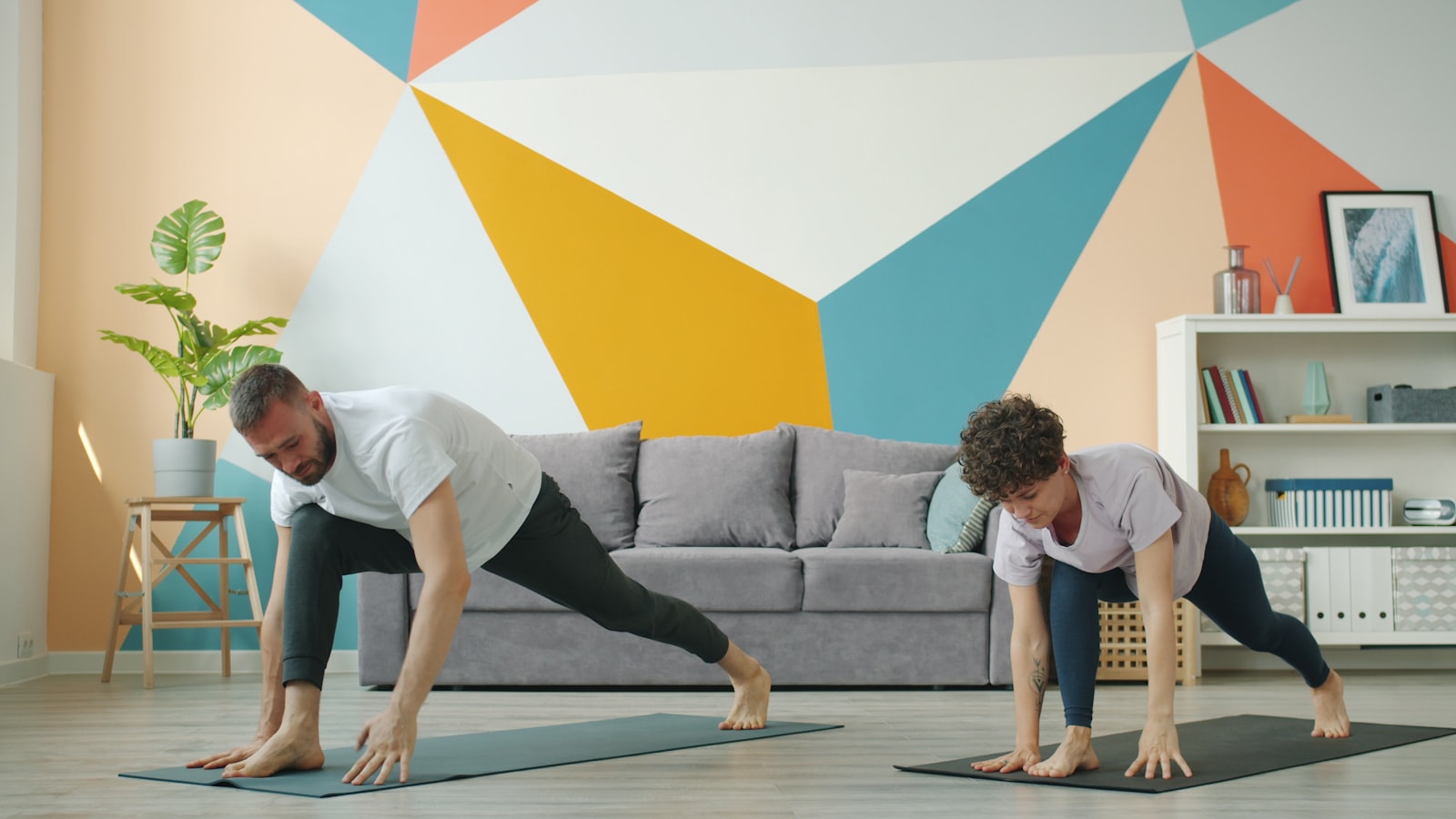
If you want an at home couples workout no equipment style, the real win is not finding the fanciest partner move on the internet. It’s finding a session the two of you can actually repeat next week without moving furniture, arguing about fitness levels, or turning date night into boot camp.
That’s the short answer: keep it simple, short, and easy to scale. Social support is linked with better exercise adherence, and there is at least some early evidence that romantic partners can help with exercise follow-through too — but “working out together” is not magic by itself. (pmc.ncbi.nlm.nih.gov)
So this post gives you exactly that: one simple no-equipment couples workout you can do at home, how to scale it if one of you is fitter than the other, and how to keep it fun enough that you’ll do it again.
The best at home couples workout no equipment setup
For most couples, the sweet spot is 20 to 25 minutes, alternating moves instead of trying to do synchronized acrobatics in your living room. That keeps the workout simple, gives each person breathing room, and makes it easier to adjust reps or pace without one person feeling like they’re “holding the other back.”
You’ll need:
- A little floor space
- A timer
- Water
- Optional: a playlist you both like
Music is not magic, but reviews do suggest it can improve affect, perceived enjoyment, and some exercise outcomes, which is enough to make a boring room feel less boring. (pmc.ncbi.nlm.nih.gov)
Why partner workouts work better than solo plans for some people
The obvious reason is accountability. If one person says, “Want to do the workout now?” the activation energy drops fast. You’re no longer negotiating with your own tired brain alone.
The less obvious reason is that a good partner workout gives you structure without pressure. One person works, one person counts, then you switch. That rhythm makes the session feel lighter. Research on social support and exercise adherence points in the same general direction: support, self-efficacy, and commitment matter. The honest version is not “a partner guarantees results,” but “a supportive person can make showing up easier.” (pmc.ncbi.nlm.nih.gov)
The honest tradeoff
Working out with your partner is great if your energy is similar and your vibe is good. It is less great if:
- one of you wants a serious hard session and the other wants “let’s just move a bit”
- one of you turns every squat into a coaching seminar
- every workout becomes a tiny relationship test
If that’s you, keep the shared workout short and optional. You can still start together, then split. If you want the social part without making it a whole thing, does having a workout buddy actually help is the next useful read.
The 20-minute at home couples workout no equipment routine
This workout uses work/rest pairs. Partner A works while Partner B rests and counts reps, then you switch. After both of you finish, move to the next exercise.
Format
- 5 exercises
- 40 seconds work each
- 20 seconds to switch
- 2 rounds total
That’s 20 minutes including quick transitions.
Round structure
- Squats
- Incline push-ups or floor push-ups
- Reverse lunges
- Dead bug
- High knees or low-impact march
Rest 60 seconds after round one, then repeat.
Exercise 1: Squats
How to do it:
Stand with feet about shoulder-width apart. Sit back and down, then stand tall.
Partner version:
One person squats while the other counts reps and gives one cue only:
“Chest up,” “slow down,” or “full stand.”
Make it easier:
- Sit to a chair and stand back up
- Shorten the depth
Make it harder:
- Add a 2-second pause at the bottom
- Slow the lowering phase
Couples tip
Don’t race. Match effort, not rep count.
Exercise 2: Incline push-ups or floor push-ups
How to do it:
Hands on a couch, sturdy chair, or the floor. Lower under control, then press back up.
Partner version:
Partner B counts reps and watches body position. Then switch.
Make it easier:
- Use a wall or kitchen counter
- Do kneeling push-ups on the floor
Make it harder:
- Use slower reps
- Add a pause at the bottom
Couples tip
If one person is doing wall push-ups and the other is doing floor push-ups, that is normal. Same workout, different level.
Exercise 3: Reverse lunges
How to do it:
Step one foot back, lower into a lunge, return to standing, then alternate.
Partner version:
Partner A works for 40 seconds while Partner B counts total reps. Switch.
Make it easier:
- Hold onto a wall or chair
- Do split squats without stepping back each rep
Make it harder:
- Slow each rep
- Add a knee drive when you stand
Couples tip
Reverse lunges are usually friendlier than forward lunges for beginners because they’re easier to control. Keep it smooth, not dramatic.
Exercise 4: Dead bug
How to do it:
Lie on your back with arms up and knees bent. Slowly extend opposite arm and leg, then return and switch sides.
Partner version:
Your partner’s job is simple: watch whether your lower back stays controlled.
Make it easier:
- Move only the legs
- Keep the range smaller
Make it harder:
- Slow every rep down
- Exhale fully as you extend
Couples tip
This is the least glamorous move in the workout and one of the most useful. Do not skip it because it doesn’t look exciting.
Exercise 5: High knees or low-impact march
How to do it:
Pick your version:
- High knees: faster cardio pace
- March in place: lower impact, still gets you moving
Partner version:
Instead of counting reps, count down the last 10 seconds out loud for each other.
Make it easier:
- March instead of run
- Keep the arms relaxed
Make it harder:
- Pump the arms
- Increase pace while staying controlled
Couples tip
If you live in an apartment, marching fast is usually smarter than bouncing all over the floor. If that’s your situation, quiet apartment workout no jumping is the cleaner fit.
A 5-minute warm-up before you start
Do this once through:
- 30 seconds arm circles
- 30 seconds bodyweight good mornings
- 30 seconds easy squats
- 30 seconds marching in place
- 30 seconds alternating reverse lunges
- 30 seconds inchworm walkouts or wall walkouts
- 30 seconds torso twists
- 30 seconds deep breathing
Nothing fancy. The point is to stop feeling like a folded laptop.
How to scale the workout if one of you is fitter
This is where most couples workouts quietly die. One person is bored, the other feels rushed, and suddenly nobody wants to do it again.
The fix is simple: keep the same exercise, change the version.
For example:
- Squat: one person uses a chair, the other adds a pause
- Push-up: one uses the wall, the other uses the floor
- Lunge: one holds a wall, the other adds tempo
- Cardio: one marches, the other does high knees
That way, you stay in the same flow without pretending both bodies need the same challenge.
If you want a shorter couples workout, do this 10-minute version
If 20 minutes feels like too much, cut it down. A workout you finish beats a workout you postpone.
10-minute version
Set a timer for 30 seconds on, 15 seconds to switch.
Do:
- Squats
- Push-ups
- Reverse lunges
- March or high knees
Complete 2 rounds.
That’s it. Short enough for a weeknight, long enough to count as real movement.
Rules that make partner workouts less annoying
A little structure helps more than motivation speeches.
1. One coaching cue max
Nobody wants a TED Talk mid-lunge.
2. Don’t compare reps
You’re on the same team.
3. Decide the workout before you start
Not while standing around in socks.
4. End while you still like each other
Especially if you’re both tired after work.
5. Pick a repeat schedule
Try 2 times a week to start. That lines up with CDC guidance that adults should do muscle-strengthening activity on at least 2 days per week, which makes a simple twice-weekly home strength session a realistic baseline. (cdc.gov)
A simple 4-week way to use this workout
You do not need a dramatic progression plan. Just make it slightly more normal each week.
Week 1
Do the 10-minute version once or twice.
Week 2
Do the full 20-minute version twice.
Week 3
Keep two sessions. Try to make your reps smoother or more controlled.
Week 4
Add a third short session if you both want it.
That’s enough to build momentum without turning “we should move more” into a household project.
What makes a couples workout actually stick
Usually, not intensity. Friction is what kills it.
The couples workouts that survive are the ones that are:
- short
- easy to start
- adjustable
- a little fun
- not overloaded with setup
That’s also why no-equipment workouts work so well at home. No bag to pack. No commute. No “maybe later.”
Where OgamicX honestly fits
Here’s the honest version: OgamicX does not have a couples mode, and it does not turn two people into one shared plan.
What it can do, if you both like a little structure, is give each of you your own place to track the workout, keep your own unified streak alive, and compare progress through the friends leaderboard if that kind of light competition helps.
That matters more than it sounds. Shared workouts are fun, but consistency usually comes from each person still having their own system. If you want that, OgamicX is free to download and use, with streaks, leaderboards, and core tracking in the free version. If you don’t, this workout still works perfectly fine with a phone timer and a note in your kitchen.
FAQ: at home couples workout no equipment
Is an at home couples workout with no equipment good for beginners?
Yes — if you choose beginner-friendly versions like chair squats, incline push-ups, supported lunges, and marching instead of jumping. The point is to match the move to the person, not to force identical reps.
How many times a week should couples do this workout?
Start with 2 times a week. That’s enough to make it a real routine without making it feel like a second job, and it lines up with baseline muscle-strengthening guidance for adults. (cdc.gov)
What if one partner is much fitter?
Use the same movement but different difficulty. Same timer, different version. That keeps you together without making one person miserable.
Do we need to do partner-only exercises?
No. In fact, most couples are better off doing simple solo exercises side by side, taking turns, and counting for each other. It’s more practical and much easier to repeat.
The takeaway
The best at home couples workout no equipment routine is not the cutest one. It’s the one that fits in your actual evening, works for two different fitness levels, and leaves both of you willing to do it again.
Start with the 10-minute version if that’s what gets you moving. Count reps for each other. Keep the cues kind. Stop before it becomes a production.
That’s enough.

Written by
The OgamicX Team
Tips, guides, and insight on fitness, nutrition, fasting, and building habits that last — from the team behind OgamicX.
About OgamicXFound this useful? Share it.