
Beginner Cardio at Home Without Running
Beginner cardio at home without running can be simple, low-pressure, and effective. Try this easy no-equipment workout that actually feels doable.
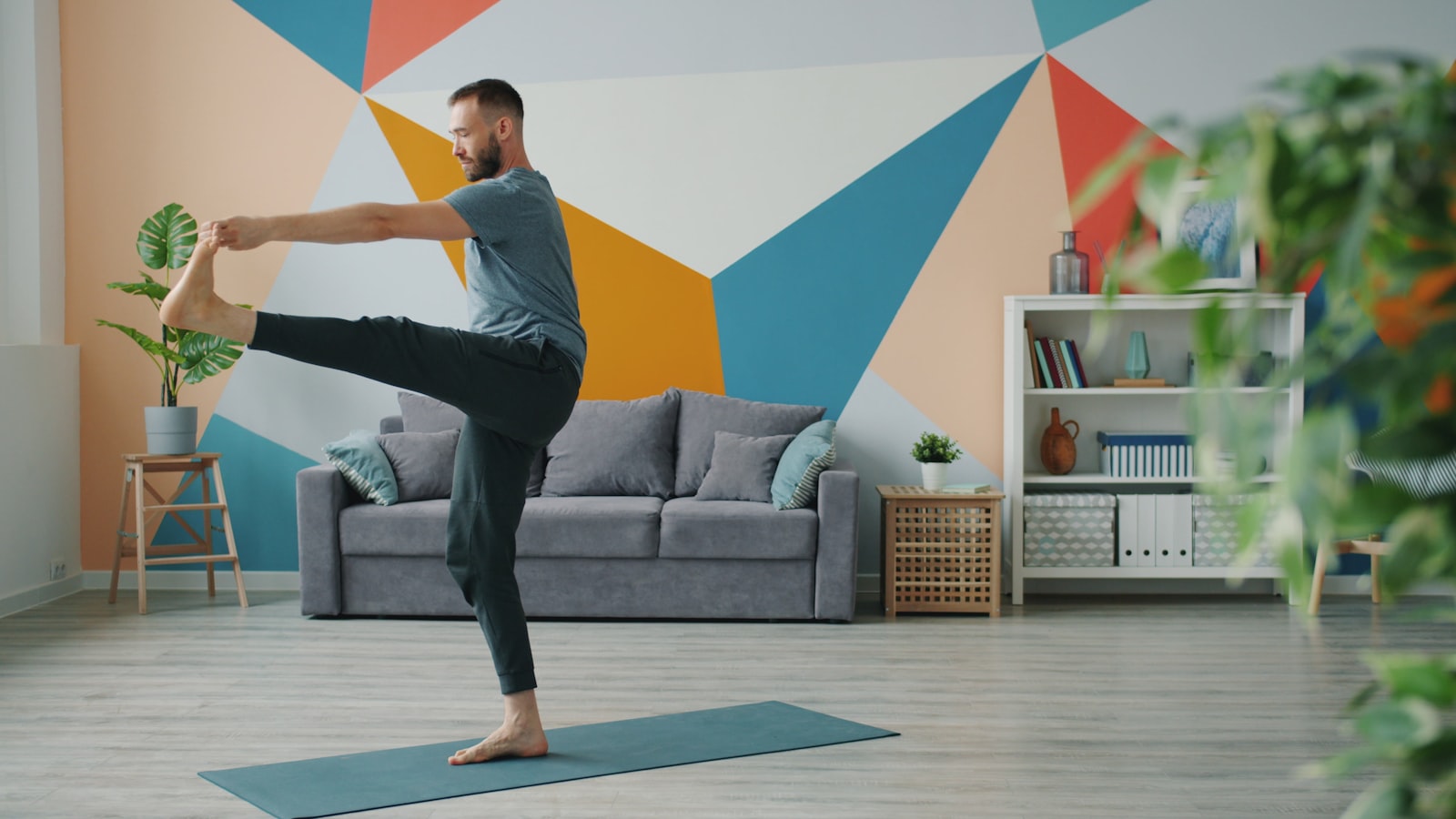
If you want cardio without running, good news: you do not need a treadmill, a route map, or a whole new runner personality to get a real cardio session at home. You need a short workout built around simple movements you can repeat without overthinking: marching, step-backs, reaches, bodyweight intervals, and a pace you can actually sustain. That counts. It counts for your fitness, and it counts toward the weekly aerobic guidelines if the effort is moderate enough. The CDC says adults should get at least 150 minutes a week of moderate-intensity aerobic activity, and that time can be built across the week rather than crammed into one giant session. the CDC’s adult activity guidelines and what counts as aerobic activity
This post is for the person thinking, “I don’t want to run,” or “running makes me quit.” Fair. Cardio is bigger than running. The win here is not becoming someone who loves road miles by Friday. The win is finding a format you’ll actually repeat next Tuesday.
Beginner cardio at home without running: what actually counts
Cardio just means movement that gets you breathing harder and your heart beating faster. You do not have to be gasping, drenched, or doing burpees in your living room for it to count. Moderate intensity is enough for most beginners, and one of the simplest ways to judge it is the talk test: you can still talk, but singing would be tough. The CDC also uses a 0-to-10 effort scale, with moderate activity often landing around a 5 or 6. the CDC’s intensity guide
That matters because beginners often overshoot. They think cardio only “works” if it feels brutal, then they dread the next session and disappear for a week. The better move is boring and effective: pick a pace that feels purposeful, finish a little breathy, and leave enough in the tank that you could do it again tomorrow.
Why beginner cardio at home without running works
Home workouts are not fake workouts. What matters most is whether you can keep doing them. Public-health guidance is broad on purpose: aerobic activity can come from lots of different movements, as long as the effort is there. The CDC also notes that aerobic activity can be spread across the week instead of done all at once, which is exactly why short home sessions work so well for beginners. the CDC’s guidance on what counts
And for a beginner, home has real advantages:
- no commute
- no weather excuse
- no pace anxiety
- no “I need the right gear first”
- easier to keep sessions short
That last one is underrated. A 10- to 20-minute session you actually do three times this week beats the fantasy workout plan that starts Monday and vanishes by Wednesday.
If consistency is the bigger problem, not knowledge, it’s worth reading how to start working out at home and streaks beat willpower next. Those two posts are basically the anti-all-or-nothing starter pack.
A 20-minute beginner cardio at home without running workout
Here’s a real session you can do in a small space with no equipment. No running. No jumping required. Just steady, beginner-friendly movement.
The structure
- Warm-up: 3 minutes
- Main workout: 14 minutes
- Cool-down: 3 minutes
Work at a pace that feels moderate. If you’re brand new, go slower than your ego wants.
Warm-up: 3 minutes
Do each for 30 seconds, then repeat once:
- March in place
- Shoulder rolls plus easy arm swings
- Step-touch side to side
- Reach overhead and down
- Heel digs out front
- Gentle bodyweight good mornings
The goal is not sweat. The goal is to stop feeling like a folded-up human.
Main workout: 14 minutes
Do 40 seconds of work, 20 seconds of easy movement or rest for each move. Complete 2 rounds of the 7 exercises below.
-
Brisk march with arm drive
March in place like you mean it. Pump the arms. Knees can stay low. -
Step jacks
Step one foot out at a time while the arms go overhead or to chest height. No jump. -
Step-back taps
Alternate stepping one leg back, lightly tapping the floor, and swinging the opposite arm forward. -
Bodyweight squat to reach
Small or medium squat, then stand and reach overhead. Keep it smooth, not deep. -
Fast feet in place
Tiny quick steps, light on the floor. Think shuffle, not sprint. -
Reverse lunge step-back or split-stance tap
If lunges feel bad, just step back and return without lowering much. -
High-knee march
Controlled, not frantic. Lift the knee only as high as feels comfortable.
If 14 minutes feels like a lot, do 1 round and call it a win. Seriously. A finished 10-minute session beats a perfect 20-minute session you keep postponing.
How hard should beginner cardio at home without running feel?
You should feel warm, more alert, and noticeably more out of breath than at rest, but not wrecked. A good beginner target is:
- you can talk in short sentences
- you’d rather not hold a long conversation
- your breathing is clearly up
- you could keep going another few minutes if you had to
That’s enough to count as aerobic work. The American Heart Association recommends at least 150 minutes per week of moderate-intensity aerobic activity, preferably spread through the week, and it does not require running or all-out sessions to qualify. the AHA’s adult physical activity recommendations
If you use the 0-to-10 effort scale, aim around 5-6 for most of the session. If you spike to a 7 briefly on fast feet or squats, fine. If everything feels like an 8 or 9, slow down.
The easiest way to progress this workout
Beginners usually need progression, but not fancy progression. Pick one lever at a time.
Option 1: Add time
Move from 40 seconds work / 20 seconds easy
to 45/15
then 50/10
Option 2: Add one round
Go from 1 round to 2.
Later, 2 rounds to 3.
Option 3: Increase the pace a little
Same moves, slightly quicker arms, slightly brisker feet.
Option 4: Upgrade one movement
For example:
- march -> high-knee march
- step jack -> faster low-impact jack
- squat to reach -> squat plus calf raise
- step-back tap -> alternating reverse lunge
Do not upgrade everything at once. That’s how a simple cardio habit turns into “actually never mind.”
If you hate running, use these cardio swaps instead
A lot of people don’t need motivation. They need permission to stop forcing the wrong format.
If running feels bad, bores you to death, or just makes you opt out, try these instead:
- brisk marching intervals
- step-ups on a sturdy step
- shadowboxing
- low-impact dance cardio
- squat-to-reach intervals
- mountain climbers on a wall or couch
- fast step-touches
- bodyweight circuit intervals
All of these can raise intensity at home without a route, a pace, or a watch. What matters is sustained effort, not whether the movement looks like traditional cardio. The CDC’s definition is intentionally broad: aerobic activity is movement that raises breathing and heart rate at a moderate or vigorous intensity. the CDC’s what-counts page
Common beginner mistakes with cardio at home without running
Starting too hard
The first session should feel almost suspiciously manageable. You’re building repeatability first.
Choosing only miserable moves
If you hate mountain climbers, don’t build your whole plan around mountain climbers. There is no medal for picking the format you dread most.
Doing random videos with no floor or ceiling
One day easy, next day chaos, then sore for four days. Better to repeat a simple structure and nudge it up gradually.
Thinking it doesn’t count unless you track distance
This is the big one. You do not need GPS to prove you exercised. If the session gets you into a moderate effort zone and you repeat it across the week, it counts. the AHA’s recommendations
A simple weekly plan for beginner cardio at home without running
If you’re starting from zero, try this:
Week 1
- 3 days of the 10-20 minute session above
- 2 days of an easy walk or light movement
- 2 days off or light activity
Week 2
- Keep 3 cardio days
- Add 1 extra round to one of them, or extend one session by 5 minutes
Week 3
- Aim for 4 cardio sessions
- Keep at least 2 of them easy to moderate, not all hard
That kind of build is much more realistic than deciding you’re now doing cardio every day forever. Spreading aerobic activity across the week is exactly how the CDC and American Heart Association frame it. the CDC’s adult activity guidelines and the AHA’s recommendations
The honest tradeoff
Running is efficient. If you enjoy it and your body tolerates it, great. It can be a very straightforward way to get aerobic work in.
But it is not the only way, and for a lot of beginners it is not the stickiest way. Home cardio without running is less sexy, maybe. It’s also easier to repeat on a random Tuesday when your motivation is average and your shoes are nowhere near the door. That matters more.
Where OgamicX fits, naturally
If your main problem is not knowledge but follow-through, this is exactly the kind of session OgamicX is built for. The app’s no-equipment workout options make home cardio feel more official without needing a route, pace, or GPS. And because OgamicX uses a unified streak, a short cardio session still counts toward the same chain you’re already trying to protect.
That’s the quiet advantage of not building cardio around running. You’re free to think in sessions, not miles. Show up, do 15 or 20 minutes, keep the chain alive, move on with your day. If that sounds more doable than becoming a runner overnight, good. More doable is usually what sticks.
The bottom line on beginner cardio at home without running
Beginner cardio at home without running can be as simple as marching, step-backs, squats, reaches, and short intervals done at a moderate pace. It counts if it raises your breathing and heart rate. It counts if you do it in short sessions across the week. And it still counts even if there’s no route, no watch, and no run button involved. the CDC’s adult activity guidelines
Start with one round. Keep it a little easier than your ego wants. Repeat it three times this week. That’s the whole game at the beginning: not impressive, just repeatable.

Written by
The OgamicX Team
Tips, guides, and insight on fitness, nutrition, fasting, and building habits that last — from the team behind OgamicX.
About OgamicXFound this useful? Share it.