
How to Build Up to a Longer Plank
How to build up to a longer plank: start with clean short holds, add time slowly, and train for form and repeatability instead of one ugly max effort.
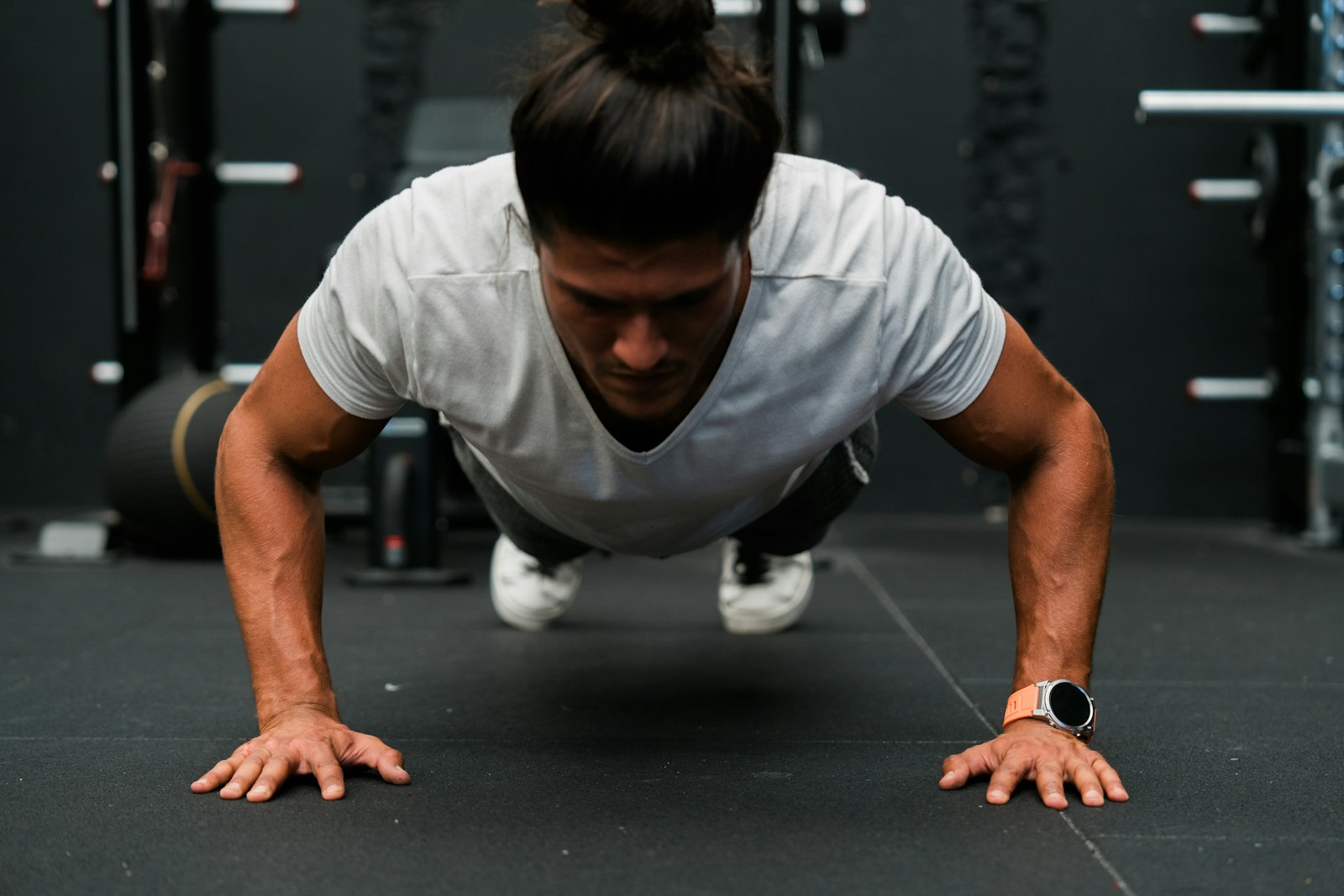
If you want to build up to a longer plank, the answer is not “just suffer longer.” It usually works better to practice clean, repeatable holds, add time slowly, and stop the set before your form turns into a sagging lower back and a hostage negotiation with the stopwatch. A longer plank is mostly a skill plus a bit of endurance: position, breathing, tension, and consistent practice matter more than one heroic max hold. ACE’s front-plank setup is a solid baseline: elbows under shoulders, legs extended, and the torso held stiff in one straight line in a controlled position ACE’s plank guide.
The good news: you do not need a fancy plan for this. You need a starting hold you can own, a small progression, and a simple way to log what happened so you can see the next milestone coming.
How to build up to a longer plank, simply
Start with a hold you can do with solid form for about 10 to 20 seconds. Then do multiple sets, rest, and add a little time over the next few weeks instead of chasing one all-out effort. That matches the basic coaching logic behind ACE’s front-plank setup: clean alignment first, duration second.
A practical progression looks like this:
- Week 1: 3–5 sets of 10–20 seconds
- Week 2: 3–5 sets of 15–25 seconds
- Week 3: 3–4 sets of 20–30 seconds
- Week 4: 3–4 sets of 25–40 seconds
If that feels too easy, add time a little faster. If your hips start drifting or your low back takes over, stay at the current level for another week. The point is not to impress the stopwatch. The point is to make each second look the same.
If you want the bigger beginner context, pair this with how to start working out at home.
The mistake that slows plank progress
Most people test too often and train too little.
They do one max plank, shake through the last half of it, collapse, and call it progress. The problem is that max holds teach you how to survive ugly reps. They do not give you much quality practice. ACE has made this point pretty directly: very long static planks are not a great end goal on their own, and the better use of the exercise is as a stepping-stone rather than a contest in suffering ACE’s take on planks.
A better approach is:
- Train submaximal holds most of the time.
- Stop with a little quality left, not after form has already gone.
- Test occasionally, maybe every 2 to 4 weeks.
That gives you more good reps and less junk time.
What good plank form actually looks like
If you want a longer plank, form is your bottleneck. ACE’s setup is straightforward: forearms on the floor, elbows under shoulders, legs extended, and the torso held stiff and aligned in their exercise library.
Here are the cues that usually help most:
1. Stack your elbows under your shoulders
If your elbows are too far forward, the hold gets messier fast. Start by lining them up under the shoulders.
2. Make a straight line
Head, upper back, hips, and heels should look connected. Not piked up. Not sagging down.
3. Squeeze everything a little
Think:
- glutes tight
- quads tight
- ribs down
- forearms gently pressing into the floor
This usually cleans up the position better than “brace harder” ever does.
4. Breathe, don’t panic
Short, controlled breaths. If you hold your breath, the plank feels worse than it needs to.
5. End the set at the first real form leak
Not after three leaks. The first one.
That might be:
- hips dropping
- shoulders shrugging up
- head craning
- lower back taking over
- breathing turning into chaos
That is your stop sign.
Your 6-week plank progression plan
If you are starting from “I can hold a plank, but not for very long,” this works well.
Week 1: own the position
- 4 sets of 15 seconds
- Rest 30–45 seconds between sets
- Do this 2–3 times this week
Your job here is boring on purpose: make every rep look identical.
Week 2: add a little time
- 4 sets of 20 seconds
- Rest 30–45 seconds
- 2–3 sessions this week
If 20 seconds feels shaky, stay at 15.
Week 3: build work capacity
- 4 sets of 25 seconds
- Rest 45 seconds
- 2–3 sessions this week
This is where people usually want to jump to a 60-second test. Do not. Keep stacking clean sets.
Week 4: nudge the ceiling
- 3–4 sets of 30 seconds
- Rest 45–60 seconds
- 2 sessions this week
If you finish these with clean form, you are getting close to a real milestone.
Week 5: one longer set, then back-off sets
- 1 set of 35–45 seconds
- Then 2–3 sets of 20–25 seconds
- Rest 45–60 seconds
This teaches you to touch a longer duration without making every set a grind.
Week 6: test, then train
- Test one best-form plank
- Stop the timer when form breaks, not when your pride does
- Then do 2–3 easier sets of 15–20 seconds
Retest every couple of weeks, not every workout.
If a full plank is still too hard
That is normal. You do not need to start from the floor version if it turns into a survival contest.
A simple regression path is:
- Incline plank on a bench, couch, or sturdy surface
- High plank with hands elevated
- Forearm plank on the floor
- Longer floor plank holds
The logic is simple: pick a version you can control, then make it slightly harder over time. If you like this kind of first-step progression, how to do your first push-up is the same basic story in a different outfit.
A good rule: if you can do three sets with clean form, you have probably earned the right to either add a little time or make the variation harder.
How often should you practice planks?
Two to four times per week is plenty for most people.
More than that is not automatically better. Planks are simple, but they still create fatigue. In a 2022 study on isometric forearm plank duration, longer bouts increased perceived effort and fatigue responses in recreationally trained participants, which is one more reason not to turn every session into a death march the study is here on PMC.
A nice rhythm looks like:
- 2 focused plank sessions per week, or
- 3 short sessions added to the end of your workouts
Keep the total dose small enough that your form stays sharp.
Should you do one long plank or several shorter ones?
For building up to a longer plank, several shorter sets usually win.
Why?
Because they let you practice:
- better alignment
- better breathing
- better tension
- more total quality time
One long set has a place later, when you want to test a milestone. But for training, clusters of shorter holds are usually cleaner and more repeatable. That also fits ACE’s broader point that planks make more sense as a useful training tool than as an endless static challenge in their plank article.
Think of it this way:
- Training: multiple good sets
- Testing: one longer hold once in a while
That split keeps you honest.
A few upgrades that help plank time go up
You do not need ten variations. But a few supporting moves can make the standard plank feel steadier.
RKC-style tension
Without changing the shape much, lightly pull your elbows toward your toes and your toes toward your elbows. Nothing moves, but the whole position tightens up.
Side planks
A 2024 study comparing several core-stability exercises found that side plank and bird dog produced some of the greatest increases in relative muscle thickness among the exercises tested, which is a useful reminder that your front plank may improve faster when your trunk work is not one-dimensional see the PMC paper here.
Bird dogs
Good for learning control without needing a long hold.
Breathing under tension
Not to make things fancy. Just to get used to bracing without turning every rep into a breath-holding contest.
The point is not to build a giant “core day.” It is to give your plank practice a little support if you keep stalling.
When to add time vs when to change the variation
Add time when:
- your last 2–3 sessions felt clean
- you finished all sets without major shaking or sagging
- breathing stayed controlled
Change the variation instead when:
- the current version feels wrong instead of simply hard
- your form breaks before the target time every set
- you are bored and only chasing the clock
Sometimes a harder-but-shorter variation teaches more than another month of dragging out the same hold.
Common reasons your plank stalls at 20–30 seconds
This is the zone where a lot of people get stuck.
Usually it is one of these:
You are starting too hard
If your first set is basically a max effort, the rest of the session gets sloppy.
You are not resting enough
Thirty to sixty seconds of rest is normal for this kind of practice. Do not rush because the exercise looks simple.
You are only testing
If every session is “let’s see how long I can last,” progress gets weirdly slow.
Your setup changes every rep
Small differences in elbow position and hip height matter a lot in planks.
You are counting ugly seconds
A 45-second bad plank is not better than a 25-second clean one.
What counts as a good milestone?
The better question is not “what plank time should I hit?” It is “what milestone should I build toward next?”
Useful milestones are:
- your first clean 20 seconds
- your first clean 30 seconds
- 3 sets of 30 seconds
- your first clean 45 seconds
- your first clean 60 seconds
That sequence is usually more useful than obsessing over random internet benchmarks.
And honestly, for most people training at home, three clean 30-second sets is already a strong practical target. Past that, your time may be better spent getting stronger through movement variety instead of stretching one plank into a misery hobby. That lines up with ACE’s coaching view that static planks are a starting point, not the entire destination.
A simple log you can use
If you want to build up to a longer plank, write it down. That sounds almost insultingly basic, but it works because it turns “I think I’m getting better” into proof.
Use a note like this:
| Session | Set 1 | Set 2 | Set 3 | Set 4 | Notes |
|---|---|---|---|---|---|
| Mon | 20s | 20s | 20s | 15s | Last set shaky |
| Thu | 20s | 20s | 20s | 20s | Better breathing |
| Sat | 25s | 20s | 20s | 20s | Ready to progress |
That is enough.
This is also where an app can genuinely help, not in a magic way, just in a friction-removal way. If you are already logging workouts or chasing a streak, tracking your plank milestone in the same place makes it easier to keep practicing instead of forgetting about it for nine days. In OgamicX, that fits naturally with logging the session and keeping the same unified streak alive whether you trained, logged a meal, or closed a fasting window. The useful part is the consistency, not some fake promise that the app will auto-adjust your plan for you. OgamicX is free to download, no card.
The bottom line on building up to a longer plank
Build up to a longer plank by practicing shorter, clean holds a few times per week, adding small chunks of time, and treating form as the real milestone. Use multiple sets for training, test a max hold only occasionally, and regress the variation if the floor version gets messy too fast. ACE supports focusing on sound setup rather than turning planks into endless static contests, and the available plank-duration research suggests effort and fatigue rise as holds get longer ACE’s plank guide and the 2022 study on PMC.
So yes, chase the 30-second, 45-second, or 60-second mark if that motivates you. Just do it the boring way.
That is usually the way that actually works.

Written by
The OgamicX Team
Tips, guides, and insight on fitness, nutrition, fasting, and building habits that last — from the team behind OgamicX.
About OgamicXFound this useful? Share it.