
How to Exercise When You’d Rather Game
How to motivate yourself to exercise when you’d rather game: use temptation bundling, tiny workouts, and game logic to make movement easier to start.
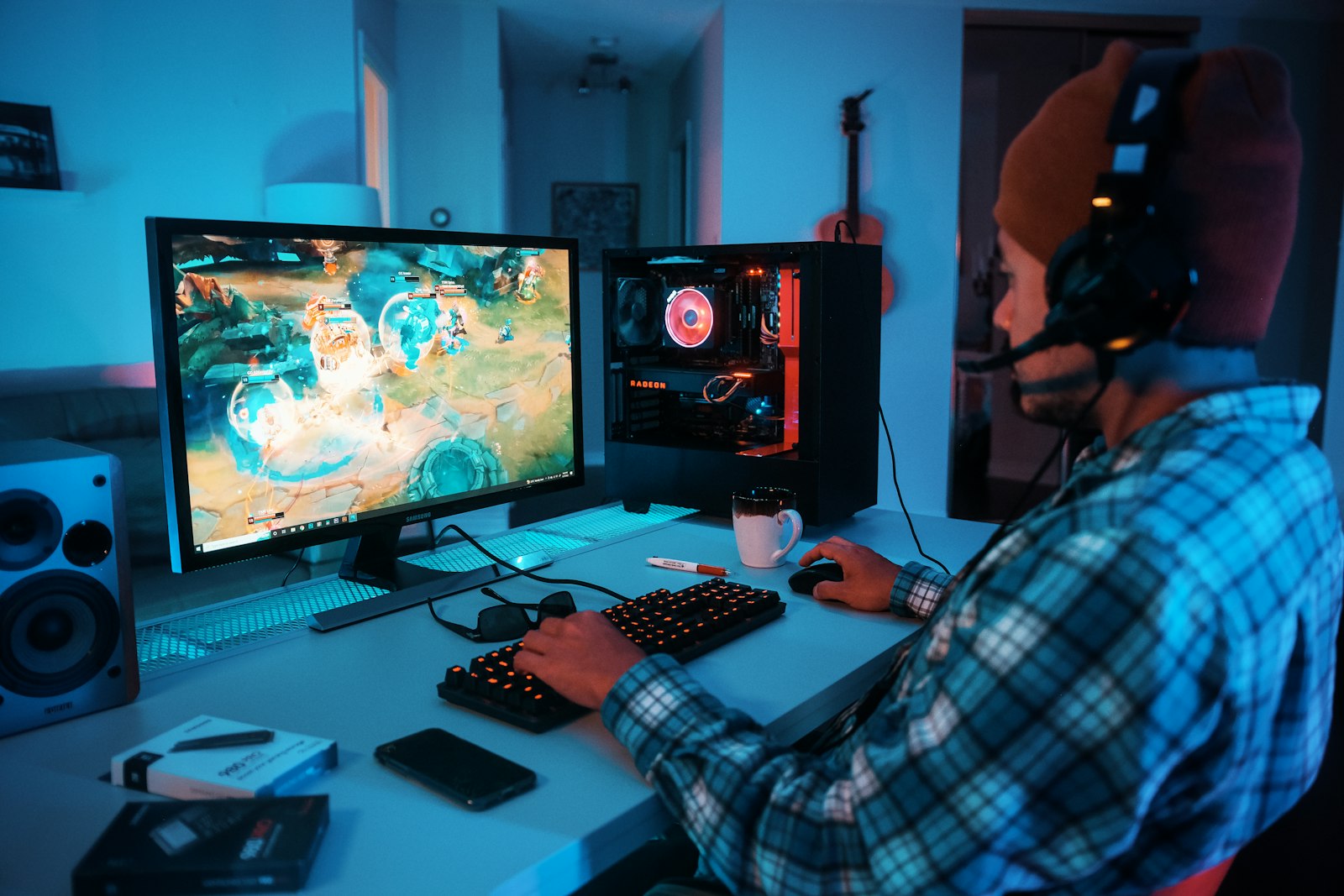
If you keep choosing gaming over exercise, that does not mean you’re lazy or bad at discipline. Usually it means one option gives your brain an immediate reward and the other asks for effort now in exchange for a payoff later. That’s an unfair matchup. The fix is not to shame yourself into caring more. It’s to make movement easier to start, smaller to win, and more rewarding right away.
Research points in that direction too. Temptation bundling — pairing something you want with something you should do — has been shown to increase gym attendance, and in one well-known study, 61% of participants chose to pay to keep the setup afterward. (pmc.ncbi.nlm.nih.gov)
You do not need to love workouts more than games. You just need a system where moving is the easier next action more often than it is now.
Why gaming keeps winning
Games are really good at the stuff exercise is bad at in the first five minutes.
They give you instant feedback, clear goals, low-friction starts, visible progress, and a reason to come back tomorrow. Exercise, especially when you’re trying to “be healthier” in a vague way, often gives you none of that on day one. You have to choose it, set it up, do it, and trust that future-you will care.
That is not a character flaw. It is a design problem.
Stop waiting to feel like it
One of the most useful mindset shifts is this: action often comes before motivation, not after.
Annoying? A little. Useful? Very.
Research on physical-activity habits suggests that repetition in stable contexts matters, and habit-based interventions can improve physical activity behavior and habit strength over time. (pmc.ncbi.nlm.nih.gov)
So the goal is not “convince myself to want burpees more than Elden Ring.” The goal is “make it easy enough to do five minutes before my brain starts negotiating.”
The best trick here: temptation bundling
This is the honest version of motivation: do not make exercise compete with your favorite thing. Attach it to your favorite thing.
Researchers call this temptation bundling — pairing a “want” with a “should.” In the classic exercise study, people got access to tempting audiobooks only at the gym, and the setup increased gym visits early in the intervention. Afterward, 61% opted to pay to keep that restricted-access system, which is a pretty good sign that rewards do not just sound nice in theory. (pmc.ncbi.nlm.nih.gov)
For gamers, temptation bundling can look like:
- only watching your comfort YouTube series while walking
- only listening to your favorite gaming podcast during lifts
- doing a 10-minute movement block during updates or queue downtime
- earning your first match after a micro-workout
- pairing cardio with a lore video, VOD, or soundtrack you actually look forward to
You are not cheating if exercise needs a reward. You are building smarter wiring.
Make the workout smaller than the excuse
Most failed workout plans are too big for the moment they are supposed to survive.
If the choice is “45-minute full workout” versus “sit down and game now,” gaming will win a lot. If the choice is “8 squats, 8 incline push-ups, 30 seconds of plank” versus “sit down and game now,” you suddenly have a chance.
A habit does not become real because it is impressive. It becomes real because it gets repeated. And the timeline is usually months, not a magic 21-day reset. A large machine-learning study highlighted by Caltech found gym habits formed on average in about six months, with wide variation by behavior and person. (caltech.edu)
Try this rule:
The 5-minute gamer workout rule
When you would rather game, do just five minutes of movement first.
That can be:
- 10 bodyweight squats
- 10 incline push-ups on a desk or couch
- 20 walking lunges
- 30 seconds of marching in place
- 30 seconds of plank
- repeat once or twice
If you want to stop after five minutes, stop. The point is to make starting normal.
Most days, one of two things happens:
- you stop after five minutes and still got a win, or
- five minutes melts the resistance enough that you keep going.
Both count.
Build a pre-game ritual, not a personality transplant
You do not need to become “a fitness person” overnight. You need a repeatable cue.
Planning research suggests that action planning can improve physical activity, especially when the cue and response are concrete instead of vague. (pmc.ncbi.nlm.nih.gov)
A good gamer-friendly ritual looks like this:
Example pre-game cue stack
- Finish work or class
- Fill water bottle
- Put controller or keyboard slightly out of reach
- Do one tiny movement circuit
- Then choose: keep going or start gaming
That sequence matters. You are putting movement before the autopilot click into a session.
Other cues that work:
- “Before I boot up my PC, I do one set.”
- “When my game updates, I walk.”
- “After my first coffee, I do 10 squats.”
- “Every time I lose three matches in a row, I stand up and move for two minutes.”
This is not about punishment. It is about giving your day a default rhythm.
Remove the setup friction
If exercising requires changing clothes, finding a video, moving furniture, deciding on a routine, and psyching yourself up, you have already lost to the game menu.
That is why the prep matters. Recent exercise-maintenance research found that exercise preparation habit and exercise instigation habit are meaningful parts of sticking with exercise over time. (pmc.ncbi.nlm.nih.gov)
Make exercise stupidly easy to begin:
- keep shoes or a mat visible
- save one beginner routine you do not have to think about
- use no-equipment movements
- decide tomorrow’s tiny workout tonight
- leave yourself a literal note on your controller or monitor
Good systems feel almost embarrassingly simple. That is fine. Simple scales.
Use game logic on yourself
Games keep you playing because they break progress into pieces. Exercise works better when you do the same.
Instead of “I need to get in shape,” use goals your brain can actually cash in:
- complete 3 movement sessions this week
- keep a 7-day movement streak alive
- hit 50 total squats across the week
- do something active on every study or work break
- level up from “I thought about it” to “I did one set”
If you want the deeper version of that idea, what makes a fitness app stick gets into why visible progress beats vague intention.
What to do on low-energy days
Some days you are not choosing between a great workout and gaming. You are choosing between being tired and being tired with guilt.
On those days, lower the bar hard.
Try one of these:
- walk during cutscenes, queues, or downloads
- do light bodyweight work between matches
- stand up every hour and do 1 minute of movement
- pick movement snacks, not a full session
- call a short walk the win and move on
The win is showing up, not the size of the session. A system that survives low-energy days beats a heroic plan that only works on your best Mondays.
For more on that, low-energy workout ideas is the sibling post.
The honest tradeoff
Let’s say the quiet part out loud: some games are more fun than exercise. Of course they are. They were built by teams of designers whose whole job is retention.
So no, you probably will not out-willpower a game every night forever. That is why “just be more disciplined” is flimsy advice. Better advice is:
- shrink the workout
- pair it with something fun
- make the start automatic
- track the streak
- reward consistency, not intensity
That is not lowering your standards. That is finally using a strategy that respects how your brain actually works.
How OgamicX fits, without pretending it solves everything
If you are the kind of person who likes games more than spreadsheets, this is where a gamified app can genuinely help.
OgamicX makes exercise feel less like opening a serious adult tool and more like entering a system that gives you something back right away. The useful part here is not magic motivation. It is structure: a unified streak that stays alive when you do any activity, XP and tiers, weekly tasks, leaderboards, and Ogi check-ins that make moving feel more like a live quest than a guilt trip.
That is the same logic as temptation bundling: make the behavior more rewarding in the moment, not just “good for you” in theory. And because workouts, meals, and fasting live in one place, it also helps with app-juggling fatigue. OgamicX is free to download, no card. Premium unlocks things like AI-personalized workout plans, unlimited MealScans, all fasting protocols, playlist selection, and no ads.
Honest tradeoff: if you want a hardcore lifting log or gram-precise nutrition tool, that is a different category. But if your real problem is “I keep meaning to start and then I open a game instead,” a system that makes movement feel more rewarding can help.
A script you can use tonight
Steal this exactly:
“I do not need to want the workout. I just need to start for five minutes before I game.”
Then make it concrete:
- Pick a 5-minute movement block.
- Pair it with something you like.
- Put it before your first game, not after.
- Count it as a win.
- Repeat tomorrow.
No dramatic reinvention. No shame spiral. Just a better setup.
If gaming keeps beating exercise right now, the problem usually is not you. It is the matchup. Change the matchup.

Written by
The OgamicX Team
Tips, guides, and insight on fitness, nutrition, fasting, and building habits that last — from the team behind OgamicX.
About OgamicXFound this useful? Share it.