
Hold Yourself Accountable Without an App
Hold yourself accountable without an app by using cues, minimums, visible tracking, and real fallback plans that still work on messy weeks.
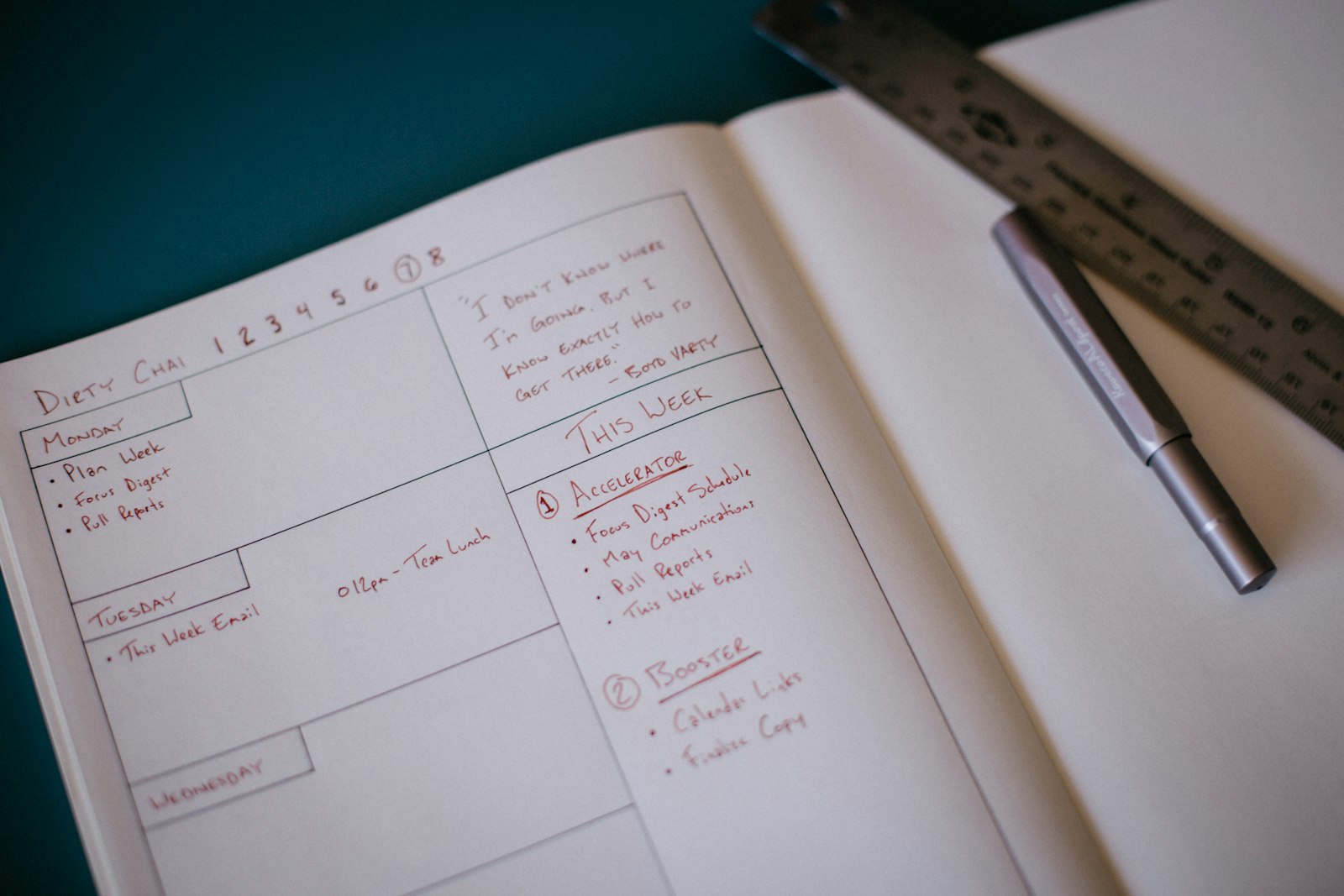
How to Hold Yourself Accountable Without an App
You know the moment. Sunday night, big reset energy. You tell yourself that this week you’ll work out, eat a little more like an adult, maybe stop ghosting the routine by Thursday. Then Thursday shows up, work runs late, your brain gets loud, and suddenly your whole plan is hanging on whether you feel like it.
Here’s the practical answer: yes, you can hold yourself accountable without an app — but you need to replace motivation with structure. Not a giant life overhaul. Just a few visible, slightly annoying-to-ignore systems: a tiny baseline, a cue, a written plan, and one real consequence for skipping. That’s what makes self-accountability feel less like a personality trait and more like a setup.
What accountability without an app actually means
A lot of people hear accountability and picture discipline. White-knuckle it. Be tougher. Stop making excuses.
That usually falls apart because the problem usually isn’t character. It’s memory, friction, and too many decisions made too late. A better no-app system answers four questions before the day gets messy:
- When will I do it?
- Where will I do it?
- What counts as success on a bad day?
- What happens if I skip it?
If those answers are vague, your plan is still running on vibes.
Start with a minimum you can do half-asleep
The biggest mistake here is making the standard too heroic. If your accountability system only works on your best days, it isn’t a system. It’s a fantasy draft.
Pick a minimum version of the habit that still counts:
- 10 squats after coffee
- a 10-minute walk after lunch
- one set of push-ups before your shower
- prep tomorrow’s breakfast before bed
Small sounds unimpressive, but that’s the point. You’re trying to make the action easier than the internal debate.
Use an if-then plan, not a general intention
“Work out more” is not a plan. “After I pour my morning coffee, I do 10 bodyweight squats in the kitchen” is a plan.
That difference matters. A systematic review and meta-analysis on implementation intentions for physical activity found that specific if-then planning had a positive effect on follow-through in adults. In plain English: linking a cue to an action cuts down on the amount of in-the-moment deciding you have to do.
Try one of these templates:
- If I close my laptop for lunch, then I walk for 10 minutes.
- If I get home from work, then I change into workout clothes before sitting down.
- If I brush my teeth at night, then I prep tomorrow’s gym bag.
- If my planned workout gets blown up, then I do the 5-minute version.
Boring? A little. Effective? Much more than hoping future-you feels inspired.
Your rule: never miss the minimum twice
Missing once is normal. Missing twice is the start of a new pattern.
You do not need a perfect streak in your notebook to make this work. You need a fast recovery rule. A simple version is: if I miss today, tomorrow I do the smallest possible version before noon. That turns a wobble into a script instead of a spiral.
If you want more on that recovery mindset, read what to do when you miss a workout day.
Put the habit where your eyes can trip over it
Self-accountability gets easier when your environment does some of the remembering for you.
Lay out the shoes. Put the resistance band near your desk. Leave the mat somewhere mildly annoying. Put the workout on a sticky note across your laptop. Put a paper calendar on the fridge.
This is not magic. It’s cue design. A recent study on cue consistency and physical activity habits found that the link between habit and behavior was stronger when people repeated activity in consistent contexts like the same time of day or same activity.
One concrete cue beats five vague intentions.
Make the score visible
If you’re not using an app, use something physical.
A surprisingly solid accountability setup is:
- a wall calendar
- a pen
- one symbol for “done”
- one symbol for “minimum version done”
That’s it.
The reason this works is simple: invisible progress is easy to abandon. Visible progress gives you a tiny moment of closure and a tiny moment of honesty. Did you do the thing, yes or no?
What you track should stay simple:
- workouts completed
- walks completed
- meal prep completed
- fasting window closed, if that’s your goal
Not twelve metrics. Not a spreadsheet that becomes its own hobby.
Borrow accountability from people, not platforms
If you want stronger accountability without an app, the fastest upgrade is another human.
That does not have to mean a gym buddy on your exact schedule. It can be:
- texting a friend “done”
- sending your weekly plan to someone on Sunday
- a standing walk with one coworker twice a week
- posting your goal in a group chat
- agreeing to owe someone coffee if you skip
A longitudinal study on social support for physical activity found that social support specific to physical activity was associated with physical activity over time. Accountability tends to work better when it feels like support, not surveillance.
A good accountability text looks like this
Not: “I’m so lazy, please yell at me.”
Better:
- “I’m aiming for 3 workouts this week. I’ll text you after each one.”
- “If I haven’t sent you a check-in by 8 p.m. Tuesday, ask me if I did the 10-minute version.”
- “I missed today. I’m doing the reset version tomorrow morning.”
Specific beats emotional every time.
Add a consequence that stings a little
Without a consequence, many plans stay optional. Without a realistic one, the consequence gets ignored too.
Good consequences are immediate and mildly annoying:
- you owe your friend coffee
- you transfer money to a cause you don’t care about
- you lose Friday takeout unless you hit your three sessions
- you have to do the shorter backup workout before gaming
You’re not trying to punish yourself into sainthood. You’re just making the cost of skipping a little more real than “I’ll feel bad later.”
And pair that with a reward for completion:
- watch your show after the walk
- good coffee after the session
- mark the calendar
- buy the better protein bar after a full week of follow-through
A review on affect and exercise habit formation suggests positive feelings around exercise may help habit development, though the evidence is still more suggestive than slam-dunk. That’s the honest version: rewarding the habit can help, but it’s not magic.
Plan for the days that usually wreck you
Most people don’t need a better Monday plan. They need a better Thursday-at-7:40-p.m. plan.
Write down your three most common derailers:
- work ran late
- bad sleep
- low energy
- travel
- rain
- “I already messed up the week”
Then pre-decide the fallback:
- late workday = 8-minute home workout
- low energy = walk during one song plus one set of squats
- travel = hotel-room bodyweight circuit
- missed session = minimum version tomorrow morning
That’s self-accountability in real life. Not pretending chaos won’t happen, but deciding what you’ll do when it does.
If that’s your main struggle, workout accountability without a partner is the next read.
The honest tradeoff of doing this without an app
You can do this. Plenty of people do.
But the tradeoff is that you become the reminder system, the streak tracker, the recovery plan, and the voice that nudges you after a missed day. Some people genuinely prefer that. Less phone time. More ownership.
The downside is obvious too: when life gets noisy, your system goes quiet unless you built enough friction-proofing into it.
That’s why the best no-app accountability systems usually end up copying the same ingredients good tools use:
- a visible streak
- small wins
- prompts and cues
- check-ins
- a bad-day version that still counts
When an app actually earns its place
You do not need an app to be accountable. But if your paper system keeps dying the second your week gets weird, the issue may not be effort. It may be that you need a system that checks in when you disappear.
That’s the useful version of an app. Not replacing your willpower with magic — just making the small decisions easier to repeat.
In OgamicX, the helpful bit here is simple: your streak can stay alive through small actions across workouts, nutrition, or fasting, and Ogi’s Care Plan can check in when you’re drifting. Not in a guilt-trip way. More like, hey, smallest win still counts.
If you want that extra layer, OgamicX is free to download and doesn’t ask for a card to start. But even if you never use it, the core fix is the same: make the habit visible, make the minimum embarrassingly doable, and decide the fallback before the hard day shows up.
Keep going:

Written by
The OgamicX Team
Tips, guides, and insight on fitness, nutrition, fasting, and building habits that last — from the team behind OgamicX.
About OgamicXFound this useful? Share it.