
How to Make Exercise Non-Negotiable
How to make exercise non-negotiable: use fixed cues, tiny default sessions, and backup plans so workouts stop depending on mood or motivation.
How to Make Exercise Non-Negotiable
You know the moment. It’s 6:40 p.m., work ran late, your phone is full of notifications, and your brain starts bargaining: I’ll do it tomorrow. I’ve had a long day. Missing once is fine. And to be clear — missing once is fine.
But if you want exercise to feel non-negotiable, the fix is not to yell at yourself harder. It’s to stop treating exercise like a daily debate.
That’s the real answer: make exercise something your day is already built around, not something you renegotiate based on mood. Research on physical activity habits points in that direction: repetition, stable cues, and concrete action plans can help exercise feel more automatic over time, even if the evidence is still messier than self-help slogans make it sound like. a 2018 systematic review and meta-analysis on implementation intentions for physical activity and a 2023 systematic review on habit-formation interventions for physical activity both support that general shape of the answer.
What “non-negotiable” actually means
It does not mean going hard every day, never missing, or acting like rest is a moral failure.
It means exercise has a protected place in your life, the same way brushing your teeth or showing up to class used to. You may change the size of the session, but you don’t keep re-deciding whether you’re “the kind of person” who moves today.
That distinction matters because the all-or-nothing version is exactly what breaks most routines. If your only acceptable workout is a full perfect session, life will beat you on logistics alone. A non-negotiable habit is usually smaller and more boring than people expect — and that’s why it survives.
Start by shrinking the rule
If you want exercise to stick, your first rule should be embarrassingly doable.
Not “I train for an hour every morning.” More like:
- “After I make coffee, I do 10 minutes.”
- “When I get home from work, I change clothes before I sit down.”
- “At 8 p.m., I do one short bodyweight circuit.”
This is not lowering your standards. It’s building a floor.
The practical reason this works is simple: habit-style exercise interventions seem to work best when the behavior is easy to repeat in a stable context, not when it depends on one giant burst of motivation. The evidence is promising, but not neat enough to justify magical thinking. That 2023 systematic review on habit formation interventions for physical activity found beneficial effects, while also noting that the most effective components still are not fully nailed down.
A lot of people fail here because they build a routine for their fantasy week. Your real week is the one that counts.
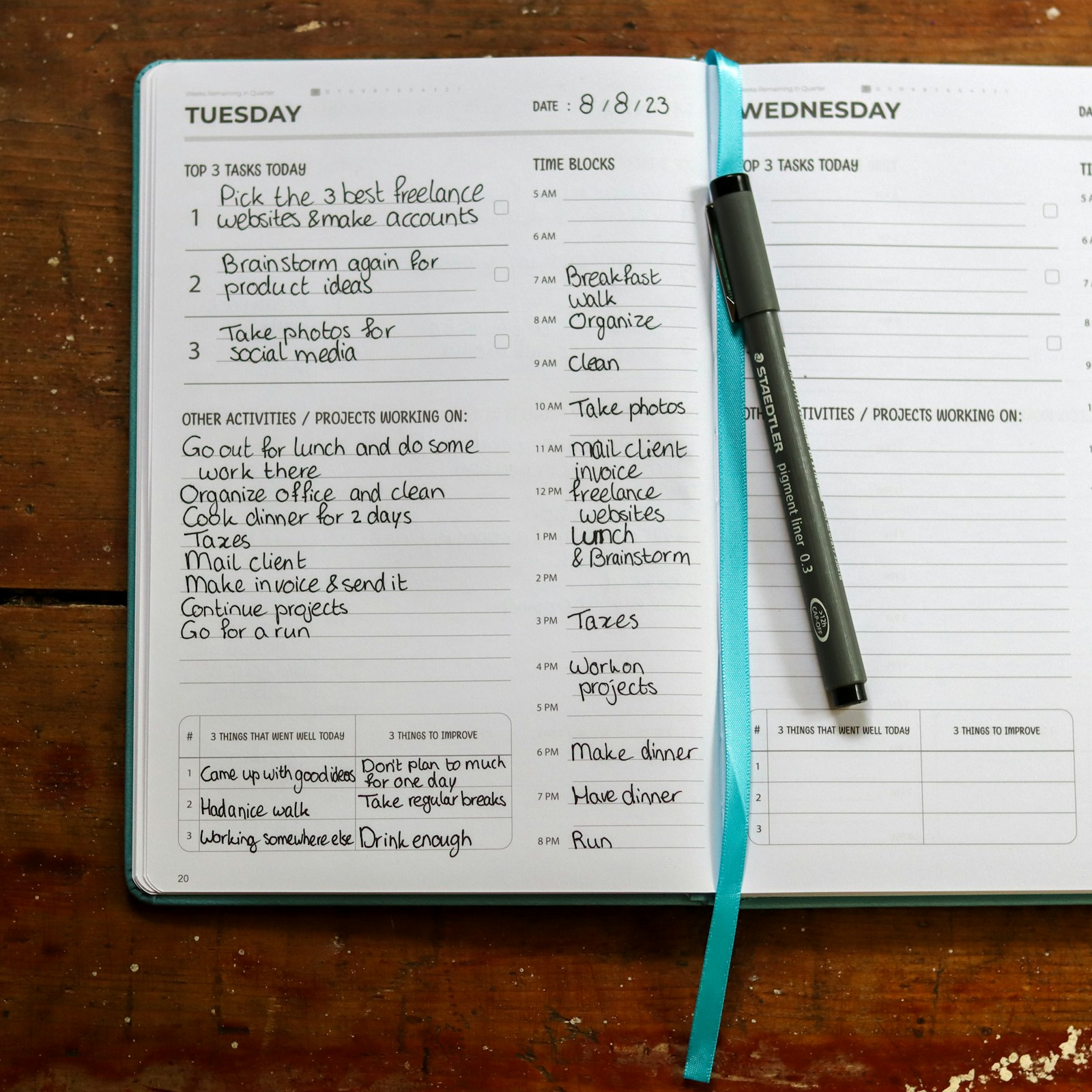
Put exercise on the calendar before motivation gets a vote
If exercise lives on a vague mental to-do list, it will lose to anything more urgent. Calendar beats intention.
Pick:
- the days
- the time
- the place
- the default session
For example:
- Monday, Wednesday, Friday at 7:00 a.m. in the living room
- Tuesday and Thursday right after work at the apartment gym
- Saturday at 10:00 a.m. before errands
The point is not perfection. The point is removing the daily negotiation.
For adults, the broad public-health target is still at least 150 minutes of moderate-intensity activity or 75 minutes of vigorous activity each week, plus muscle-strengthening work on 2 or more days. But you do not need to hit the full weekly ideal on day one to build the habit.
Think in appointments first, volume second.
Use if-then planning, because vague plans are easy to ditch
One of the most useful behavior-change tools here is the implementation intention — basically an if-then plan.
- If it’s 7:00 a.m. on Monday, then I do my workout before I open email.
- If work explodes and I miss my normal time, then I do the 12-minute backup version at 8:30 p.m.
- If I feel too tired for the full session, then I still do the first 5 minutes.
A systematic review and meta-analysis of randomized trials on implementation intentions for physical activity found a positive effect in adults. That does not mean one sentence in your notes app transforms your life on its own. It means specific action planning tends to beat “I should work out more.”
Your habit should have a default plan and a backup plan. Otherwise one messy day becomes a skipped week.
If you want help building those fallback rules, if-then planning for workouts fits neatly here.
Attach exercise to a cue that already happens
Habits usually grow faster when they’re tied to something stable.
That’s why these are stronger:
- after coffee
- after shutting your laptop
- after dropping your bag at home
- before showering
- right after lunch
- after class
A cue should be obvious and hard to miss. “Sometime in the evening” is not a cue. “Right after I change out of work clothes” is.
If you want exercise to feel non-negotiable, stop relying on internal cues like motivation and use external ones your day already gives you for free.
Make the first 60 seconds stupidly easy
A lot of skipped workouts are not really about the workout. They’re about the start.
So lower the friction on the first minute:
- lay out your clothes the night before
- keep your shoes by the door
- save the workout in your app ahead of time
- choose the exact routine before the day starts
- use one playlist you only play when it’s go time
This sounds small because it is small. That’s the point. When a behavior has fewer setup steps, it’s easier to repeat. And repeated behaviors in stable contexts are what habits are built from, which is consistent with the current review evidence on physical-activity habit interventions.
You are not trying to become a heroic person at 6:02 a.m. You are trying to make starting feel normal.
Decide what counts on low-energy days
This is the part most people skip, then wonder why the habit keeps dying.
You need a written answer to: What counts as a win when the day goes sideways?
Maybe your full workout is 35 minutes. Your reduced version might be:
- 10 minutes of movement
- one circuit
- one walk
- one short strength block
Non-negotiable does not mean maximal. It means there is still a version of the habit available when your ideal version is off the table.
That protects you from the classic trap where one rough day becomes “I’m off track now.” If you want more on that mindset shift, this is exactly where streaks beat willpower fits into the bigger picture: consistency usually survives on smaller wins than your ego wants.
Treat reminders as guardrails, not nagging
A reminder is not childish. It’s infrastructure.
A 2023 systematic review and meta-analysis of mobile health interventions for physical activity suggests app-based interventions can help promote physical activity, though results vary a lot by design and real-world context. In plain English: reminders alone are not magic, but well-timed prompts can be useful when they reduce friction and catch you before the day disappears.
Good reminders:
- happen before the usual fail point
- tell you exactly what to do
- don’t ask you to think too much
Bad reminders:
- arrive too late
- guilt-trip you
- are so frequent you ignore them
Try one prompt that says the next action, not a vague command. “Shoes on at 6:30” beats “Don’t forget fitness!!!” by a mile.
Make it visible enough that you can’t accidentally forget
If exercise is invisible, your brain will pretend it never existed.
A few simple ways to keep it in sight:
- leave the mat or dumbbells where you’ll see them
- put your workout time on your main calendar, not a hidden app
- track completed sessions somewhere visible
- use a repeating checklist for your week
This is less about aesthetics and more about memory. Habits like cues. Your environment can either support the cue or quietly sabotage it.
Build identity after action, not before
A lot of advice says to “become someone who never skips workouts.” Nice sentiment. Not very useful on Tuesday night when takeout just arrived.
A better version is: every time you do the small version, you cast one more vote for being a person who moves even when life is messy.
Identity can help maintenance, but it usually grows from repetition, not speeches. That’s the honest reading of the habit literature too: repeated behavior in stable contexts matters more than motivational self-talk, and the evidence base still has limits that are worth admitting out loud. The 2023 systematic review on habit-formation interventions for physical activity is useful here precisely because it is supportive without pretending the science is cleaner than it is.
So don’t wait to feel like a consistent person. Collect the receipts first.
The honest tradeoff
Making exercise non-negotiable means giving it priority over something.
Usually that’s:
- some scrolling
- some TV
- a little sleep-in margin
- the fantasy that you’ll “see how the day goes”
That tradeoff is real. You don’t need to romanticize it. But you do need to make it consciously. If exercise matters, it needs a protected slot in your day, not leftover scraps.
The good news is that once a routine becomes more automatic, it usually feels less expensive than it does in the early setup phase. That doesn’t happen in three days. Count weeks, not days. And again, the current evidence on physical-activity habit interventions is promising without supporting fairy-tale timelines. The 2023 review is a good reminder to stay practical.
If you want help making the habit easier to keep
This is where an app can actually earn its place.
OgamicX fits this problem well because it’s built around consistency, not just logging. The unified streak means a workout, a meal log, or a closed fasting window can all keep the same chain alive, which is a lot kinder than juggling separate apps with separate broken streaks. It also has Duolingo-style Streak Shields for the occasional missed day, and Care Plan check-ins from Ogi that nudge you when you’re drifting instead of going silent on you. OgamicX is free to download, with a free tier that includes core tracking and streak features — no card.
That’s not a substitute for choosing a time and a cue. Nothing is. But if your main problem is “I keep forgetting, drifting, or restarting,” a consistency engine helps.
The simple version
If you want exercise to become non-negotiable, do this:
- Pick a fixed time.
- Attach it to an existing cue.
- Shrink the default session.
- Write an if-then backup plan.
- Decide what counts on bad days.
- Use reminders before the fail point.
- Track the streak, not just the perfect workouts.
That’s it. Not glamorous. Very effective.
The problem usually isn’t you. It’s the strategy. Stop asking motivation to make the call every day, and give exercise a job in your schedule it doesn’t have to re-interview for.
Keep going:

Written by
The OgamicX Team
Tips, guides, and insight on fitness, nutrition, fasting, and building habits that last — from the team behind OgamicX.
About OgamicXFound this useful? Share it.