
Make It Easier to Start Your Workout
Make it easier to start your workout by cutting friction, using clear cues, and building a routine that feels obvious even on tired, messy days.
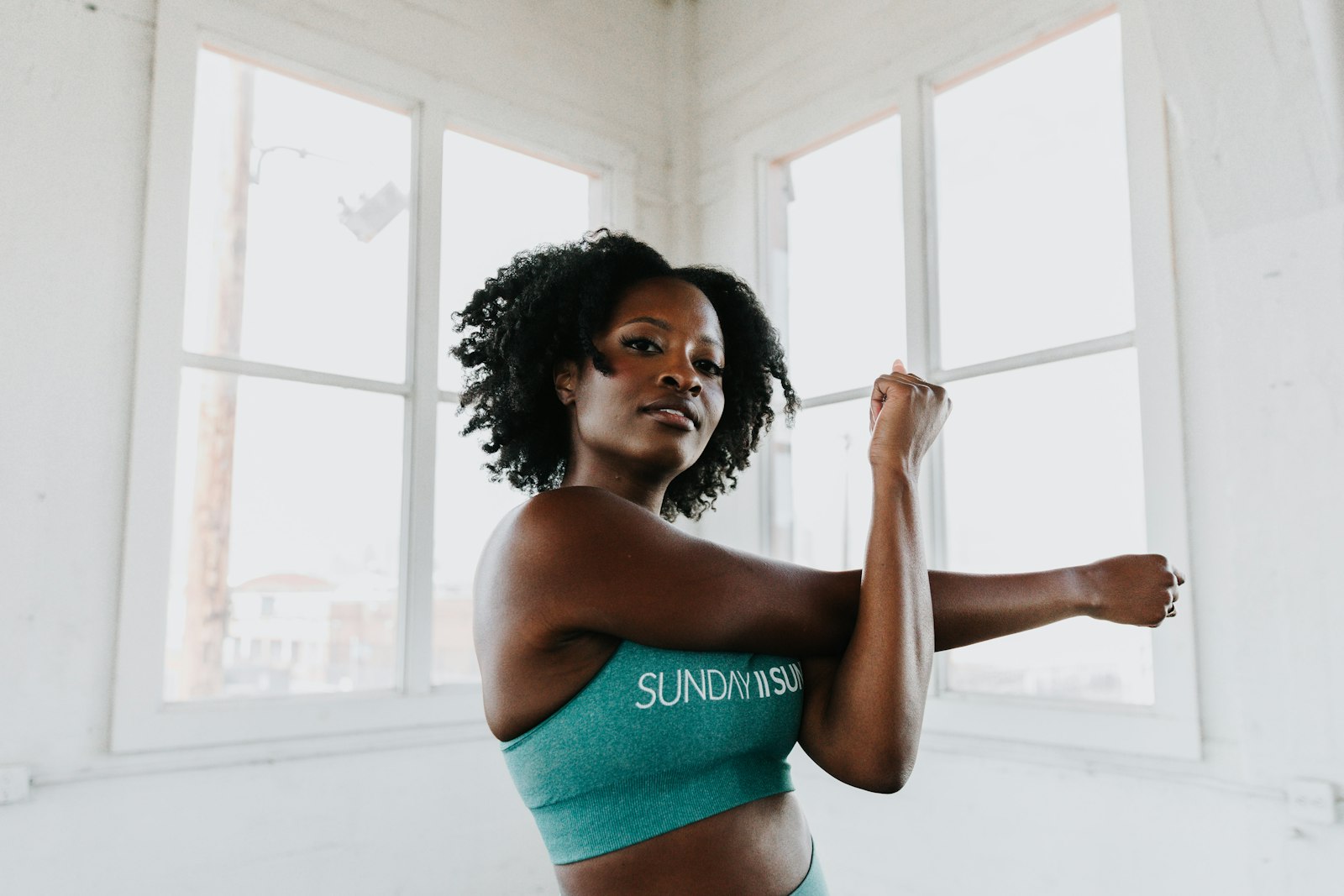
Starting your workout is usually the hard part.
Not the push-ups. Not the walk. Not even the sweat.
It’s that weird little gap between “I should work out” and actually moving your body. If that gap keeps eating your plan, the fix usually isn’t more motivation. It’s less friction.
Make the first minute easier, and the workout stops feeling like a negotiation.
Research on physical activity habits points in a pretty unglamorous direction: planning helps, cues help, and repeating the behavior in a stable context can make it feel more automatic over time. A 2023 meta-analysis on physical-activity habit interventions and a prospective study on cue consistency and physical-activity habit all point in that direction.
This post is about reducing the small bits of resistance that pile up before a workout: finding clothes, choosing what to do, deciding when to start, switching between apps, clearing floor space, wondering if 20 minutes even counts.
This isn’t about hyping yourself up. It’s about making the start mechanically easier.
Why starting a workout feels weirdly hard
Most people don’t fail at exercise because they’ve never heard that exercise is good for them.
They fail at the transition.
The shoes are in another room. The mat is under a chair. The app needs a login. The playlist lives somewhere else. You’re still deciding between strength, cardio, or “maybe tomorrow.”
That’s the intention-behavior gap: wanting to do the thing is not the same as doing it. Research on physical activity repeatedly finds that planning strategies can help close that gap by turning vague goals into a specific when, where, and how. See this study on action and coping planning for exercise.
And once exercise happens in a stable context often enough, it starts to feel less like a daily moral test and more like something your day just does. A 2023 meta-analysis on habit-formation interventions for physical activity found a positive effect on physical-activity habit strength, though the effect size was modest and this is not magic overnight.
If you want the deeper version of that idea, streaks beat willpower is the pillar post.
Reduce steps to start
If you want to make it easier to start your workout, think like a lazy product designer.
Count the number of decisions and actions between “I should work out” and “my body is moving.”
A hard-to-start workout often looks like this:
- pick a workout
- find clothes
- find shoes
- move furniture
- choose music
- open an app
- log in
- set a timer
- decide whether today is “worth it”
That’s a lot of exit ramps.
A better setup is boring in the best way:
- clothes already out
- workout already chosen
- floor space already clear
- start time already attached to something you already do
- one tap to begin
Doing the same kind of workout at the same time can help because it removes decisions. In a prospective study on cue consistency and physical-activity habit, the habit link was stronger among people who reported doing the same activity at the same time of day.
Build a workout launch sequence
Don’t think about your full routine first.
Build the launch sequence first.
This is the tiny chain that gets you from normal life into motion. For example:
- Finish coffee.
- Put on shoes already by the door.
- Open the saved workout.
- Start the warm-up.
That’s it.
Short. Repeatable. Hard to misunderstand.
Researchers call this an implementation intention: If X happens, then I do Y. The point is not motivation. The point is reducing the in-the-moment debate. This approach is widely used as a behavior-change technique, even if results vary by context and person.
Good launch-sequence cues
The best cue is not inspirational.
It’s reliable.
Good examples:
- after I pour my morning coffee, I start my 20-minute workout
- after I close my laptop for work, I do my walk
- after I brush my teeth at night, I do my mobility routine
- when I get home and put my keys down, I change immediately
Bad cues are vague:
- sometime this evening
- when I feel motivated
- after I finish everything else
- when I have enough energy
Your brain loves ambiguity because ambiguity leaves room to postpone.
Make your environment say “go”
Environment design sounds fancy, but mostly it means this: stop making your workout hide from you.
You want the room to give your body a gentle nudge before your brain starts bargaining.
Lay out your clothes the night before
This works because it removes one more decision at the exact moment you’re most likely to stall.
If you work out in the morning, put the full outfit where you can practically trip over it. If you work out after work, set it where you change.
Tiny rule: lay out the exact outfit, not a pile of options. Options are friction dressed up as freedom.
Put the equipment where the workout happens
If you use a mat, dumbbells, or bands, keep them visible and reachable.
Not buried in a closet behind winter coats and emotional history.
Visible cues matter because habits are tied to context and repeated response patterns. The 2023 meta-analysis on physical-activity habit interventions describes habit formation as repeated practice in specific contexts that strengthens cue-response associations.
Clear a tiny workout zone
You do not need a Pinterest home gym.
You need one rectangle of usable floor.
If every workout starts with dragging a chair, folding laundry, and moving a charger cable, your brain registers the session as a project. Keep one small area ready enough that “start” actually means start.
Put your shoes in the path, not in storage
If walking or running is your main workout, shoes by the door beat shoes in the closet every time.
You’re designing for tired-you, rushed-you, mildly-annoyed-you. That version of you should not have to hunt.
Decide the workout before the day begins
One of the sneakiest forms of friction is choice.
A lot of people think they need freedom: “I’ll just see what I feel like later.” What they usually get is decision fatigue and a 40-minute scroll through routines they never start.
Planning helps in part because it specifies the action in advance. You are not just deciding to exercise. You are deciding what exercise begins when the cue shows up. This study on planning interventions and physical activity looked at planning as a mediator of short-term physical-activity behavior.
Use a default workout menu
Create three default options:
- Short: 10–15 minute session
- Normal: 20–30 minute session
- Low-energy: walk, mobility, or easy circuit
Now the question isn’t “What should I do today?”
It’s “Which preset fits today?”
That is a much easier question.
Repeat workouts more than you think you should
Novelty is fun.
Repetition is what gets done.
Doing the same Monday workout for six weeks is not boring if the alternative is doing no workout because you spent 18 minutes choosing one. In that same prospective study on cue consistency, stronger habit effects showed up when people reported doing the same activity at the same time of day.
Make the first minute ridiculously easy
The start of the workout should feel almost too simple.
Not the whole workout. Just the opening move.
Examples:
- press play on the warm-up video
- start a 10-minute walk route
- do the first round of your circuit
- hit “begin” on your saved session
- start the timer for your mobility flow
The routine before the workout can count too. A 2024 trial on exercise preparation habit interventions found some support for preparation-habit components helping exercise participation over time, especially for online exercise classes.
So yes, filling your water bottle, placing your mat, and queuing your session can be part of the habit.
That’s not fake progress.
That’s scaffolding.
Use if-then plans for the moments you usually quit
Most people know the clean version of their routine.
Fewer people plan for the messy version.
That’s where coping planning helps. Instead of only deciding the ideal workout, decide what happens when life gets in the way. This study on action and coping planning for exercise suggests both forms of planning can help bridge the exercise intention-behavior gap.
Try a few of these:
- If my meeting runs late, then I do the short workout preset.
- If I get home drained, then I change clothes before sitting down.
- If it’s raining, then I do the indoor bodyweight session.
- If I miss the morning slot, then I walk right after lunch.
- If I feel indecisive, then I do the saved Monday routine.
Notice the theme: no drama, no guilt, no “well I blew it.”
Just a smaller path that still starts.
Remove digital friction
A lot of workout resistance is not physical.
It’s app friction.
You open one app for the workout, another for food, another for habits, another for music, and by the time you’ve bounced between them all, your motivation has gone out for a cigarette.
If your routine lives across five tools, starting requires too many taps and too much context-switching.
In that case, consolidating into fewer tools can help—not because apps create discipline, but because fewer moving parts means fewer chances to stall.
That’s also why stop juggling 5 fitness apps lands with so many people. Best-at-one-thing loses to best-at-the-whole-day surprisingly often.
If you want one place for workouts, meals, fasting, and the streak that ties them together, OgamicX fits this problem well. Not because it makes you magically disciplined. Just because fewer steps between intention and action usually helps. It’s free to download, with no card.
Build a tired version of your routine
A smart workout system is not built only for your best day.
Build one for:
- the Wednesday when work ran long
- the Sunday when you slept badly
- the afternoon when you feel flat
- the week when your schedule gets weird
The mistake is making your routine so optimized that it only works when life behaves.
Habit work tends to stick better when the behavior can repeat in a recognizable context over time, and that usually means keeping the entry conditions simple enough to survive real life. The 2023 meta-analysis on physical-activity habit interventions supports the broader case for habit-focused interventions, while also being a useful reminder not to oversell how fast this becomes automatic.
Ask:
- What can I prepare the night before?
- What decision can I make once instead of daily?
- What app or tool can I eliminate?
- What usually delays me by five minutes?
- What would make starting feel obvious?
If you answer those honestly, you’ll usually find the friction.
A practical friction-reduction checklist
If you want to make it easier to start your workout this week, do this tonight:
The night-before setup
- Lay out your exact workout clothes.
- Put shoes where you’ll see them.
- Clear one small floor space.
- Choose tomorrow’s workout now.
- Save or queue it.
The cue setup
- Attach the workout to something you already do daily.
- Write one if-then backup plan.
- Decide your short-version option in advance.
The digital cleanup
- Remove unused fitness apps from your home screen.
- Keep one clear path to the workout you actually do.
- Put your main workout app somewhere obvious.
The honest timeline
Making it easier to start your workout is not a one-day mindset trick.
It’s a systems job.
You’re teaching your environment to help instead of heckle.
Habit research supports the general idea that repetition with stable cues can build automaticity, but don’t turn that into a fake promise that your routine will feel effortless by next Tuesday. The timeline is usually measured in weeks and months, not a burst of motivation. The 2023 meta-analysis on physical-activity habit interventions found a positive overall effect, but not a miracle.
The win is smaller than that and better: fewer stalled starts, fewer wasted decisions, and more days where beginning happens before your excuses get fully dressed.
If your workouts keep dying at the starting line, don’t ask, “How do I become more disciplined?”
Ask, “What is making the first minute harder than it needs to be?”
That question is kinder, and usually more useful.
And once you solve that, consistency gets a lot less dramatic.

Written by
The OgamicX Team
Tips, guides, and insight on fitness, nutrition, fasting, and building habits that last — from the team behind OgamicX.
About OgamicXFound this useful? Share it.