
How to Make Working Out Fun (Not a Chore)
Fun isn't the soft part of fitness — it's the mechanism. Why how exercise feels predicts whether you stick with it, plus 5 levers that make it fun.
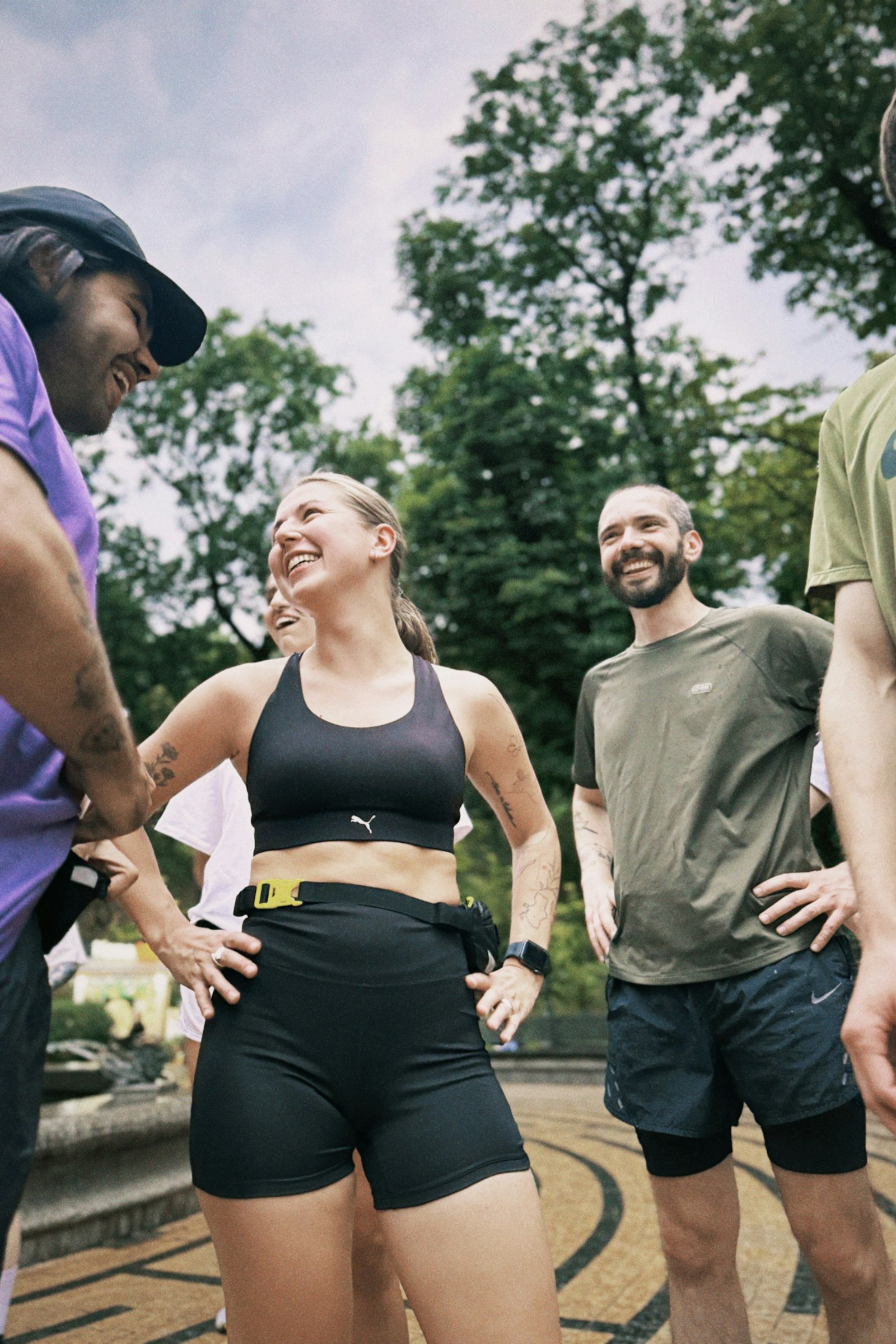
Nobody white-knuckles their way through a Netflix binge. You don’t set a 6 a.m. alarm, lay your clothes out the night before, and recruit an accountability buddy to make sure you watch one more episode. It just happens, because it’s fun. Now hold that next to how most of us treat exercise — the alarms, the bribes, the guilt, the whole creaking scaffold of willpower — and an awkward question falls out: what if the problem was never your discipline? What if the problem is that you made the thing miserable, then blamed yourself for not loving it?
This isn’t a pep talk about “finding your why.” It’s a quieter, more useful claim, and the research is firmly behind it: how an activity feels is the single biggest predictor of whether you’ll still be doing it in six months. Fun isn’t the frivolous part of fitness you earn once you’ve suffered enough — for most people, it’s the actual mechanism. Let’s take it seriously: what “fun” really means here, why it beats willpower, and the levers that turn a chore back into something you’d choose.
The willpower model is quietly broken
The dominant story about fitness is a story about willpower. Get up earlier. Want it more. Push through. Discipline over motivation. There’s a sliver of truth in there — discipline does outlast motivation on any given Tuesday — but as a system, “just force yourself” has a fatal flaw: it treats unpleasantness as a fixed cost you have to keep paying, forever, out of a willpower account that’s empty by 6 p.m. most days.
That account is finite, and it’s already overdrawn by your job, your family, your inbox, and a dozen other things demanding self-control. Asking it to also fund every workout, forever, is a plan that works right up until the first hard week — then collapses, on schedule, while you conclude you’re “just not a disciplined person.”
You are, though. You’ll spend four hours optimizing a fantasy character’s gear. You’ll stay up too late because the next chapter is a cliffhanger. The machinery for sustained, voluntary effort is fully installed and running great — it’s just pointed at things that are fun, and not at the activity that would actually change your life. The fix isn’t a bigger willpower account. It’s lowering the price of admission so you stop needing one.
What actually keeps you coming back: how it feels
Here’s the finding that should reframe the whole conversation. In a study of previously sedentary adults, researchers measured one simple thing during a single bout of moderate exercise — whether people felt good or bad while doing it — and then checked back months later. The people who’d felt better during that one session were doing meaningfully more physical activity 6 and 12 months later, even after controlling for how active they were to begin with. Your in-the-moment affective response wasn’t a footnote to adherence. It was the predictor.
Sit with that, because it inverts the usual advice. The standard playbook says results drive adherence: see the changes, get hooked, keep going. But results are slow and invisible for the first month or two — the scale lies, the mirror lags — so a results-first plan asks you to keep showing up during the exact window when there’s nothing to show. What can pay out immediately is how the session felt. Feel decent during and after, and your brain files “exercise” under approach, not avoid. Feel wrecked, bored, and judged, and it files the activity under threat, then quietly routes your evenings elsewhere.
This is also why the broader science of motivation keeps landing in the same place. The most cited framework in the field, Self-Determination Theory, distinguishes between doing something because you feel pushed to (external pressure, guilt, a number on a chart) and doing it because it’s genuinely satisfying in itself. A large systematic review of self-determination theory and exercise found that the more autonomous and intrinsic a person’s reasons for moving — enjoyment, a sense of competence, choosing it for yourself — the better those reasons predicted sticking with it over the long haul. Guilt gets you to the gym this week. Enjoyment gets you there next year.
Fun isn’t the reward — it’s the strategy
Put those two together and “make it fun” stops sounding soft. It’s the highest-leverage thing you can do for your consistency, because it attacks the problem at the root instead of papering over it with more discipline.
And to be clear about what “fun” means here, because the word scares people off. It doesn’t mean every workout is a giggling party, or that you’ll never have to push. Fun, in the sense that matters, means the experience nets out positive — engaging, satisfying, a little playful, paying you something you can feel before your body changes. A hard set can be fun the way a tough boss fight is fun. The bar isn’t “euphoria.” It’s “I’d choose this again.” Clear that bar consistently and you’ve solved adherence — the only fitness problem that actually matters, because the best program on earth does nothing if you quit it in March.
The five levers of fun
Fun isn’t luck or personality. It’s built, and there are really only a handful of levers. Pull any of them and the felt experience of moving goes up. Pull several and exercise stops feeling like a thing you have to make yourself do.
1. Variety — kill the boredom before it kills the habit. The fastest way to make anything un-fun is to make it identical every time. The same 30-minute treadmill slog, forever, isn’t hard because it’s intense; it’s hard because it’s monotonous, and monotony is its own quitting force. Rotating movements, formats, intensities, and settings keeps the activity novel enough that your brain stays curious instead of bored. Novelty is free, and it’s one of the most underrated adherence tools there is.
2. Play — let it feel like a game, not a test. Play is effort that doesn’t feel like effort because the goal is the doing, not the outcome. Sports do this automatically: you’ll sprint, cut, and dive for a frisbee in a way you’d never “do cardio.” Anything with a target, a score, a level, or a little challenge to clear borrows that same energy. The opposite of play isn’t rest — it’s grading yourself.
3. Social — make it something you do with people. Almost everything is more fun with company, and exercise is no exception. A walk with a friend is a hangout that happens to burn calories. A class, a team, a group chat where everyone reports in — the relatedness does real motivational work, the kind that turns “I should” into “they’re expecting me.” You don’t even need a partner in the room; knowing someone can see whether you showed up is often enough.
4. Progress you can actually see. Your brain hands out a little hit of satisfaction for progress itself, independent of the end goal — but only if the progress is visible. The trouble with fitness is the real progress hides for weeks. So you install visible proxies: a number that climbs, a streak that grows, a weight you can now lift that you couldn’t last month. Make the invisible legible and every session pays a small dividend instead of feeling like nothing happened.
5. Gamification — borrow the tricks games spent 50 years perfecting. Games are, at bottom, machines for making effort feel good: XP, levels, quests, streaks, leaderboards. None of that is fluff — each maps onto a real motivational mechanism, and applied honestly it’s startlingly effective. A meta-analysis of gamified physical-activity programs found they meaningfully increased activity — on the order of 1,600 extra steps a day versus controls. The mechanics that kept you grinding a save file work just as well pointed at your real life. (We dig into why each one works in what games got right about behavior change.)
“But I genuinely don’t find exercise fun”
Fair — and worth taking seriously rather than waving away. If you’ve only ever experienced exercise as the punitive version — the program that’s too hard, the comparison to people way ahead of you, the activity you picked because you were “supposed to” — then of course it isn’t fun. You’ve been sampling the worst possible version and generalizing.
The move isn’t to manufacture enthusiasm you don’t have. It’s to audit. Which lever is missing? If you’re bored, that’s a variety problem, not a willpower problem. If you dread it alone, a social problem. If it feels pointless, a visible-progress problem. If it feels like a test you’re failing, a difficulty problem — the work is calibrated for someone else, not you. Almost every “I hate working out” is really one or two missing levers in a trench coat. Find the lever, pull it, and the same activity changes character entirely. And if the real wall is your brain talking you out of it before you start, that’s a design problem too, with design solutions.
Pick your on-ramp
“Make it fun” is the principle. Here’s how to actually do it, routed by what’s standing in your way right now:
“I want the game-layer — points, levels, streaks, the works.” If what hooks you is structure and scorekeeping, build a game around your training on purpose. How to gamify your workouts is the mechanics manual — XP and tiers, quests, streaks, leaderboards, how to rig your own game layer and how the apps do it.
“I don’t want a ‘workout’ at all — I want to move and not hate it.” Then stop trying to love the gym and go find movement that never feels like exercise in the first place. Fun ways to exercise without realizing it is a menu of activities — dancing, pickup games, active hobbies, walking adventures, playing with your kids — that burn the calories while your brain thinks it’s having fun. (Because it is.)
“I show up, but I need a reason to celebrate that isn’t the scale.” This is the rewards question, and getting it right is its own small skill. How to reward yourself for working out covers reward systems that reinforce the habit instead of sabotaging it — what to use, what to avoid, and how to build a ladder that actually pulls you forward.
If consistency is the deeper issue underneath all of this, the most fun mechanic of all is also the stickiest: a streak you’d hate to break quietly does the motivating for you, no willpower required.
Where an app earns its keep
You can pull every one of these levers by hand — and plenty of people do. But notice how much manual labor it is: inventing variety so you don’t get bored, scorekeeping so progress stays visible, finding people to be accountable to, building rewards that don’t backfire. That bookkeeping is exactly the kind of thing that decays the first busy week, which is the week you most needed it.
That’s the gap OgamicX is built to hold. It makes exercise fun the way a game does, deliberately: every action earns XP across 8 named tiers (Starter all the way to Elite), so progress is visible the moment you log it instead of months from now. Any activity — a workout, a logged meal, a fast — feeds one unified streak, with Duolingo-style shields so a single missed day doesn’t nuke a month of work. Friend and global leaderboards turn a private intention into a social one. And your weekly tasks are calibrated to your own behavior, always including one trivially-easy guaranteed win to get the reward loop firing before your resistance wakes up — which is the whole reason it works as a fitness app that actually sticks. The point isn’t the badges. It’s that the workout itself becomes the game — a structural trick no gym or personal trainer can offer you. It’s free to start (no card, no trial games); three active templates and core tracking are free forever, and Premium ($4.99/mo) adds an AI-built plan and more enrollments if you ever want them.
The bottom line
Fun isn’t the soft, optional part of getting fit — it’s the load-bearing one. The thing that decides whether you’re still training next year isn’t how badly you want results or how disciplined you are; it’s whether moving your body nets out as something you’d choose again. So stop trying to win the willpower war. Pull a lever instead: add variety, make it play, bring people in, make progress visible, or let a game carry you. Pick the on-ramp above that fits your wall, and go make the thing fun enough that you don’t have to force it.
Keep going:

Written by
The OgamicX Team
Tips, guides, and insight on fitness, nutrition, fasting, and building habits that last — from the team behind OgamicX.
About OgamicXFound this useful? Share it.