
How to Start Working Out as a Woman at Home
How to start working out as a woman at home: a simple beginner plan with short strength sessions, walking, and an easy setup you can actually stick to.
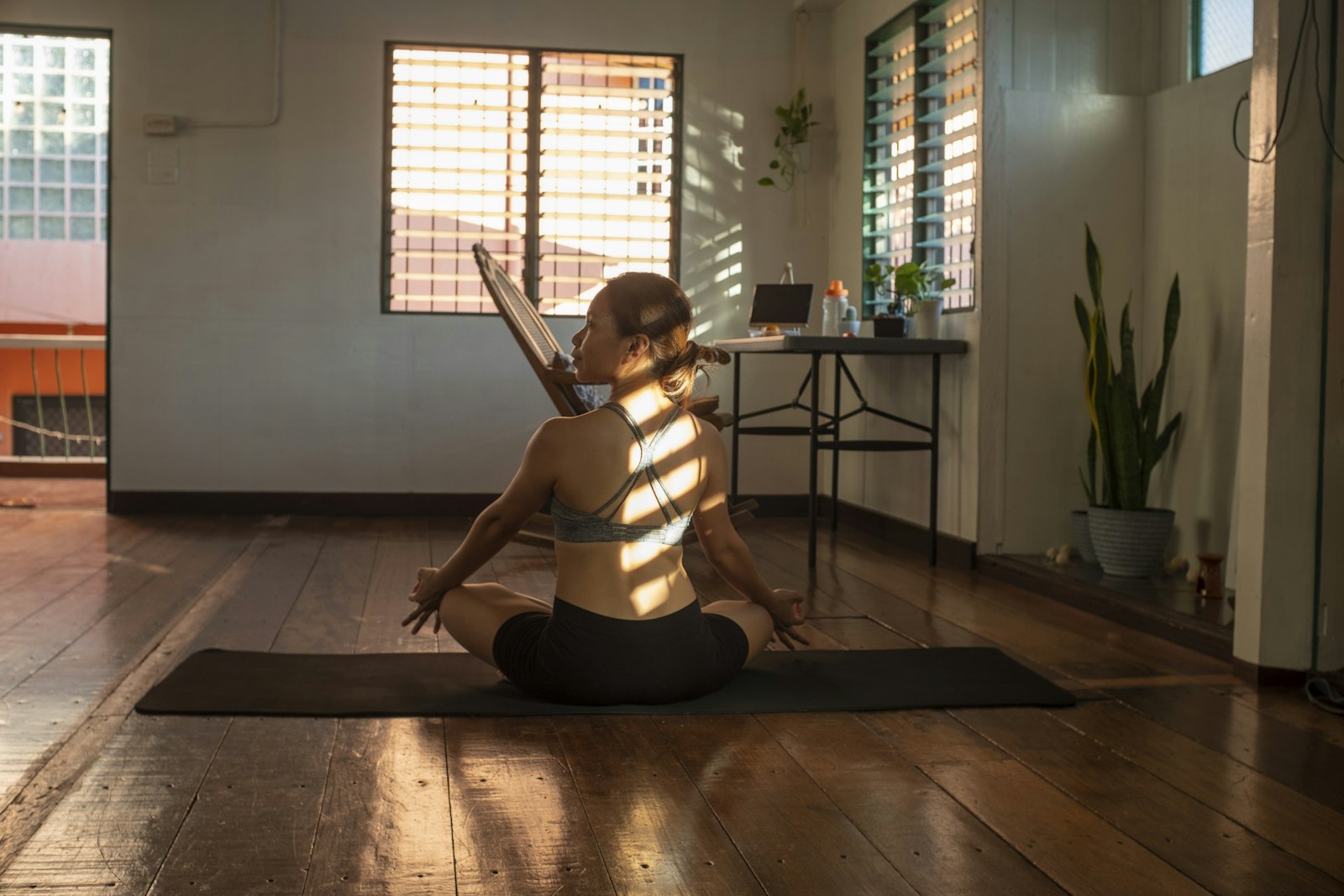
If you want to start working out as a woman at home, the best plan is not a dramatic one. It’s 2 to 3 short strength sessions a week, a little walking or other easy cardio, and a setup so simple you can do it without negotiating with yourself for 45 minutes first. That’s enough to build the habit, get stronger, and avoid the classic beginner cycle of going too hard on Monday and disappearing by next Thursday. As a baseline, U.S. guidance still recommends at least 150 minutes of moderate activity a week plus muscle-strengthening work on 2 or more days, and it explicitly notes that you can break that movement into smaller chunks. (cdc.gov)
You do not need a gym membership, fancy gear, or a “women’s workout” that is secretly just punishment with pastel branding.
How to start working out at home as a woman
Start smaller than you think you should.
For your first 2 weeks, your job is not to build the perfect routine. It’s to become someone who actually shows up in her living room and moves. That means a plan you can do in regular clothes, in a small space, with no equipment, in about 15 to 25 minutes.
A good beginner home setup looks like this:
- 2 or 3 strength days per week
- 1 to 3 easy movement days like walking, dancing, or a short cardio session
- At least 1 full rest day
- Short sessions you can finish even on a low-energy day
That lines up with mainstream guidance. Adults are advised to do muscle-strengthening work at least 2 days a week, the weekly movement target can be split into smaller bouts, and “some activity is better than none” is the actual rule here, not a consolation prize. (cdc.gov)
If you want the bigger consistency picture too, how to start working out at home pairs well with this.
The biggest mistake beginners make at home
Most beginners do too much, too soon, too specifically.
They pick a seven-day challenge, a punishing HIIT video, or a routine built for somebody already comfortable with exercise. Then they get sore, overwhelmed, or quietly annoyed by how much mental effort the whole thing takes.
The better move is boring on paper but much more effective in real life:
- Train your whole body
- Repeat the same simple plan for a few weeks
- Stop while you still feel like you could do a little more
- Make the next session easy to start
ACSM’s current resistance-training guidance makes the core point nicely: train all major muscle groups at least 2 days per week, build gradually over time, and don’t confuse complicated programming with what matters most for a healthy adult beginner. The useful part is the boring part: consistency. (acsm.org)
A beginner home workout plan for women
If you’re wondering exactly what to do, use this as your week-one template.
Option A: 3-day beginner plan
Day 1 – Full body
- Squat to chair or bodyweight squat — 2 sets of 8 to 10
- Wall push-up or incline push-up on a counter — 2 sets of 6 to 10
- Glute bridge — 2 sets of 10 to 12
- Bird dog — 2 sets of 6 to 8 per side
- March in place or easy walk — 5 to 10 minutes
Day 2 – Easy movement
- 15 to 25 minute walk
- Or 10 minutes of easy marching, step-ups, or dancing at home
Day 3 – Full body
- Reverse lunge holding a wall for balance, or split squat to a short range — 2 sets of 6 to 8 per side
- Dumbbell row if you have weights, or backpack row — 2 sets of 8 to 10
- Dead bug — 2 sets of 6 to 8 per side
- Glute bridge or hip hinge drill — 2 sets of 10 to 12
- Easy walk — 5 to 10 minutes
Day 4 – Rest
Day 5 – Full body
- Repeat Day 1, or do the same exercises with one small upgrade:
- 1 extra rep
- 1 extra set
- slightly slower control
- slightly deeper range of motion
Option B: 2-day beginner plan
If three days feels like a lot, do this instead:
- Tuesday: full-body strength, 15 to 20 minutes
- Friday: full-body strength, 15 to 20 minutes
- Most other days: 10 to 20 minutes of walking if you can
Two days per week is a perfectly legitimate place to start, especially because the official minimum for muscle-strengthening work is 2 days weekly. (cdc.gov)
What exercises should women start with at home?
The best beginner exercises are not “for women” in some mystical sense. They’re movements that are simple, scalable, and easy to learn at home.
Start with these patterns:
1. Squat
Good beginner versions:
- Sit-to-stand from a chair
- Bodyweight squat
- Box squat
2. Push
Good beginner versions:
- Wall push-up
- Counter push-up
- Knee push-up later, if it feels right
3. Hinge or glute work
Good beginner versions:
- Glute bridge
- Hip hinge drill
- Romanian deadlift with a backpack later
4. Pull
Good beginner versions:
- Backpack row
- Resistance band row if you have a band
5. Core stability
Good beginner versions:
- Bird dog
- Dead bug
- Side plank from knees later
6. Low-impact cardio
Good beginner versions:
- Walking
- Marching in place
- Step-ups on a low step
- Dance cardio if you actually enjoy it
You do not need to start with jump squats, burpees, or an hour-long workout video with a trainer yelling “no excuses.” You need exercises you can repeat next week.
How hard should your workouts feel?
A beginner workout should feel like work, not like a physical or emotional ambush.
A good rule:
- You should finish feeling like you probably had 1 to 3 reps left on most sets.
- Your breathing can be up, but you should not feel wrecked.
- Mild soreness can happen, especially at first, but your routine should not make normal life miserable.
This gradual build matters because beginners do not need much complexity to improve. They need enough effort to matter, repeated often enough to become normal. ACSM’s recent overview also notes that things many people obsess over early on, like special equipment, complex periodization, or always pushing to failure, did not consistently change outcomes for the average healthy adult the way simply following a workable plan did. (acsm.org)
What if you feel intimidated by strength training?
A lot of women do, especially if most of their exposure to fitness has been one of two extremes:
- hyper-lean aesthetic marketing
- chaotic “fat-burning” workouts that feel more like punishment than practice
Home training helps because it strips out some of the social weirdness. No mirrors, no waiting for equipment, no feeling like you’re doing something wrong in public.
And strength work is worth learning. The Office on Women’s Health recommends regular physical activity plus muscle-strengthening activity for women, with the same basic weekly baseline of 150 minutes of moderate activity and 2 days of strength work. (womenshealth.gov)
That’s the part worth holding onto: this does not have to be dramatic to count.
Do women need a different workout plan than men?
At the beginner level, not in the way the internet usually means.
Women do not need a fundamentally different list of exercises. You still benefit from the same basic movement patterns: squat, push, hinge, pull, brace, and walk. What usually does differ is context:
- many beginners want to train at home, not in a gym
- some want lower-impact options
- some feel more comfortable starting with guided structure
- some want training that feels supportive instead of punishing
So the useful distinction is not “pink dumbbells versus real training.” It’s whether the plan matches your starting point, schedule, confidence level, and space.
That’s why a simple at-home plan beats a “best workout for women” article that tries to do everything at once.
How to make your home workout habit stick
The problem usually isn’t you. It’s the setup.
If you want this to last longer than ten days, make the friction embarrassingly low.
Keep your workout area ready
You do not need a home gym. You need:
- enough floor space for a mat or towel
- shoes nearby if you use them
- one chair, counter, or wall for exercise modifications
Use a tiny start
Tell yourself:
- “I only need 10 minutes”
- “I only need the first set”
- “I only need to change clothes and start”
That sounds small because it is. Small is the point.
Repeat your schedule
Pick the same days each week. For example:
- Monday, Wednesday, Friday
- or Tuesday and Saturday
The fewer decisions you make, the better.
Track the session, not your mood
If you wait to feel motivated, you’ll accidentally build a routine that only works on good days. A simple check mark, streak, or logged session helps because it rewards showing up, not perfection.
If that’s the part you struggle with, streaks beat willpower is the deeper read.
When should you progress?
Stay with the same basic plan for about 3 to 4 weeks before changing much.
Progress when:
- the reps feel easier
- your form feels more controlled
- you recover well by the next session
- the workout no longer feels challenging in a useful way
Then make one change:
- add 1 to 2 reps
- add 1 set
- slow the lowering phase
- shorten rest a little
- move from a wall push-up to a counter push-up
- hold a backpack for squats
You do not need a brand-new routine every Monday. Beginners usually do better with less novelty and more repeatable wins.
A realistic 4-week expectation
Here’s the honest version.
In your first month, the biggest changes are usually:
- the workout feels less confusing
- you recover a little better
- movements feel more coordinated
- starting takes less mental drama
- you begin to trust yourself to keep going
That matters. It’s easy to dismiss these as “not real results,” but they’re the foundation that makes long-term progress possible.
Public-health guidance is also framed around weeks and regular activity, not miracle timelines. Count weeks and reps, not fantasies. (cdc.gov)
A few beginner questions women ask a lot
Do I need equipment?
No. You can start with bodyweight, a chair, a wall, and maybe a backpack. Dumbbells and bands are nice later, not required on day one.
How long should my home workouts be?
Start with 15 to 25 minutes. If that feels too long, start with 10. Short enough to finish beats ideal enough to postpone.
Should I do cardio or strength first?
If you’re brand new, prioritize 2 to 3 strength sessions a week and add easy cardio around them. The muscle-strengthening piece is the one many adults miss. (cdc.gov)
What if I miss a day?
Then you missed a day. That’s all. Restart at the next planned session. A skipped workout is a normal event, not a personality verdict.
An honest app bridge, if you want help starting
If the hardest part is not the exercises but the figuring it all out, structured guidance helps.
OgamicX fits this stage well because it has women’s workout templates built for home training, and the app’s setup is more beginner-friendly than stitching together five different tools. It also keeps workouts, meal logging, fasting, streaks, and check-ins in one place, which is useful if you’re the kind of person who downloads a bunch of health apps and then stops opening all of them by week two.
On the product side, the relevant facts are straightforward: OgamicX includes 30 prebuilt bodyweight templates, supports home and no-equipment training, and Premium unlocks AI-personalized workout plans. It’s free to download, no card.
The honest tradeoff: if you want advanced lifting programming, gym-specific coaching, or technique analysis, that’s not really the point here. This is better for getting started, building consistency, and keeping the whole day in one place.
Your simplest next step
Don’t build the perfect routine tonight.
Pick two days this week, choose four exercises, and do two sets each. Then go for a walk tomorrow. If that sounds almost too easy, good. That’s the version you’re most likely to repeat.
And that’s what starting is: not proving something, just making it easy to come back.

Written by
The OgamicX Team
Tips, guides, and insight on fitness, nutrition, fasting, and building habits that last — from the team behind OgamicX.
About OgamicXFound this useful? Share it.