
How to Work Out Quietly in an Apartment
How to work out quietly in an apartment: swap high-impact moves, soften your setup, and keep home workouts neighbor-friendly without losing consistency.
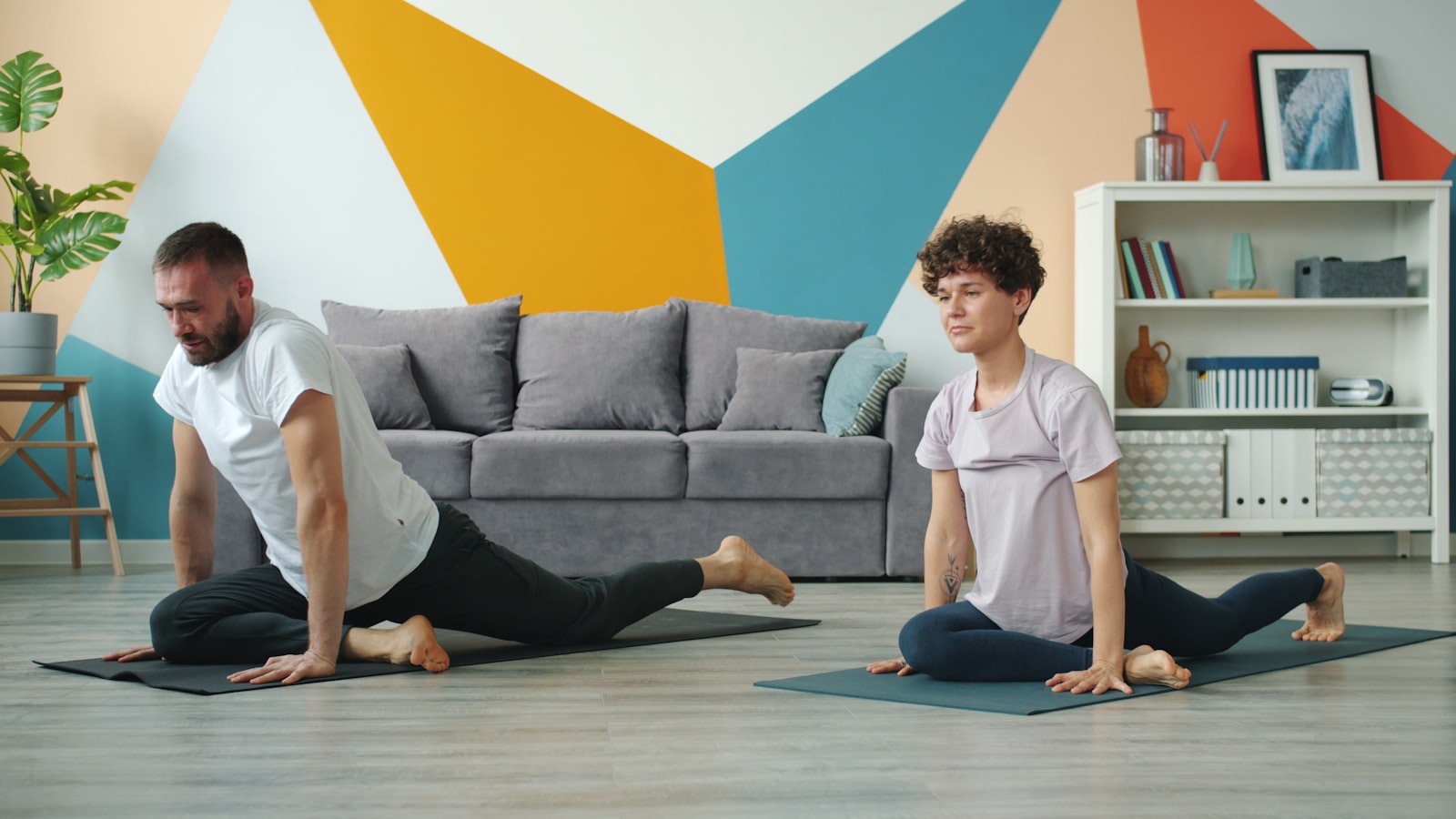
If you live in an apartment, the question usually is not can I work out at home? It’s how do I do it without sounding like I’m rearranging the ceiling for the person below me?
The short answer: yes, you can absolutely get a real workout in without a lot of noise. The biggest fix is usually simple — stop choosing high-impact movements indoors. Public-health guidance for adults still comes down to regular aerobic activity plus muscle-strengthening work each week; it does not require jump-heavy workouts in a second-floor living room to count. The CDC’s current guidance is at least 150 minutes of moderate-intensity activity a week plus muscle-strengthening activity on 2 days.
In practice, a quieter setup, smarter exercise swaps, and better timing will get you most of the way there. And honestly, a low-impact workout you can repeat four times a week usually beats a loud “perfect” session you keep avoiding because you feel bad for your neighbors.
Why apartment workouts get noisy fast
The main problem is usually impact, not effort.
Your downstairs neighbor does not hear a plank the way they hear jump squats, burpees, hard-running-in-place, or dumbbells dropped on bare flooring. Research on floor-impact sound shows that resilient materials can reduce transmitted vibration and sound, but the amount of noise still depends heavily on the force of the impact and how vibration moves through the floor structure.
There is also a human side to it. A 2021 review on noise annoyance in dwellings notes that impact noise from neighbors is a common source of annoyance, and how strongly people react depends partly on context and sensitivity. In plain English: the exact same workout can feel fine at 5 p.m. and unforgivable at 10:30 p.m.
That means quiet home training is mostly three things:
- Reduce impact
- Reduce vibration
- Pick better times
Do that, and you can usually keep training without becoming the building villain.
The easiest fix: stop choosing loud movements
If your workout includes repeated moments where both feet leave the floor, start there. Most apartment noise comes from a pretty short list of moves.
Usually loud in an apartment
- Jump squats
- Burpees
- Jumping jacks
- High knees done hard
- Skater hops
- Tuck jumps
- Box jumps
- Fast mountain climbers if your feet are slamming down
- Running in place with a heavy foot strike
Usually apartment-friendly
- Squats
- Reverse lunges
- Split squats
- Glute bridges
- Dead bugs
- Planks
- Push-ups
- Slow mountain climbers
- Step-back burpees with no jump
- Shadowboxing with soft footwork
- Marching in place
- Low-impact cardio circuits
That swap alone changes everything. You are not watering down the workout. You are choosing exercises that fit your building and make it easier to show up again tomorrow.
Quiet substitutions for the loudest moves
This is the part most people actually need, so here it is plainly.
Jump squats → tempo squats
Use a 3-second lower, 1-second pause, then stand. You lose the landing noise and keep the leg burn.
Burpees → walk-back burpees
Hands down, step back to plank, step forward, stand tall. No sprawl, no jump, no thud.
Jumping jacks → step jacks
Step one foot out at a time while raising your arms overhead. Same rhythm, much less impact.
High knees → fast marches
Drive the knees up, pump the arms, stay light on the floor. You can make this surprisingly hard without stomping.
Skater hops → side step + reach
Keep the lateral pattern, ditch the landing.
Mountain climbers → slow sliders or controlled climbers
Move slower and place the feet quietly instead of firing them into the floor.
Running in place → incline march or shadowboxing
If you want cardio without impact, these two are gold.
A good rule: if the move makes the floor shake, swap it for a version where one foot stays grounded or both feet land softly and under control.
Use your floor setup like a noise-control tool
A mat helps, but it helps most when you use it correctly.
You do not need to turn your apartment into a sound lab. But changing the surface under you is smarter than just hoping to “be quieter.” The same floor-impact research above supports the basic idea that softer, vibration-damping layers can reduce transmitted sound, even if they do not magically make repeated jumping neighbor-safe.
What actually helps
- A thicker exercise mat instead of a thin yoga-style layer
- Two layers if needed: rug plus mat, or foam tile plus mat
- Setting up on an area rug instead of bare wood or laminate
- Training away from the room’s noisiest spots if possible
What a mat does not fix
A mat can soften contact and reduce some vibration. It does not make repeated jumping apartment-friendly by itself.
So yes, buy the mat. But also stop doing tuck jumps in a second-floor bedroom.
Timing matters more than people want to admit
The same quiet-ish workout can still annoy people if it happens too early or too late.
That same review on residential noise annoyance supports the obvious real-life point: context changes annoyance. There is no magic universal clock, but daytime and early evening are usually safer than very early mornings or late-night sessions.
A good apartment rule of thumb:
- Best: late morning, afternoon, early evening
- Usually okay: after work, before typical quiet hours
- Risky: very early mornings
- Worst: late evenings and nights
If your schedule is brutal and the only realistic slot is early, make that your quietest-format day:
- mobility
- bodyweight strength
- marching cardio
- core
- upper-body work
- low-impact circuits
Save anything louder for outdoors, the gym, or a different day.
Your form matters more than you think
Quiet workouts are not just about exercise selection. They are also about how you move.
Use soft-landing mechanics
Even on low-impact sessions, try to:
- keep knees slightly bent
- land through the midfoot softly
- avoid heel slamming
- control the lowering phase
- place hands down gently in plank transitions
A reverse lunge can be nearly silent or weirdly loud depending on how carelessly you step back.
Slow down transitions
A lot of apartment noise happens between exercises, not during them:
- dropping to the floor too fast
- standing up hard
- kicking dumbbells aside
- dragging equipment
Move like someone else lives under you. Because, usually, they do.
Build a quiet workout that still feels real
You do not need to improvise this every time. A quiet apartment workout can be simple.
Example 20-minute quiet workout
Warm-up — 3 minutes
- March in place
- Arm circles
- Hip hinges
- Bodyweight good mornings
Circuit A — 8 minutes
- Tempo squats x 10
- Incline push-ups x 8–12
- Reverse lunges x 8 each side
- Dead bugs x 10 each side
Repeat as many quality rounds as fit.
Circuit B — 8 minutes
- Glute bridges x 12–15
- Slow mountain climbers x 20 total
- Side steps with reach x 12 each side
- Forearm plank x 20–40 seconds
Cool-down — 1 minute
- Easy breathing
- Calf stretch
- Hip flexor stretch
That is enough. The NHS’s home workout videos include 10-minute formats, which is a nice reminder that a useful at-home session does not have to be long or dramatic to count.
If you want another version that works in a small space, how to start working out at home is a good next step.
Equipment choices that keep the peace
If you use equipment, choose the kind that does not punish your floor.
Better apartment choices
- Resistance bands
- Light dumbbells you can set down gently
- Sliders
- A bench or chair that does not wobble
- Thick mat or foam tiles
Things to be careful with
- Kettlebells on hard floors
- Adjustable dumbbells dropped between sets
- Step platforms on bare wood
- Jump ropes indoors
- Anything that encourages repeated impact
And one obvious thing people still do: do not drop weights. Ever. If you need to train that way, apartment home training is the wrong venue for that session.
A little etiquette goes a long way
The practical side matters, but so does the social side. If you know your building has thin floors, a little neighbor-awareness saves drama.
Good apartment-gym etiquette
- Keep louder sessions out of early and late hours
- Put a mat down every time
- Choose low-impact cardio indoors
- Don’t drag furniture for space at 6 a.m.
- Keep music in headphones
- If a neighbor mentions noise, adjust instead of getting defensive
You do not need to apologize for existing. You just want a setup that respects shared walls and floors.
When to take your workout elsewhere
Some workouts are just a bad fit for apartment living.
Take it outside or to a gym if your plan depends on:
- repeated jumping
- sprint intervals
- heavy weight drops
- battle-rope style noise
- lots of explosive foot contact
This is one of those honest tradeoffs. Home workouts are convenient, but they are not the perfect place for every training style. If your goal is consistency, though, a quiet plan you can do four times a week usually beats a louder “ideal” plan you keep skipping because you feel guilty halfway through it.
A simple quiet-workout checklist
Before you press play on a random video, ask:
Is this workout neighbor-safe?
- Does it include jumping?
- Does it require hard landings?
- Does it use loud equipment?
- Can I swap the impact moves easily?
- Am I doing this at a normal hour?
- Do I have a rug or mat down?
If the answer to two or three of those is “not really,” pick a different session.
The OgamicX bridge: choose quiet templates on purpose
This is exactly where apartment-friendly templates help. If you are trying to work out at home without disturbing your neighbors, the win is not chasing the loudest workout online. It is choosing sessions that match your space so you can keep your streak going without stressing about every footstep.
OgamicX fits that use case well because the app includes 30 prebuilt bodyweight templates for home, no-equipment training, and your unified streak stays alive with workouts, nutrition, or fasting activity in the same app. So on a day when your building situation calls for a quieter session, you can pick a lower-impact bodyweight workout instead of forcing a jump-heavy one that does not fit your space. The app is free to download, no card, with up to 3 active template enrollments on the free tier.
If you tend to quit when your setup gets inconvenient, streaks beat willpower is the bigger idea underneath all of this.
Bottom line
If you want to work out without disturbing your neighbors, focus on the boring-sounding fixes that actually work:
- swap jumping for low-impact alternatives
- use a thicker mat or layered surface
- train at reasonable hours
- move softly in transitions
- pick workouts designed for apartments, not garage gyms
The problem usually is not that home workouts do not work. It is that a lot of home workouts are designed like nobody has neighbors. Quiet training is still real training — and if it helps you stay consistent, it is probably the smarter plan anyway.

Written by
The OgamicX Team
Tips, guides, and insight on fitness, nutrition, fasting, and building habits that last — from the team behind OgamicX.
About OgamicXFound this useful? Share it.