
Low Impact Cardio With No Jumping at Home
Low impact cardio with no jumping at home can still raise your heart rate. Try quiet, apartment-friendly moves and a simple no-equipment routine.
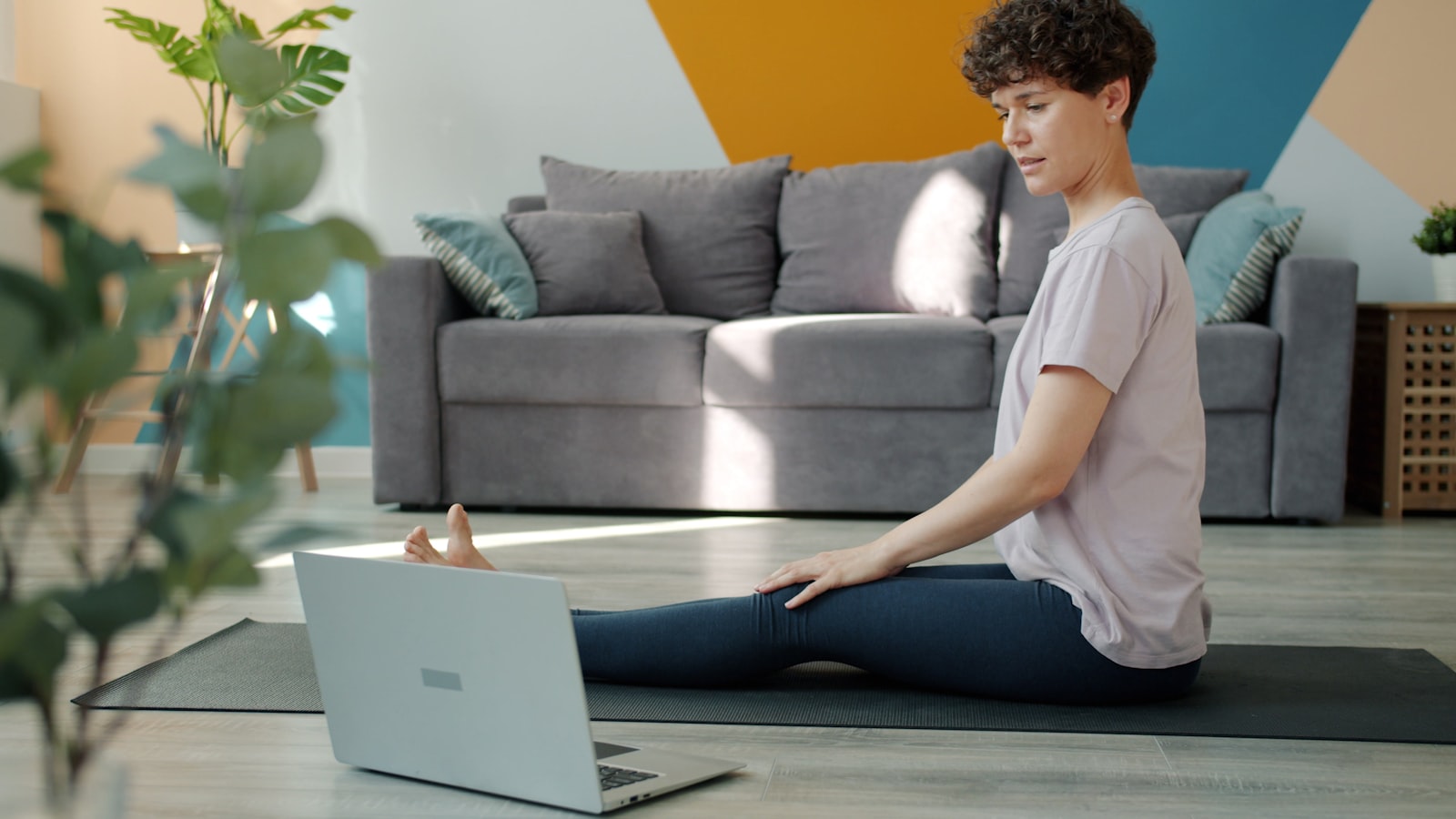
If you want cardio that gets your heart rate up without sounding like you’re rearranging the ceiling for the person downstairs, this is the version to do. Low impact cardio with no jumping at home can still work just fine. You just swap hops and burpees for moves like fast marches, step-backs, skaters without the leap, and squat-to-reaches.
The short answer: yes, no-jumping cardio still counts. Adults are still advised to aim for at least 150 minutes of moderate-intensity aerobic activity per week, and those minutes can be split into smaller chunks across the week rather than done in long sessions all at once. Some activity is better than none, which is very good news if your best workout window is 12 quiet minutes between dinner and a shower. CDC’s adult activity guidelines
What “low impact” actually means here
Low impact does not mean easy. It means the movement is gentler on the landing side because you’re avoiding repeated pounding from jumps, bounds, and hard contacts with the floor. In real life, that makes low-impact cardio a better fit for apartments, shared spaces, early mornings, and anyone who wants a workout that feels doable again tomorrow.
A good no-jumping cardio workout usually has three things:
- one foot on the floor most of the time
- enough pace to raise your breathing rate
- simple patterns you can keep going for 10 to 30 minutes
Think: march, step, reach, tap, drive, repeat. Not glamorous. Very repeatable.
Why no-jumping cardio works at home
Home cardio usually fails for boring reasons. The room is small. The floor is hard. Your neighbors exist. Your motivation is a little fragile after work. Quiet, low-impact cardio solves more of that than the internet’s favorite “go all out” workout ever will.
It also fits the actual guidance. The CDC recommends at least 150 minutes a week of moderate-intensity aerobic activity, and explicitly notes that you can break that activity into smaller chunks during the week. The American Heart Association’s recommendations for adults say the same thing: the goal is regular aerobic activity spread through the week, not one heroic session you need three business days to recover from.
In plain English: a 15-minute quiet workout you’ll do four times this week is more useful than a brutal plyo session you spend the next nine days avoiding.
If you’re building the home-workout habit from scratch, this also pairs well with how to start working out at home and the bigger idea behind streaks beat willpower.
How hard should low impact cardio feel?
Use the talk test. Moderate-intensity cardio should feel like work, but not chaos: you’re breathing harder, yet you can still talk in short sentences. If you can chat like you’re sitting on the couch, pick up the pace. If you can barely get out a word, back off a little. The American Heart Association’s physical activity guidance describes moderate intensity in that same practical way.
A few easy ways to make a no-jumping workout harder without adding impact:
- move faster
- make the arm swing bigger
- add more direction changes
- shorten your rest
- work for longer intervals
- hold light weights if you already tolerate that well
You do not need weights for this to work. Pace does a lot of the job.
The best low impact cardio moves with no jumping
You do not need 25 exercises. You need 6 to 8 that flow well together.
1. Fast march in place
Stand tall, drive one knee up at a time, and swing your arms with intent.
Make it harder: move faster or lift the knees a bit higher.
Make it quieter: keep the feet close to the floor and think soft steps.
2. Step jacks
Do the shape of a jumping jack without the jump: step one foot out as the arms go overhead, then bring it back in and switch sides.
Why it works: bigger upper-body movement raises the demand without extra noise.
3. Step-back taps
Step one foot back into a light toe tap, return to center, then switch.
Make it feel more athletic: add a slight forward reach with both arms as the foot steps back.
4. Skaters without the hop
Step side to side and sweep the trailing foot behind you lightly, like a speed skater in control mode.
Why it works: lateral movement makes basic cardio feel less boring very quickly.
5. Squat to reach
Sit back into a small squat, stand up, and reach both arms overhead.
Keep it low impact: no popping off the floor at the top. Just stand and reach.
6. Knee drive pull-downs
Pull your elbows down as one knee lifts, then switch sides.
Why it works: simple rhythm, easy to speed up, and it feels more like exercise than “just marching around your living room.”
7. Side step with punch-outs
Step side to side while punching straight ahead or slightly across the body.
Apartment bonus: solid effort, very little noise.
8. Toe taps to a low target
Tap alternating feet onto a low step, bottom stair, or other stable low surface.
Important: keep the target low and sturdy. This is cardio, not a surprise balance challenge.
A 20-minute low impact cardio workout with no jumping
Here’s a simple session you can do in a bedroom, living room, or that weird rectangle of open floor between your sofa and the TV.
Warm-up: 3 minutes
- 45 seconds easy march
- 45 seconds shoulder rolls + step touch
- 45 seconds step-back taps
- 45 seconds squat to reach at an easy pace
Main workout: 14 minutes
Do 40 seconds on, 20 seconds off. Complete 2 rounds of these 7 moves:
- Fast march
- Step jacks
- Step-back taps
- Skaters without the hop
- Squat to reach
- Knee drive pull-downs
- Side step punch-outs
Cool-down: 3 minutes
- slow march
- side-to-side step touch
- easy breathing
- light calf and quad stretches if that feels good
That gives you 14 minutes of actual work plus a warm-up and cool-down. Do it 4 times a week and you’ve already built 56 minutes of cardio. Add a couple of walks or another short session and you’re moving toward the weekly target in a very normal, non-heroic way. The CDC’s guidance on adding physical activity as an adult explicitly says those minutes can be broken up.
Need shorter? Use these no-jumping cardio formats
Not every day is a 20-minute day. Fine. The smaller version still counts.
The 10-minute version
Pick 5 moves:
- fast march
- step jacks
- skaters without the hop
- knee drive pull-downs
- side step punch-outs
Do 45 seconds work, 15 seconds transition for 2 rounds.
The “I have almost no energy” version
Pick just 3 moves:
- march
- step-back taps
- squat to reach
Do 30 seconds each for 5 rounds at a calm but steady pace.
This is the part people skip because it seems too small. Don’t. The shortest version is often the one that saves the streak.
How to make it quieter for apartments and roommates
If your main goal is cardio that won’t annoy the building, the secret is not just “avoid jumping.” It’s how you land and transition.
Stay light on the feet
Think “place the foot” instead of “drop the foot.” A soft march is much quieter than a heavy one.
Keep the moves compact
Big dramatic travel often turns into accidental stomping. Smaller steps usually mean less noise and better control.
Use a mat if you have one
Not for miracle claims. Just for a bit of grip and some sound dampening.
Pick lateral and backward steps over chaotic forward shuffles
Forward-moving drills in a small room get messy fast. Side steps and step-backs are usually cleaner and quieter.
Test shoes versus barefoot
Some people are quieter in trainers. Some are quieter barefoot or in grippy socks. Your floor gets the final vote.
Common mistakes with low impact cardio at home
Mistake 1: Going so gentle it stops being cardio
Low impact is gentler. It is not sleepy. If your breathing never changes, increase the arm action or speed.
Mistake 2: Choosing choreography that’s too complicated
You’re not auditioning for anything. Pick moves you can remember half-awake.
Mistake 3: Starting too long
If you’re restarting, 10 to 15 minutes is plenty. The win is finishing in a way that leaves you willing to come back.
Mistake 4: Treating quiet workouts like they don’t count
They count. Especially if they’re the version you’ll actually do in a small apartment on a Wednesday evening.
A simple weekly plan
If you want structure without making this a whole spreadsheet hobby, start here.
Option A: Beginner week
- Monday: 10 minutes
- Wednesday: 15 minutes
- Friday: 10 minutes
- Saturday or Sunday: 20 minutes or a walk
Option B: Build the habit first
- 15 minutes
- 3 to 4 times per week
- same time of day if possible
That is enough to start building rhythm. And again, the CDC is very clear that aerobic activity can be broken into smaller sessions across the week. Their adult activity guidance is refreshingly normal about this.
The honest tradeoff
No-jumping cardio is great for convenience, repeatability, and quiet home workouts. The tradeoff is that you sometimes need to create the challenge with pace and intent instead of relying on impact to do it for you.
That is not a flaw. It just means being a little more deliberate:
- bigger arm drive
- faster transitions
- less standing around
- simple moves you can sustain
Best-at-the-whole-day usually beats best-at-one-exercise you dread.
How OgamicX fits, without making this weird
If low impact cardio is your most repeatable version of exercise, the useful thing is having it feel easy to start and easy to count. That’s where OgamicX fits naturally.
You can use one of the home, no-equipment workout templates, keep the session short, and let it feed the same unified streak as the rest of your day. A quiet 12-minute cardio session still keeps the chain alive. So does logging a meal or closing a fasting window. That matters if you’re the kind of person who quits when life gets messy and five separate apps start feeling like homework.
If you want the broader quiet-at-home angle, this also pairs naturally with quiet apartment workout no jumping. And if your bigger problem is consistency, what makes a fitness app stick is the more honest question underneath all of this.
It’s free to download, no card. The point isn’t to turn your living room march into a giant productivity ritual. It’s to make the small session easy enough to repeat tomorrow.
The bottom line
The best low impact cardio with no jumping at home is the kind you can do quietly, consistently, and without dread. Marches, step jacks, step-backs, no-hop skaters, squat-to-reaches, and knee drives are more than enough to build a solid home cardio routine.
Start with 10 to 20 minutes. Keep the moves simple. Use pace, arm swing, and shorter rests to make it harder instead of adding impact. Then repeat it often enough that it becomes the obvious option, not the heroic one.
That’s usually where the habit starts.

Written by
The OgamicX Team
Tips, guides, and insight on fitness, nutrition, fasting, and building habits that last — from the team behind OgamicX.
About OgamicXFound this useful? Share it.