
Small Space Full Body Workout No Equipment
Small space full body workout no equipment: a simple full-body routine for tiny rooms, apartments, and dorms that actually fits real life.
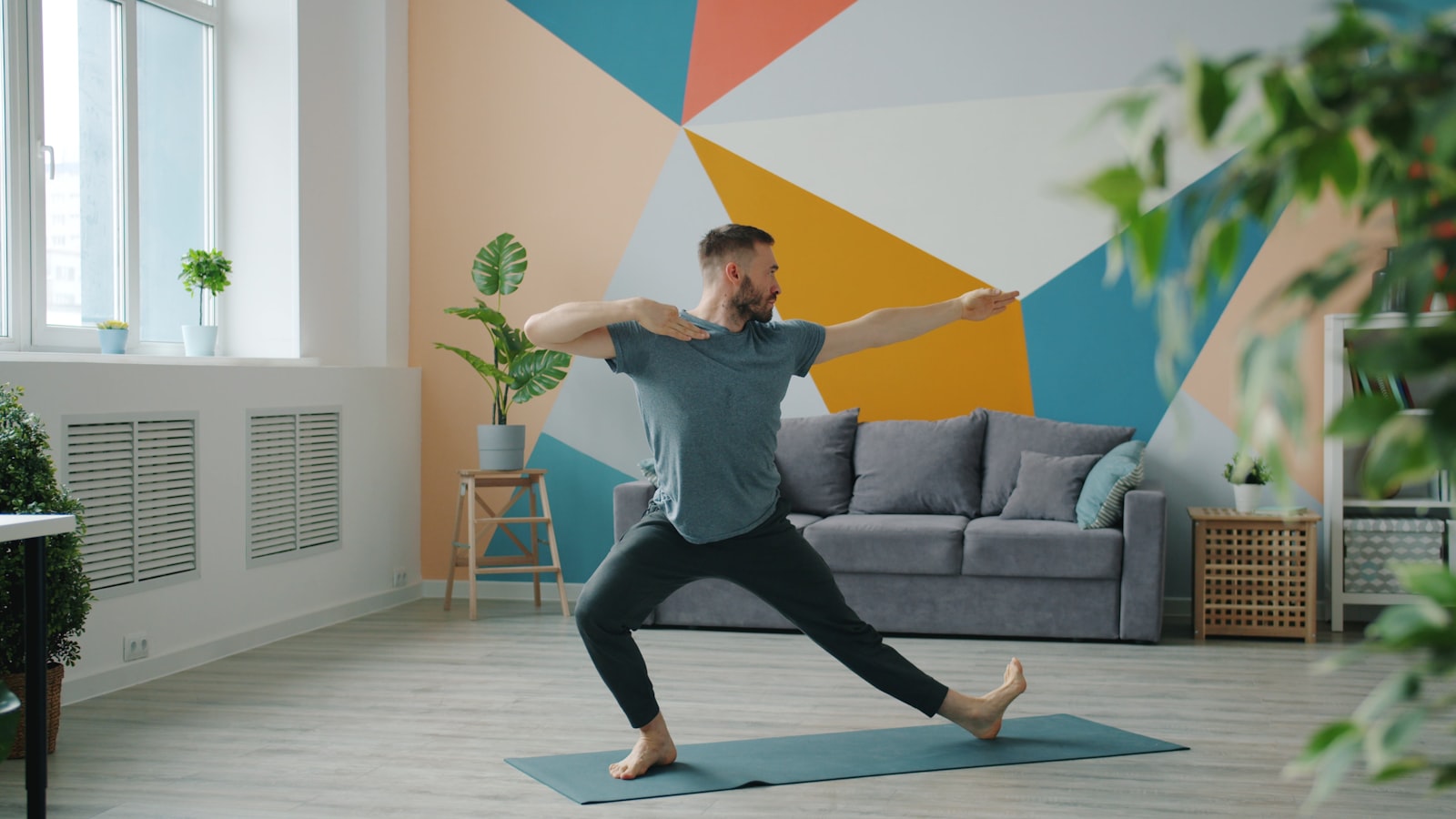
If you want a small space full body workout with no equipment, you do not need a garage gym, a spare room, or even enough floor to pace around. You need about the footprint of a small exercise mat, a short plan, and exercises that do not send you crashing into a coffee table. This routine is built for exactly that: one spot, no gear, full body, beginner-friendly enough to start with, and scalable enough to keep using when it gets easier.
The bigger point is this: the problem usually is not your apartment. It is trying to use workouts designed for open floors, benches, and way more setup than real life allows. A good small-space routine works because it removes friction. You can actually do it on a random Tuesday, which matters a lot more than having the “perfect” plan.
Adults should aim for at least 150 minutes of moderate-intensity activity each week plus muscle-strengthening activity on 2 or more days. And yes, bodyweight training counts. The CDC says both clearly, and WHO makes the same bigger point: some activity is better than none. (cdc.gov) There is also some evidence that simple bodyweight training can improve fitness in previously inactive adults, though the research base is still smaller than the one for traditional gym-based training. (pmc.ncbi.nlm.nih.gov)
Why a small space full body workout works
A full-body plan is the right move when space is tight because you get more done with fewer exercises. Instead of splitting days into chest, legs, core, and so on, you cover your main movement patterns in one session: squat, hinge, push, core, and a little cardio or conditioning.
That setup is also beginner-friendly. An ACSM position stand recommends 2 to 3 days per week of resistance training for novice trainees, which makes a short full-body routine a much more realistic starting point than a six-day schedule you will hate by week two. (pubmed.ncbi.nlm.nih.gov) If you want a bigger-picture habit plan around that, read how to start working out at home.
How much space do you actually need?
Less than you think.
For this workout, you need roughly:
- the length of a small exercise mat
- enough room to lie down comfortably
- enough overhead clearance to raise your arms
- enough side clearance to step out a little without punching furniture
If you can do a plank without your feet hitting the couch, you have got enough room.
The small space full body workout no equipment routine
Do this as a circuit. Move from one exercise to the next, rest briefly, then repeat.
Option A: beginner version
- Bodyweight squat — 10 to 12 reps
- Incline push-up on a bed, couch, or sturdy counter — 8 to 10 reps
- Glute bridge — 12 to 15 reps
- Reverse lunge or split squat hold — 6 to 8 reps each side
- Dead bug — 8 to 10 reps each side
- March in place with high knees — 30 to 45 seconds
Rest 60 to 90 seconds, then repeat for 2 to 4 rounds.
Option B: standard version
- Bodyweight squat — 12 to 15 reps
- Push-up — 6 to 12 reps
- Glute bridge with a 2-second pause at the top — 12 to 15 reps
- Reverse lunge — 8 to 10 reps each side
- Forearm plank — 20 to 40 seconds
- Fast feet or mountain climbers — 20 to 30 seconds
Rest 45 to 75 seconds, then repeat for 3 to 5 rounds.
Option C: quiet apartment version
If you are trying not to annoy downstairs neighbors:
- swap high knees for a brisk march
- swap mountain climbers for slow knee drives
- keep everything smooth, not bouncy
- focus on time under tension instead of impact
You do not need jumping for this to count.
Exercise-by-exercise form cues
Bodyweight squat
Stand with feet about hip- to shoulder-width apart. Sit back and down like you are aiming for a chair, then stand tall.
Think: ribs down, chest tall, knees track over toes, whole foot on the floor.
Too hard? Squat to a chair.
Too easy? Slow the lowering phase to 3 seconds.
Push-up or incline push-up
Use a wall, counter, couch, or the floor depending on your level. Keep your body in one straight line and lower under control.
Think: hands under shoulders, elbows angled slightly back, do not let your hips sag.
Too hard? Go higher with the incline.
Too easy? Lower more slowly or pause at the bottom.
Glute bridge
Lie on your back, knees bent, feet flat. Press through your heels and lift your hips until your body forms a line from shoulders to knees.
Think: squeeze glutes at the top, do not overarch your lower back.
Too easy? Add a pause or go single-leg if you are ready.
Reverse lunge
Step one leg back, lower with control, then return to standing. Reverse lunges usually need less forward space than walking lunges, which is why they are apartment-friendly.
Think: torso tall, front foot planted, move slowly enough to stay balanced.
Too hard? Hold onto a wall or do a split squat without stepping.
Dead bug
Lie on your back with arms up and knees bent. Slowly extend the opposite arm and leg while keeping your lower back gently pressed down.
Think: move slower than you want to. Core work is supposed to look a little boring.
Too hard? Move only your legs.
Too easy? Extend longer and pause.
Plank
Set forearms or hands on the floor and hold a straight line from shoulders to heels.
Think: squeeze glutes, keep ribs tucked, push the floor away.
Too hard? Elevate your hands on a couch or table.
Too easy? Add shoulder taps if space allows.
A 20-minute version you can actually stick with
If you want this to feel simple, use this timer:
- Warm-up: 3 minutes
- Circuit: 6 exercises, 40 seconds work / 20 seconds transition, 3 rounds
- Rest between rounds: 60 seconds
- Cool-down: 2 minutes
That lands you at about 20 minutes, which is a very normal amount of time to fit into a workday or evening.
Warm-up for a tiny room
You do not need an elaborate warm-up. You need one that gets your joints moving and your heart rate slightly up.
Try this for 3 minutes:
- 30 seconds march in place
- 30 seconds arm circles
- 30 seconds bodyweight good mornings
- 30 seconds half squats
- 30 seconds alternating reverse lunges
- 30 seconds plank shoulder taps against a wall or countertop
That is enough to stop your first set from feeling like a betrayal.
How often to do this workout
For most beginners, 2 to 3 sessions per week is the sweet spot. That lines up well with general resistance-training guidance for novices and gives you enough repetition to improve without turning your week into a logistics puzzle. (pubmed.ncbi.nlm.nih.gov)
A simple schedule:
- Monday: small space full body workout
- Wednesday: small space full body workout
- Friday or Saturday: small space full body workout
On other days, walk, stretch lightly, or do nothing dramatic. The win is showing up consistently, not trying to cram seven perfect sessions into a week.
How to make a no-equipment small space workout harder
Once the routine starts feeling easy, do one of these before you go hunting for a more advanced plan:
1. Add a round
Go from 2 rounds to 3, or 3 to 4.
2. Slow the lowering phase
Take 3 seconds down on squats, push-ups, and lunges.
3. Add a pause
Pause at the bottom of the squat, the bottom of the push-up, or the top of the bridge.
4. Shorten rest
Trim 15 seconds off your between-round rest.
5. Upgrade the variation
- squat → split squat
- incline push-up → floor push-up
- glute bridge → single-leg bridge
- dead bug → plank variation
You do not need equipment to create progression. You just need a way to make the same movement slightly more demanding over time. If that is the part you usually get stuck on, progressive overload without weights is the next read.
Common mistakes in a small space full body workout
Doing too much impact
If your space is small, high-impact moves often become sloppy moves. You do not need burpees, broad jumps, or skater hops to get a good session.
Choosing exercises that need more room than you have
Walking lunges, shuttle runs, and giant sprawls sound fun until your shin meets a bed frame.
Making every session a cardio punishment
A full-body workout should train muscles too, not just leave you sweaty and confused.
Starting too long
If you have been inconsistent, start with 15 to 20 minutes. That is long enough to matter and short enough to repeat.
The honest tradeoff
A small space full body workout with no equipment is excellent for building consistency, improving general fitness, and getting stronger as a beginner. It is not the best tool forever for every goal.
If you eventually want to maximize strength, train very specific lifts, or follow a more advanced progression model, you may outgrow a pure no-equipment routine. That is normal. Great for now is still great. A plan you can do in your apartment this week beats an advanced one you keep postponing.
When this kind of workout is perfect
This routine is especially good if you:
- live in a studio, dorm, or crowded apartment
- do not want to jump or make much noise
- are getting back into exercise
- feel overwhelmed by gym setups
- want one default workout you can do without thinking
That last one matters more than people admit. Friction kills habits. Simplicity keeps them alive.
How to stay consistent when space is tight
A few things help:
- leave enough floor space clear the night before
- pair the workout with a cue you already do, like coffee or changing after work
- keep one minimum version for low-energy days: 1 round still counts
- use the same routine long enough to get good at it before swapping exercises every week
The CDC and WHO both emphasize that activity can be accumulated and scaled; it does not need to be elaborate to count. (cdc.gov) If consistency is the harder part for you, streaks beat willpower is the bigger-picture version of this idea.
A simple 1-round minimum version for chaotic days
If your day is a mess, do this once through:
- 10 squats
- 8 incline push-ups
- 10 glute bridges
- 6 reverse lunges each side
- 20-second plank
That is it. Not impressive. Extremely useful.
A missed perfect workout does not help much. A tiny session you actually complete keeps the habit alive.
If you want a done-for-you version
This is exactly where prebuilt no-equipment templates help. Instead of inventing another apartment workout from scratch every time, you open one plan and go. OgamicX includes 30 prebuilt bodyweight templates for home, no-equipment training, and the free tier allows up to 3 active enrollments at a time. If you want more structure than a saved-notes-app workout, that kind of setup removes a lot of the mental load.
And if you are the kind of person who quits because the plan lives in one app, your meals in another, and your streak in a third, that all-in-one setup matters more than people think. Best-at-one-thing often loses to best-at-the-whole-day.
Final takeaway
The best small space full body workout no equipment plan is not the fanciest one. It is the one that fits your room, your noise limits, and your actual life. Start with 2 to 3 sessions a week, keep the exercise list short, and progress by adding control before complexity.
You do not need more square footage. You need a routine that fits inside the one you already have.

Written by
The OgamicX Team
Tips, guides, and insight on fitness, nutrition, fasting, and building habits that last — from the team behind OgamicX.
About OgamicXFound this useful? Share it.