
Stay-at-Home Parent Workout Routine That Fits
Stay-at-home parent workout routine: build it around naps, quiet time, and bedtime so it actually survives real life, not your fantasy schedule.
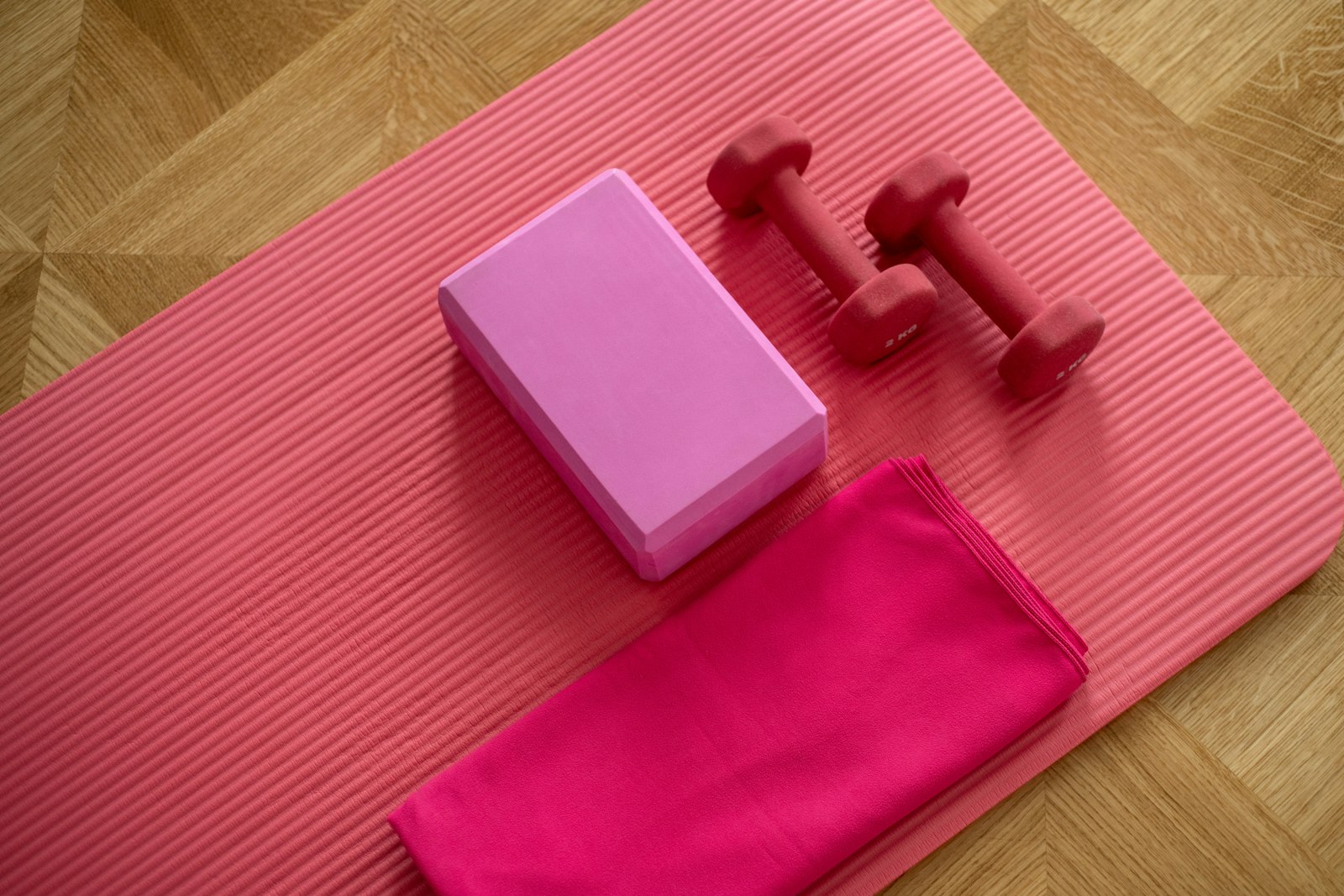
If you’re a stay-at-home parent, the hard part usually isn’t what workout to do. It’s that your day has no clean edges. There’s no commute, no lunch break, no obvious 6 p.m. slot. One kid naps late, the other skips quiet time, someone needs a snack, the morning disappears, and suddenly it’s bedtime and the workout never had a place to land.
So the fix is not “be more disciplined.” It’s to build a stay-at-home parent workout routine around the rhythms your day already has: nap time, quiet time, stroller time, after bedtime, or the 12-minute gap before the house wakes up. Adults are still aiming for at least 150 minutes of moderate activity a week plus muscle-strengthening work on 2 days, and the CDC notes that the total can be broken into smaller chunks — some activity is better than none. The CDC’s adult activity guidelines and their guidance on adding activity as an adult are refreshingly clear on that.
The real problem with a stay-at-home parent workout routine
A lot of “workout schedule for busy moms” advice assumes your day is packed but predictable. That’s not quite the stay-at-home-parent version of busy.
Your problem is usually structureless busy. The day is full, but not fixed. Things blur together. If you wait for a perfect 45-minute block, you’ll be waiting a long time.
That’s why a stay-at-home parent workout routine works better when it answers three questions:
- When will I most likely do it?
- What is the shortest version that still counts?
- What happens when the day goes sideways?
If you decide those in advance, you stop renegotiating with yourself at 2:17 p.m. while someone is asking for berries.
Start with anchors, not a timetable
The best stay-at-home parent workout routine is usually anchor-based, not clock-based.
A clock-based plan sounds like this:
- Work out at 11:00 a.m.
An anchor-based plan sounds like this:
- When the toddler goes down for nap, I do a 15-minute workout.
- When quiet time starts, I do one strength circuit.
- After bedtime, I do my backup session if the day blew up.
- If everyone is melting down, I do 5 minutes and keep the streak alive.
That style of planning lines up with research on implementation intentions — basically, “if X happens, I do Y.” found that these if-then plans can help translate vague intentions into actual movement.
Good anchors for stay-at-home parents
The best anchor is the one that already happens most days, even if the exact time shifts.
Common good anchors:
- After the first nap starts
- At the beginning of quiet time
- Right after school drop-off
- During stroller walk time
- Right after the kids are in bed
- Before anyone else is awake
Bad anchors tend to be vague:
- “Sometime this afternoon”
- “When I get a chance”
- “Once the house is calm”
The house, respectfully, may not get calm.
Pick one primary window and one backup window
This is the part most routines miss. You do not need seven perfect workout appointments. You need:
- one primary window
- one backup window
- one tiny emergency version
That’s the whole system.
For example:
Option 1: Nap-time routine
- Primary: 15–20 minutes when nap starts
- Backup: 10 minutes after bedtime
- Emergency version: 5-minute bodyweight circuit
Option 2: Quiet-time routine
- Primary: 20 minutes at the start of quiet time
- Backup: stroller walk + 5 squats/pushups between rooms
- Emergency version: one circuit only
Option 3: Before-the-house-wakes-up routine
- Primary: 15 minutes before the kids wake
- Backup: after lunch
- Emergency version: 5 minutes before showering
This matters because routines usually fail at the exact moment they become all-or-nothing. If the “real” workout can’t happen, the brain decides the day is lost. A better routine has a smaller version built in. If that pattern sounds familiar, how to work out during nap time is the narrower version of the same problem.
Make the routine small enough to survive real life
A stay-at-home parent workout routine should feel almost suspiciously doable at first.
Why? Because consistency is the win. The CDC notes that activity can be accumulated in smaller chunks, and the federal guidelines emphasize moving more and sitting less rather than waiting for one perfect block. Their adult activity guidance is useful here because it gives permission to stop thinking in all-or-nothing sessions.
That means your baseline routine can be simple:
A realistic weekly template
3 strength days
- 15 to 20 minutes
- Full-body bodyweight work
- Example: squats, incline pushups, glute bridges, rows if you have a band, planks
2 movement days
- 10 to 30 minutes
- Walk, stroller walk, low-impact cardio, short circuit
2 flexible days
- Rest, walk, easy movement, or a 5-minute minimum session
That does two useful things:
- gets you closer to the weekly activity target
- gives the week enough flexibility to survive sick days, bad naps, and mystery chaos
You do not need every session to be long. You need it to be repeatable.
Build the routine around energy, not fantasy
There’s a version of you with a color-coded schedule and a full uninterrupted hour. Lovely person. Maybe not today.
A better stay-at-home parent workout routine respects the energy pattern you actually have.
Ask:
- When am I least interrupted?
- When do I have the best mental energy?
- When am I most likely to talk myself out of it?
For some parents, nap time is best because the house is finally quiet. For others, nap time is for dishes, emails, or staring at a wall in silence. In that case, after bedtime may be more realistic. The point is not to choose the “best” slot on paper. It’s to choose the slot you can repeat.
A quick reality test
Your routine is probably realistic if:
- it asks for 10 to 20 minutes, not an hour
- it uses no equipment or almost none
- it has a backup slot
- it still works after a bad night of sleep
- you can explain it in one sentence
For example:
“At the start of quiet time, I do a 15-minute full-body workout. If that fails, I do 5 minutes after bedtime.”
That is a routine. It’s not glamorous, but it survives contact with children.
Use themes so you don’t have to decide every day
Too much decision-making kills routines. A simple fix is to give each day a loose theme.
Example:
- Monday: strength
- Tuesday: walk
- Wednesday: strength
- Thursday: short cardio
- Friday: strength
- Saturday: family walk or anything active
- Sunday: off or reset
Now you’re not waking up asking, “What should I do today?” You already know the category. That reduces friction. More broadly, research on physical-activity habit formation points in the same direction: repeating a behavior in a stable context helps habit strength grow over time, even if the exact timeline varies a lot by person — the basic idea holds that repetition plus a reliable cue matters.
If your week gets messy, don’t “start over Monday.” Just do the next themed session. That same reset logic is the whole point of what to do when you miss a workout day.
Your minimum version should be embarrassingly easy
This is the move that keeps the routine alive.
Your minimum version is what you do on the messiest day:
- 10 squats
- 10 incline pushups on the counter
- 20 marching steps in place
- 30-second plank
- repeat once
That might take 4 to 5 minutes. Good. The point is not to crush a workout on a hard day. The point is to keep the identity of “I am still someone who shows up.”
There’s good reason to think these tiny, cue-linked reps matter. The evidence on exact habit timelines is messy — there is no magical day where it suddenly locks in for everyone — but the direction is pretty consistent: stable cues and repeated reps beat one heroic week — a better description of how habits actually form than the usual internet “21 days” folklore.
A simple stay-at-home parent workout routine you can steal
Here’s a version that works well if your days are unpredictable.
Level 1: The “my day has no shape” plan
Primary anchor: start of nap or quiet time
Backup anchor: after bedtime
Minimum version: 5 minutes anytime
Monday
15-minute full-body strength
Tuesday
10 to 20-minute walk or low-impact cardio
Wednesday
15-minute full-body strength
Thursday
5 to 15-minute minimum session or walk
Friday
15-minute full-body strength
Saturday
Family movement: walk, park laps, playground circuits
Sunday
Off or reset session
Full-body template
- squats
- incline pushups
- glute bridges
- reverse lunges or split squats
- plank or dead bug
Do each for 30 to 45 seconds, rest briefly, repeat 2 to 3 rounds.
No fancy setup. No commute. No “I need the perfect program first.”
What to do when the kids wreck the plan
They will. That’s not a failure of character or commitment. That’s Tuesday.
When the plan breaks:
- Shrink the session
- Move it to the backup window
- Count a walk if that’s what the day allows
- Resume tomorrow without punishment
Don’t add makeup workouts. Don’t declare the week ruined. Don’t wait for Monday.
A routine survives because it has a recovery plan.
The honest tradeoff
A stay-at-home parent workout routine built this way is excellent for consistency. It is not optimized for people who want long, uninterrupted, highly structured training sessions with lots of equipment and precise progression.
That’s the tradeoff. You’re choosing repeatable over ideal.
For most stay-at-home parents, that’s the right trade. A solid 15-minute routine you can hit three times a week beats a beautiful 60-minute plan that lives in your notes app and never happens.
How OgamicX fits, if you want help keeping the routine alive
This is exactly the kind of problem OgamicX is good at: not “what is the perfect workout plan in theory,” but “how do I keep showing up when the day has no clean shape?”
The useful part is the combination:
- short no-equipment workout templates
- a unified streak that stays alive when you do the small version
- Care Plan check-ins from Ogi when you’re drifting
- one place to keep the day from turning into six half-used apps
So if your real issue is that the workout never gets a slot, the goal isn’t to suddenly become a schedule robot. It’s to give the workout a home inside the day you already have.
Pick one anchor. Pick one backup. Make the minimum version tiny. Then repeat that long enough for it to feel normal.
That’s how a stay-at-home parent workout routine starts working: not when life gets less chaotic, but when the plan gets realistic enough to survive it.

Written by
The OgamicX Team
Tips, guides, and insight on fitness, nutrition, fasting, and building habits that last — from the team behind OgamicX.
About OgamicXFound this useful? Share it.