
Stay Consistent Walking Every Day
Stay consistent walking every day with a simple system: lower the bar, use one cue, and bounce back fast when life knocks your streak sideways.
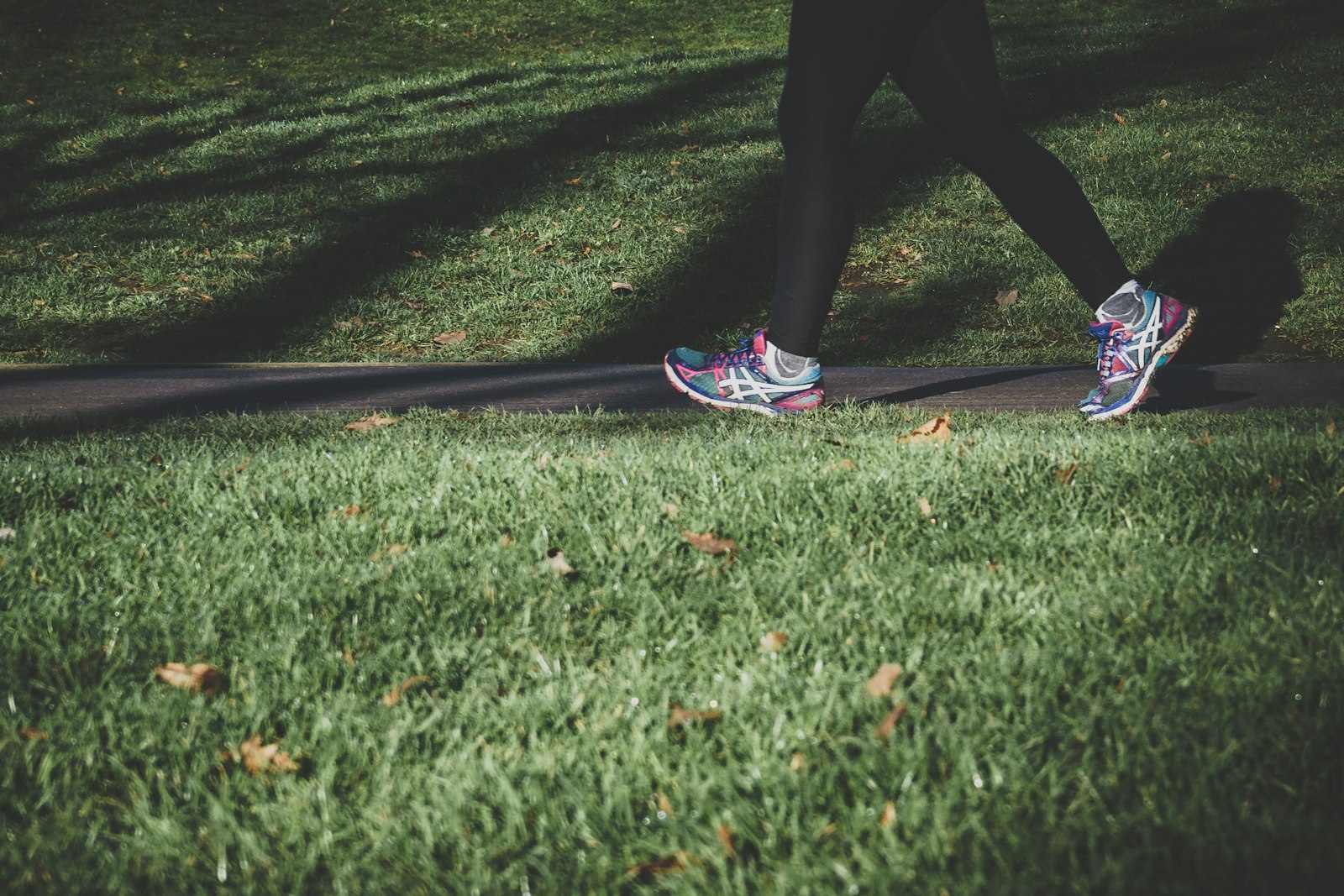
Miss one rainy-day walk and your brain quietly turns it into “I’ll restart Monday.” That’s why most walking streaks fall apart — not because walking is hard, but because the rules are too brittle to survive a normal week.
If you want to stay consistent walking every day, the goal isn’t to become someone who never misses. It’s to build a system that survives messy days: a walk small enough to do when life gets loud, attached to a cue you already have, with one miss treated as a speed bump instead of a verdict on your character. A recent walking-habit trial points the same way — habit formation tracked with repeating a cue-triggered walk over time. a recent walking-habit trial
How to stay consistent walking every day: the short answer
If you want the practical version, here it is:
- Lower the bar so a 5-minute walk still counts.
- Use one reliable cue like after coffee, after lunch, or after your last meeting.
- Follow a never-miss-twice rule instead of chasing perfection.
- Make the streak about showing up, not hitting a huge step number.
- Expect one missed day and plan for it without shame.
That’s the system. Most other advice matters a lot less.
The real reason walking streaks fall apart
Most people don’t quit walking because walking is hard. They quit because they made the rules too brittle.
The classic version is “I’m walking 10,000 steps every single day now.” It sounds clean. It also collapses the first time life gets loud. A streak built on an ideal day dies on a normal one. Public-health guidance focuses on weekly activity totals, not a mandatory daily step target, and CDC guidance says adults can spread activity out across the week instead of chasing one perfect session. CDC’s adult activity guidance
That matters because your walking habit is not a fitness test — it’s a repetition problem. The more often the behavior happens in a consistent context, the more automatic it can become over time.
Translation: make it easy to repeat
Your walking routine needs to survive these days:
- raining
- busy
- slept badly
- got home late
- can’t be bothered
- traveling
- mildly annoyed at everything
If your rule only works when you feel fresh and organized, it’s not a system. It’s a mood.
Start with a minimum viable walk
It sounds too small to matter. It isn’t.
Your minimum viable walk is the shortest version that still lets you say, honestly, “Yep, I kept the habit alive today.” For most people, that’s about 5 minutes. Not 45. Not a heroic loop. Five.
Why so short? Because the point of the minimum is not to impress you. It’s to remove the friction between “I should walk” and “I can do that right now.”
A good minimum viable walk is:
- short enough to do when you’re busy
- easy enough to do when you’re low-energy
- clear enough that there’s no negotiation
Examples:
- walk around the block once
- walk for one song and a half
- walk until the end of the street and back
- walk for 5 minutes after lunch
That tiny version is what keeps the chain alive.
Only owe the minimum on rough days
On a good day, you can do more. On a rough day, you only owe the minimum.
This keeps your habit from becoming all-or-nothing. And all-or-nothing is where most streaks go to die.
Habit-stack your walk onto a cue you already have
If you’re deciding from scratch when to walk every day, you’re making the habit harder than it needs to be.
Pick a cue that already happens almost daily, then place the walk right after it. This is the boring magic. A systematic review and meta-analysis found implementation-intention strategies — the classic “when X happens, I do Y” plan — were more effective than control conditions for increasing physical activity in adults. a systematic review on implementation intentions and physical activity
Good walking cues usually look like this:
- After I pour my morning coffee, I walk for 5 minutes.
- After lunch, I walk before reopening my laptop.
- After my last meeting, I go outside once around the block.
- After dinner, I walk before I sit down properly for the night.
Not all cues are equal. Pick one that is:
- already part of your real life
- hard to forget
- early enough that the day doesn’t swallow it whole
For a lot of people, “after work” is too vague. “After my 1 p.m. lunch” is better. “After I make coffee” is even better.
Use never-miss-twice, not never-miss-once
You are going to miss a day. That is not negative thinking. That is just how calendars work.
The danger is not the missed day itself. It’s the story that follows it: “Well, streak broken. Might as well restart next week.” Research on physical-activity lapse and relapse suggests slips are shaped by real-life situations and triggers, not some simple moral failure. research on lapse and relapse triggers
So steal a better rule: never miss twice.
That means:
- miss today if life happens
- protect tomorrow like it matters
- come back with the smallest possible version
If you miss your evening walk on Wednesday, Thursday is a 5-minute walk day by default. No catching up. No punishment walk. No “I need to do an hour now.” Just re-entry.
This matters because restarting quickly keeps one lapse from becoming a full break in identity. You’re still a person who walks. You just had a Wednesday.
Make the streak about showing up, not numbers
This is the honest tradeoff section.
A walking streak can help a lot. It gives you momentum, a reason not to skip for no reason, and a satisfying little “don’t break the chain” energy. But if you build it badly, it curdles into anxiety.
That usually happens when the streak becomes attached to a big arbitrary target instead of the behavior itself. Suddenly a 20-minute walk “doesn’t count” because it didn’t hit your chosen number. Now the streak isn’t helping you walk. It’s helping you feel behind.
So be explicit: your walking streak is about showing up.
Not:
- hitting 10k every day
- proving you’re disciplined
- earning your food
- making up for sitting
- chasing weight-loss math
Just showing up. The walk counts because you walked.
If you want a harder day sometimes, great. But your baseline rule should protect consistency, not perfection.
What to do on rainy, busy, and low-energy days
This is where most habits get tested for real.
Rainy day
Keep the cue, shrink the route.
Walk under cover if you can. Walk the hallway, your building, the garage, the stairs, the block with an umbrella, the nearest store and back. The point is not aesthetic excellence. It’s continuity.
Busy day
Use the first available gap, not the ideal one.
A 5-minute walk between meetings beats a 30-minute walk that never happened. If your schedule is packed, the minimum viable walk stops being cute and starts being the whole game.
Low-energy day
Make the start microscopic.
Put shoes on. Stand outside. Walk for 2 minutes if 5 sounds insulting. Most of the resistance is at the doorway.
How long does it take for walking to feel automatic?
Usually longer than people want, and less neatly than the internet likes to imply.
Habit formation is not a 21-day magic trick. It tends to take weeks to months, and it varies a lot by person and behavior. If you want the deeper version of that timeline, read how long to form a habit.
And if you want the bigger argument for why consistency systems beat hype, read streaks beat willpower.
A simple daily walking system you can actually keep
If you want to set this up tonight, do this:
1. Pick your cue
Choose one:
- after coffee
- after lunch
- after your last meeting
- after dinner
2. Define your minimum
Pick one:
- 5 minutes
- one block
- one song
- end of the street and back
3. Write the rule plainly
Example:
After lunch, I walk for 5 minutes.
4. Decide your rough-day version now
Example:
If it’s raining or I’m slammed, I still do 5 minutes somewhere.
5. Add the comeback rule
Example:
If I miss one day, the next day is automatically a minimum walk day.
That’s enough. You do not need a more inspiring spreadsheet.
Where OgamicX fits, if you want help keeping the chain alive
If you want help keeping the chain alive, this is exactly what OgamicX is built for: that short walk counts toward the same unified streak as a full workout — one streak across movement, nutrition, and fasting — so one imperfect day doesn’t force a reset, and a streak shield covers the day you genuinely miss. It’s free to download, no card.
But even if you never use it, steal the system: lower the bar, use a cue, and never let one missed walk become a full identity crisis.
Because the walk that keeps the habit alive is not always the impressive one. Usually, it’s the one you almost skipped.
Keep going:

Written by
The OgamicX Team
Tips, guides, and insight on fitness, nutrition, fasting, and building habits that last — from the team behind OgamicX.
About OgamicXFound this useful? Share it.