
What to Do on Day One of Getting Fit
What to do on day one of getting fit: start with 10–20 minutes of easy movement, keep it simple, and make day two obvious so the habit can actually stick.
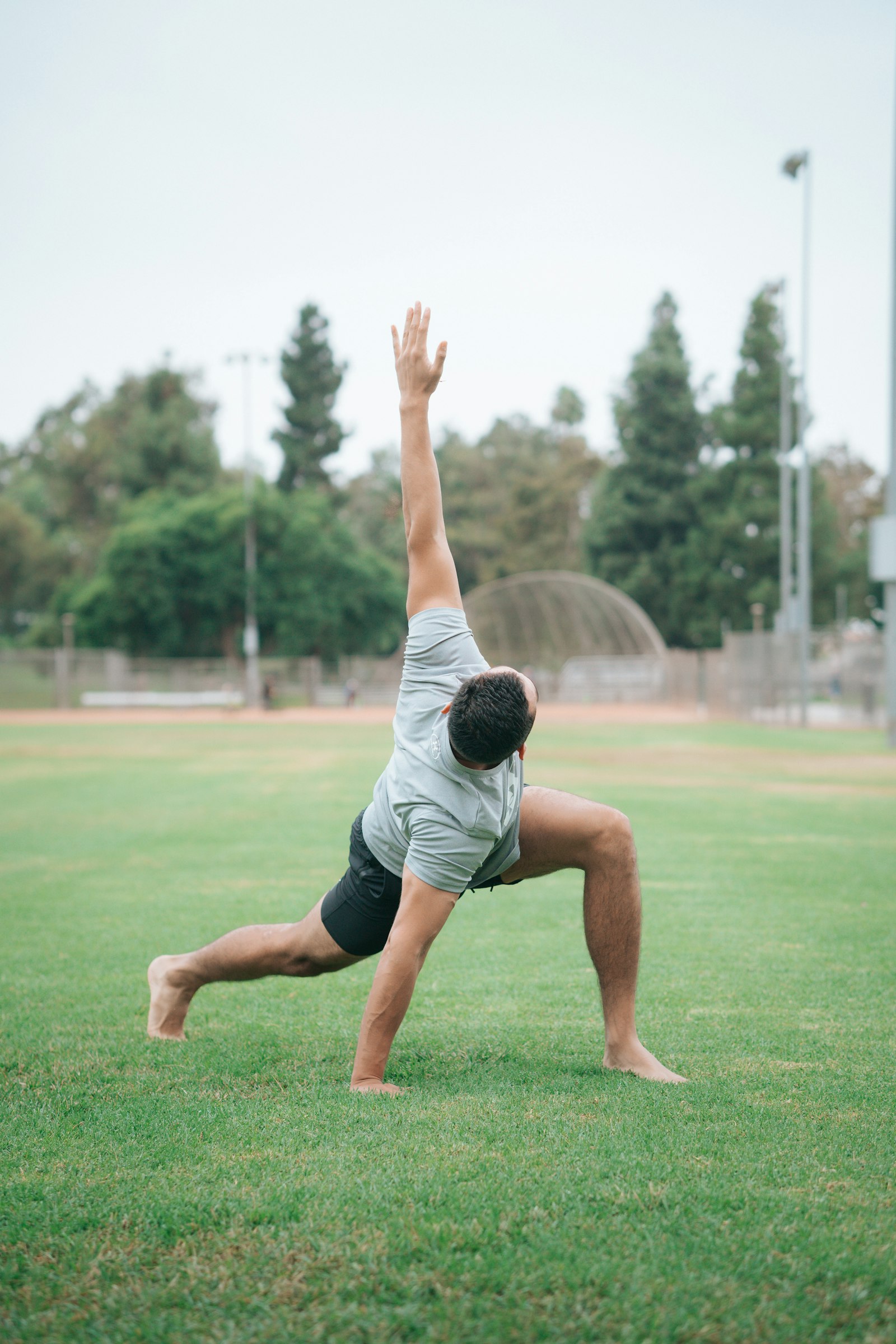
You do not need a perfect plan on day one.
If you want the short version: do 10 to 20 minutes of easy movement, pick a few basic strength moves, choose when you’ll do it again, and stop before this turns into a life-overhaul project. That’s much closer to what beginner guidance actually supports than the classic “go hard because I’m finally motivated” move. The CDC’s adult activity guidance emphasizes that some physical activity is better than none, that activity can be broken into smaller chunks, and that adults build toward 150 minutes of moderate activity per week plus muscle-strengthening activity on 2 days per week over time. CDC’s adult physical activity guidance
What day one is actually for
Day one is not for proving how serious you are.
It’s for reducing friction. The better frame is: your first job is to complete a session you can recover from and repeat. That’s also in line with current mainstream exercise guidance. The CDC says you don’t need to do all your weekly activity at once, and ACSM’s current resistance-training guidance says to train all major muscle groups at least 2 days per week and build gradually over time. CDC’s adult activity overview and ACSM’s resistance-training guidance infographic
That matters because beginners usually blow up day one by treating it like a fitness entrance exam. The smaller win is the real win here.
Your day one plan: keep it stupidly simple
If you’ve done nothing lately, this is enough for a real first day:
- Walk for 5 minutes
- Do 1 round of:
- 8 squats to a chair
- 5 to 8 wall push-ups
- 8 glute bridges
- 20-second plank from knees or hands on a counter
- Walk for 5 more minutes
- Write down when day two will happen
That’s a full first day.
If you’re a little more comfortable moving, do 2 rounds instead of 1. If you’re very out of practice, cut every number in half. The win is finishing and feeling like, “Yeah, I could do that again,” not collapsing on the rug and calling it commitment.
Why this works better than a heroic first workout
Because day one has one enemy: making yourself too sore, too overwhelmed, or too behind to continue.
The federal guidance explicitly allows activity to be broken into smaller chunks across the week, and it emphasizes moving more and sitting less rather than demanding a perfect program from the start. CDC’s adult activity guidance
There is also decent evidence that implementation intentions — basically an if-then plan like “If it’s 7:30 a.m. after coffee, then I do my 10-minute workout” — can help physical activity behavior. A systematic review and meta-analysis of randomized trials on implementation intentions and physical activity found a positive effect overall, though this is still behavior-change research, not magic.
So the first day is less about the workout itself and more about building this sentence:
“If it’s my usual time and place, I start with the tiny version.”
That sentence does more for consistency than hype ever will.
The best day one workout if you’re starting from zero
Let’s make this even more concrete.
Option 1: The “I have zero fitness confidence” version
Do this at home:
- March in place — 1 minute
- Sit-to-stand from a chair — 6 reps
- Wall push-ups — 5 reps
- Glute bridges — 6 reps
- Gentle walk around the room or outside — 2 minutes
Repeat once if you feel okay.
This version is good because it covers the basics: legs, pushing, hips, and a little cardio, without asking for equipment or coordination you don’t have yet.
Option 2: The “I can handle a bit more” version
- Brisk walk — 5 minutes
- Bodyweight squats — 8 to 10 reps
- Incline push-ups on a counter — 6 to 8 reps
- Reverse lunges holding a wall or chair — 5 each side
- Dead bug or plank — 20 seconds
- Walk — 5 minutes
Do 1 to 2 rounds.
Again: stop while you still feel successful. Day one should leave you with momentum, not a limp.
What to do before the workout
You do not need a pre-workout ritual worthy of a documentary.
Just do these four things:
1. Pick a time
Not “sometime today.” A real time.
Behavior-change research is useful here because vague plans are easy to dodge; specific plans are easier to follow through on. The same systematic review on implementation intentions for physical activity supports using concrete if-then plans rather than fuzzy intentions.
Good examples:
- After I pour my morning coffee
- Right after work, before I sit down
- At 7:00 p.m. before dinner
2. Pick a place
The fewer decisions, the better.
Your living room floor, the patch of sidewalk outside, the bedroom next to the bed — boring is good. Friction is what kills beginners, not lack of information.
3. Put on clothes you can move in
That’s enough. No aesthetic transformation required.
4. Lower the bar on purpose
This is the important one. Tell yourself: “My job today is to finish, not impress myself.”
That protects you from the classic first-day mistake of turning a fresh start into a punishment.
What to do after the workout
This part matters more than people think.
After you finish, do three things while you still remember:
1. Write down exactly what you did
Not for data-nerd reasons. For memory.
Something as simple as:
- 10-minute walk
- 1 round of squats, wall push-ups, bridges, plank
- Felt a little awkward, but okay
That note becomes tomorrow’s starting point.
2. Decide the next session immediately
The CDC recommends building activity into your routine and setting aside specific times for it. That’s the spirit of.
Try:
- “Monday, Wednesday, Friday at 7:30 a.m.”
- “Tomorrow after work for 10 minutes”
- “Before dinner on weekdays”
3. Keep the rest of the day normal
Don’t reward yourself by doing nothing for a week because you “started your fitness journey.”
One workout is not a new identity yet. It’s a vote in that direction.
What not to do on day one
This is where a lot of people quietly sabotage themselves.
Don’t test your maximums
No max push-ups. No “let’s see how far I can run.” No punishing finisher because motivation is high.
Your first workout should tell you what feels manageable, not what breaks first.
Don’t buy six things
You do not need resistance bands, a smart watch, matching sets, meal prep containers, and a fresh notebook by sunset.
Use a chair, a wall, and your body first.
Don’t rebuild your entire diet tonight
If you want one nutrition move on day one, make it tiny:
- eat one more protein-forward meal,
- add a fruit or vegetable you’ll actually eat,
- or simply notice what dinner looks like without judging it.
That’s enough. “Get fit” usually dies under the weight of 14 simultaneous promises.
Don’t make soreness the goal
Soreness can happen, especially if you’re new, but it is not proof of effectiveness. If day one leaves you too wrecked to move for three days, it was too much.
A realistic day one checklist
If you like checkboxes, steal this:
Before
- [ ] Choose a 10–20 minute window
- [ ] Choose a place
- [ ] Put on moveable clothes
- [ ] Pick the beginner workout
- [ ] Decide your “tiny version” in case motivation drops
During
- [ ] Start with 5 minutes of walking or marching
- [ ] Do 1 round of basic strength moves
- [ ] Stop while you still feel capable
After
- [ ] Write down what you did
- [ ] Schedule day two
- [ ] Keep the plan small for the first week
That’s a successful first day.
If you’re nervous, this is normal
A lot of beginner-fitness advice skips this part and jumps straight to programs.
But the awkwardness is real. You might feel uncoordinated. You might wonder if this counts. You might keep expecting a more serious version of you to arrive before you begin. That person does not arrive first. Action comes first, then confidence catches up.
That’s one reason small, specific plans work so well. Not because they’re glamorous, but because they survive contact with a real Tuesday.
What the first week should look like after day one
Don’t suddenly scale to seven days because you had one good morning.
A better first-week target is:
- 2 to 3 short strength sessions
- easy walks on most days if you can
- repeat the same simple structure
That fits the general direction of public-health guidance — building toward regular aerobic activity plus muscle-strengthening twice weekly — without pretending you need to hit the full textbook version on day one. CDC’s adult physical activity guidance
A simple first week might look like this:
- Day 1: 10–15 minutes, 1 round
- Day 2: walk only
- Day 3: same workout, maybe 2 rounds
- Day 4: off or easy walk
- Day 5: same workout again
- Weekend: one longer walk if it feels good
Boring? A little. Effective? Much more than the “new me” explosion.
The honest tradeoff
If you’re hoping day one will feel cinematic, this advice may disappoint you.
It is deliberately unsexy. No crushing workout. No dramatic meal reset. No giant promise. The tradeoff is that a smaller first day feels less exciting in the moment.
But it gives you something better: a version you can repeat.
And repetition is the whole game.
When an app actually helps
Not on day one because you need more features. On day one, that’s usually the opposite of helpful.
But if your real pattern is start strong, forget by day four, then quietly drift, a simple tracking setup can earn its keep later in the week. That’s where something like OgamicX fits naturally: one place to log workouts, meals, and fasting if you use it, with one streak across the whole day instead of five separate apps yelling from five different icons. The free version is enough to get started — free to download, no card — and if nutrition becomes part of your plan later, MealScan gives you 3 scans a day free.
Ogi can also check in on you when you start to disappear, which is a lot more useful than an app that goes silent the second your motivation does. If you want the broader beginner setup after this, read how to start working out at home next, or if motivation is your real issue, go to 7 tiny wins for your first week.
If you want one sentence to remember
On day one of getting fit, do a workout small enough to finish, then make day two obvious.
That’s the whole move.
Keep going:

Written by
The OgamicX Team
Tips, guides, and insight on fitness, nutrition, fasting, and building habits that last — from the team behind OgamicX.
About OgamicXFound this useful? Share it.