
Protein Per Day to Keep Muscle While Losing Fat
Protein per day to keep muscle while losing fat: a practical target is 1.8–2.2 g/kg/day, paired with lifting and a sane calorie deficit.
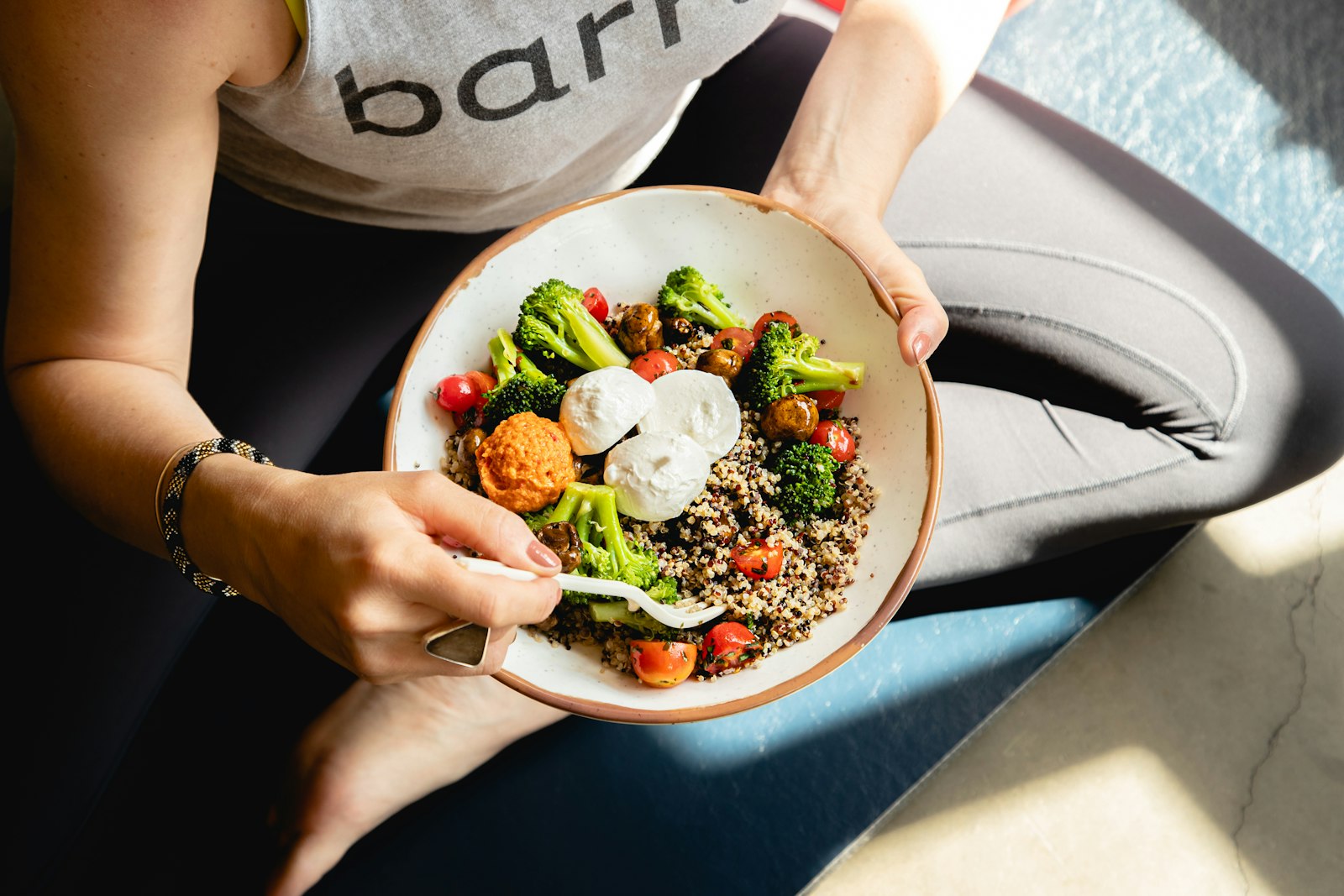
You know the moment. You’ve been eating a little lighter for a couple of weeks, one workout feels weirdly flat, and now you’re side-eyeing a tub of protein powder like it might explain your whole life.
Here’s the short answer: if you’re trying to lose fat without giving up muscle, a practical target is about 1.6 to 2.4 grams of protein per kilogram of body weight per day, with 1.8 to 2.2 g/kg/day as a very usable middle range for many active people dieting and doing resistance training. That sits well above the basic RDA of 0.8 g/kg/day, because cutting calories changes the job protein has to do. Muscle gains plateaued around 1.6 g/kg/day, while notes 1.4–2.0 g/kg/day is a solid range for physically active people.
That said, protein is not magic. It helps most when it’s paired with some kind of resistance training and a calorie deficit that isn’t so aggressive that your body starts giving up lean mass along the way. In one trial during a marked energy deficit, the group eating 2.4 g/kg/day while doing hard training did better for lean body mass than the group at 1.2 g/kg/day. That study is here.
How much protein per day to keep muscle while losing fat
For healthy, active adults in a fat-loss phase, the evidence points toward protein needs that are well above the minimum RDA if the goal is preserving lean mass. A good practical way to think about it is:
- Good baseline: 1.6 g/kg/day
- Safer middle during a cut: 1.8–2.2 g/kg/day
- Upper practical end for harder cuts: up to ~2.4 g/kg/day
You do not need to hit the absolute top of that range for protein to help. In real life, moving from “barely thinking about protein” to “consistently hitting a reasonable daily target” matters more than squeezing out a tiny edge with perfect math. That last bit is a practical inference from the broader evidence, not a magic threshold.
If you want the bigger picture on fat loss itself, read calorie deficit explained.
Why protein needs go up when you’re losing fat
When you eat in a calorie deficit, your body has less total energy coming in. That’s the whole point if fat loss is the goal, but it also raises the risk of losing some lean mass along the way. Higher protein intake helps improve the odds of holding onto more of that lean mass, especially when training stays in the picture. The energy-deficit trial above is one reason this higher-protein advice shows up so often in practice.
That’s also why the plain old RDA of 0.8 g/kg/day is not a great target here. The RDA is about covering basic needs in the general population, not optimizing muscle retention while dieting and lifting. makes that distinction pretty clearly.
The part people skip: lifting matters too
If your goal is “keep muscle while losing fat,” protein cannot do that job by itself. Your body needs a reason to keep muscle. Resistance training is that reason.
The evidence here is refreshingly unsexy: higher protein works best alongside training, not instead of it. looked specifically at resistance training contexts, and the energy-deficit trial paired higher protein with hard exercise.
So if you’re worried about losing muscle, the checklist is usually:
- Eat enough protein
- Keep lifting or doing some form of progressive resistance work
- Don’t crash-diet
- Accept that strength can feel a little weird sometimes during a cut
A few flat workouts do not automatically mean you’re losing all your muscle. Sometimes you’re just under-fueled, under-slept, or emotionally attacked by leg day.
Protein target by body weight: quick examples
Using 1.8 to 2.2 g/kg/day as a practical middle zone:
- 60 kg body weight: about 108 to 132 g/day
- 70 kg: about 126 to 154 g/day
- 80 kg: about 144 to 176 g/day
- 90 kg: about 162 to 198 g/day
If you prefer pounds, divide your body weight in pounds by 2.2 to get kilograms, then multiply by your target range.
This is a range, not a personality test. If you land a bit under some days and a bit over others, that is still real life.
Do you need 1 gram per pound?
Maybe, but not always.
“One gram per pound” is easy to remember, and for plenty of active people it lands somewhere near the evidence-based range. But it’s more of a gym shortcut than a universal law. The research support is stronger for grams-per-kilogram ranges than for one catchy rule applied to everybody. is a better anchor here than bro-math.
If you like simple rules and it helps you stay consistent, fine. If it makes eating feel like homework and you start quitting by Thursday, use the kilogram range instead.
Is more protein always better?
Not really.
There seems to be a point where total daily protein keeps helping less and less. A dose-response systematic review and meta-analysis found benefits across a range of intakes, but not an endless straight-line reward forever.
Translation: going from too little protein to enough is a big deal. Going from enough to extremely high often gives you much smaller returns.
That’s one reason I’d rather see someone consistently hit a sane target than chase a heroic number they can’t maintain. Chicken breast should not become your full-time job.
Does protein timing matter, or just total daily intake?
Total daily intake matters most. That’s the big rock. But spreading protein across the day can still be useful.
A practical way to do that is to split intake across 3 to 4 meals instead of trying to backfill your whole day at night. That’s broadly in line with the sports-nutrition literature, even if the exact per-meal math does not need to rule your life. Since the clearest evidence in this post is about daily totals, I’d keep the meal-distribution advice practical rather than obsessive.
A useful version looks like this:
- Breakfast with actual protein, not just vibes
- Lunch that isn’t secretly all carbs
- Dinner with a real protein source
- Optional snack or shake if needed to fill the gap
You do not need to turn every meal into a lab experiment.
What if you’re plant-based?
You can absolutely hit these targets with plant-based eating, but it usually takes a bit more planning because some plant proteins are less dense per serving than many animal-protein foods. The good news is that you do not need to panic about plant-based eating being automatically disqualified. A recent systematic review and meta-analysis comparing plant and animal protein found a small muscle-mass advantage for animal protein overall, while strength outcomes did not differ significantly.
In practice, plant-based eaters usually do better when they:
- Aim for protein at every meal
- Use a mix of sources instead of relying on one food
- Make peace with higher-volume meals or a shake if needed
This is less about perfection and more about not accidentally finishing the day at half your target.
Signs your protein intake may be too low for a cut
None of these proves anything by itself. But if a few are happening at once, protein is worth checking:
- You’re hungry all the time
- Your meals are low in protein by accident
- Your strength is sliding fast
- Recovery feels worse than expected
- You keep ending the day far below your target
Again, protein is only one lever. Sleep, training quality, and how aggressive your calorie deficit is matter too.
The honest tradeoffs
Higher-protein eating can make a cut easier for a lot of people, but it is not effortless.
It can cost more. It can take more planning. If you’re always grabbing food on the fly, hitting a high target feels very different from theoretically hitting it. And if you go too hard on “high protein” without looking at the rest of your meals, you can end up eating a very weird diet built entirely out of bars, shakes, and dry poultry.
Also, muscle retention during fat loss is never guaranteed. The goal is to improve the odds, not control every variable.
A simple way to set your protein target
If you want this to be useful by tonight, do this:
Option 1: The practical default
Set protein at 1.8 g/kg/day.
That’s high enough to be useful for most active people cutting, without starting at the extreme end. If you’re training hard or your cut is more aggressive, move toward 2.2 g/kg/day.
Option 2: The easy meal method
Take your daily target and split it into 3 or 4 eating moments.
Example: if your target is 140 grams, that could look like:
- 35 g at breakfast
- 35 g at lunch
- 35 g at dinner
- 35 g from a snack or shake
That kind of structure is usually easier to live with than trying to rescue your whole day at 9:40 p.m. with two yogurts and a panic can of tuna.
If consistency is the part that usually falls apart, how to hit your protein goal without supplements would be a natural next read.
Food-first examples that make this easier
You do not need special foods. You need foods you’ll actually keep buying.
A day might look like:
- Greek yogurt and eggs at breakfast
- Chicken, tofu, turkey, or tuna at lunch
- Fish, tempeh, tofu, lentils, or another reliable protein source at dinner
- Cottage cheese, edamame, jerky, milk, or a protein shake to plug holes
If your current intake is low, don’t overhaul everything at once. Add one reliable protein anchor to each meal first.
Where OgamicX fits, if tracking is the part you usually quit
This is the point where a lot of people know the answer and still don’t do it, mostly because food tracking gets annoying fast. If that’s you, the useful move is not “be more disciplined.” It’s making protein easier to notice.
OgamicX can help with that in a low-friction way: you can log meals manually or use AI MealScan to estimate calories and macros from a photo. The free version includes 3 MealScans per day, and Premium unlocks unlimited scans. If you’re trying to keep muscle while losing fat, that makes it easier to spot whether your meals are actually protein-light or whether you just feel like you’re eating enough.
And if you want the bigger picture on how protein fits into fat loss, read calorie deficit explained. Protein helps protect muscle, but the overall structure still matters.
The bottom line
If you’re trying to figure out how much protein per day to keep muscle while losing fat, the practical answer is:
- Start around 1.8 g/kg/day
- Use 1.6–2.4 g/kg/day as the evidence-based range
- Lift regularly
- Spread protein across the day
- Don’t expect protein to save a crash diet
The problem usually isn’t that you need a more extreme number. It’s that you need a target you can hit on ordinary Tuesdays. That’s the one that keeps working.
Keep going:

Written by
The OgamicX Team
Tips, guides, and insight on fitness, nutrition, fasting, and building habits that last — from the team behind OgamicX.
About OgamicXFound this useful? Share it.