
Set Up Your Space So You Work Out More
Set up your space so you work out more with a visible cue, less friction, and a tiny default routine that makes starting feel almost automatic.
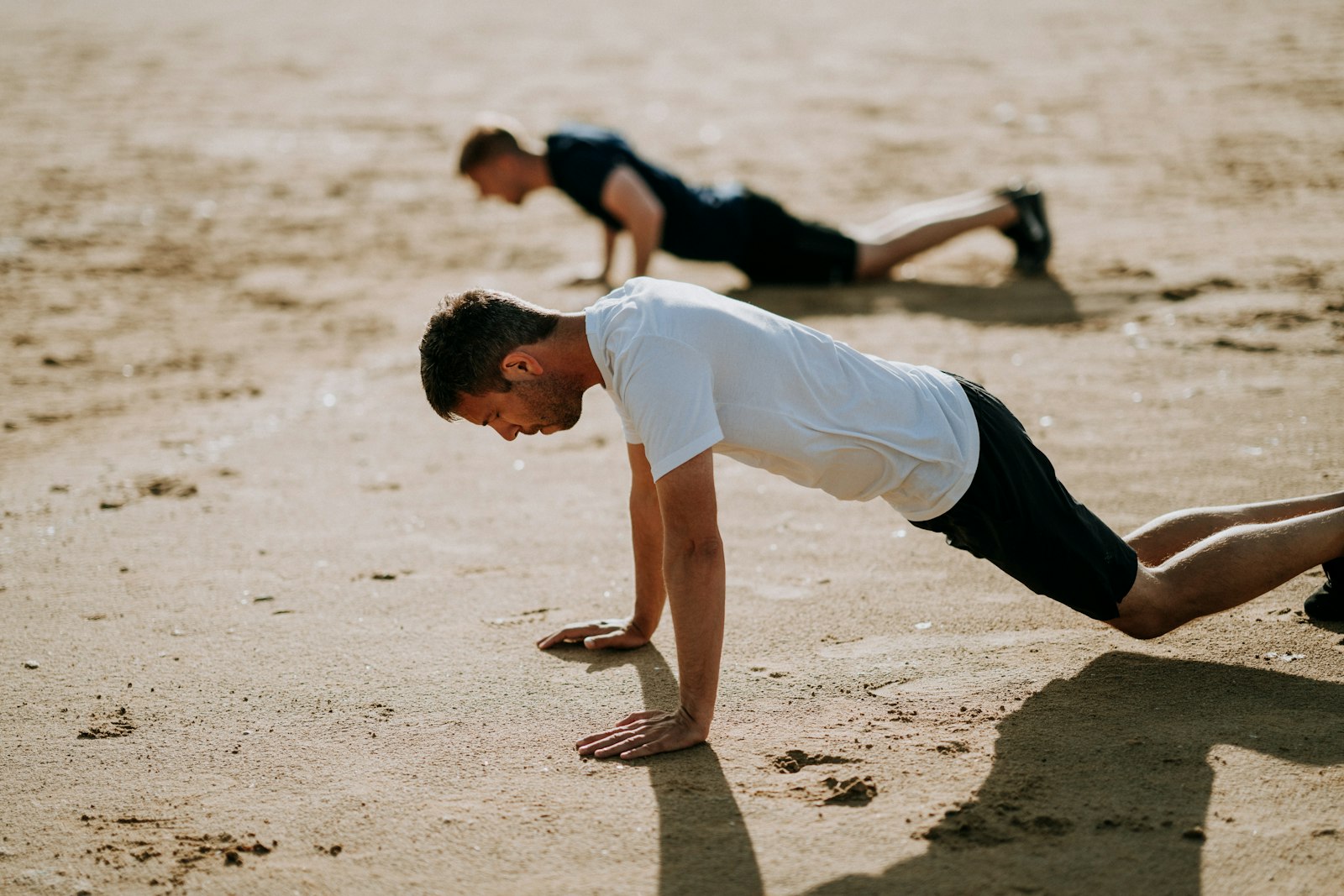
If you want to work out more at home, the goal is not to build a Pinterest gym. It’s to make starting feel almost automatic. The space that gets used is usually simple: a mat you can see, enough floor to lie down, and fewer little frictions between “I should work out” and “I’m already doing the first rep.” That matters because physical-activity habit interventions do appear to improve habit strength, even if the effect is modest and the studies vary quite a bit. a 2023 meta-analysis of physical-activity habit interventions
In other words: your setup matters, but not because it looks impressive. It matters because your environment becomes part of the cue. A visible workout corner, clothes laid out, and a default plan for what happens there all make it easier to start. And if you’re using a no-equipment setup, that’s actually an advantage — less gear, less friction, fewer excuses.
Why your workout space matters more than motivation
Most people think they need more motivation. Usually they need fewer decisions.
There’s decent evidence that physical activity becomes more automatic when it’s repeated in stable contexts, and habit-focused exercise research is built around exactly that cue-and-repetition idea. The honest nuance: not every kind of cue seems equally powerful, but stable context still helps make the behavior easier to repeat. the same meta-analysis on physical-activity habit strength a prospective study on cue consistency and exercise habits
Your home environment also gives off cues for either movement or staying put. Researchers have explicitly described the home as a place that can be structured to encourage or discourage exercise and sedentary behavior. a review of how home environments shape activity behavior
That’s the real job of your workout space:
- reduce startup friction
- make the cue visible
- make the first minute obvious
- keep the space “ready” more often than not
Not fancy. Ready.
The best home workout space is a dedicated corner, not a whole room
You do not need a garage gym. You need one repeatable spot.
For most people, the sweet spot is a small dedicated corner you can get into position in under a minute. Think:
- one mat
- one clear patch of floor
- maybe a small stool, resistance band, or towel
- enough room to squat, lunge, plank, and lie down
That’s it.
Why a corner works better than “I can work out anywhere” is simple: anywhere usually means nowhere. A dedicated place becomes part of the routine. Even if some cue-consistency research found time-of-day and activity type mattered more than place alone, using the same place still removes one more decision from the chain. that cue-consistency study
What your workout corner should include
Keep it boring on purpose.
Good setup:
- mat already out or easy to unroll
- clutter cleared
- shoes nearby if you use them
- phone charger within reach
- screen or speaker ready if you follow guided sessions
Bad setup:
- mat in a closet behind three boxes
- dumbbells under the bed
- laundry on the only open floor patch
- needing to move furniture every time
- needing to decide what workout to do after you finally get started
If setup takes ten minutes, it won’t feel like “a quick workout.” It will feel like a project.
Make the cue visible enough that you trip over it
A good cue is obvious before your brain starts negotiating.
That could be:
- a mat left in sight
- workout clothes on a chair
- shoes by the desk
- a resistance band hanging on a door hook
- a sticky note on the TV stand that says “10 minutes first”
The key is not making the cue inspirational. It’s making it hard to miss.
A visible mat beats a motivational quote every time.
Build for the first 60 seconds, not the full workout
This is where a lot of home setups go wrong. People optimize for the ideal session — 45 perfect minutes, playlist ready, maybe a whole transformation arc in their head. Then real life shows up, and the bar feels too high.
Instead, design your space around the first minute.
Ask:
- Can I step onto the mat immediately?
- Do I know the first move already?
- Is there enough space for a 5-minute version?
- Can I do something useful here even on a low-energy day?
If the answer is yes, you’re much more likely to start. And starting gets more reliable when you make a specific when-where-how plan rather than leaving it vague; a systematic review and meta-analysis found implementation-intention strategies can improve physical activity in adults. a meta-analysis on implementation intentions and physical activity
So pair the space with a default opening script:
- “After I pour coffee, I do 10 squats on the mat.”
- “When I finish work, I change clothes and do the first 5 minutes.”
- “After brushing my teeth at night, I do one short mobility or core session.”
That’s not glamorous. It works better than waiting to feel fired up.
If you want the bigger behavior-change idea here, how to make it easier to start your workout is the same principle from another angle.
Put your space where your life already happens
The best workout corner is rarely the prettiest spot in the house. It’s the one you actually pass.
If you work from home, that might be near your desk. If evenings are your best bet, it might be in the living room. If you want morning workouts, put the cue near the coffee machine, bathroom, or bedroom doorway.
Habit formation depends on repetition in context, so borrowing an existing routine is smarter than trying to invent a whole new life. the 2023 review of habit-formation interventions for physical activity
A few examples:
For morning workouts
Put the mat somewhere you physically see before you open three apps and lose the plot.
Good spots:
- beside the bed
- near the bathroom door
- next to the coffee setup
For after-work workouts
Put the cue between “done with work” and “collapse onto couch.”
Good spots:
- beside your desk
- in the hallway between office and kitchen
- in the living room with the coffee table already shifted
For tiny-apartment workouts
Don’t wait for the perfect open area. Claim one rectangle of floor and protect it.
That can mean:
- storing a basket of random clutter somewhere else
- folding one chair away permanently
- marking a small mat zone you leave clear every day
The space only has to be enough for the kind of workouts you’ll actually do.
Remove friction before it shows up
A lot of “I skipped it” moments are really “too annoying right now” moments.
So do a friction audit. Stand in your intended workout spot and ask what would stop you on a tired Tuesday.
Common problems:
- floor is always messy
- you have to hunt for the mat
- your clothes are in another room
- the room is too cold or too dark
- you need to pick a workout from scratch
- your phone dies halfway through
- family or roommates use the space for everything else
Then fix the boring stuff.
The most useful friction fixes
1. Leave the mat visible.
Out of sight really does become out of mind.
2. Pre-decide the session type.
Monday = short strength. Wednesday = cardio. Friday = recovery or mobility. Less deciding, more doing.
3. Keep your workout clothes stupidly accessible.
Not folded beautifully in a far drawer. Reachable.
4. Make the room usable fast.
If lighting, fan, and floor setup take 30 seconds instead of 5 minutes, you’re more likely to start.
5. Use one device only.
If your workout needs a TV remote, app login, Bluetooth pairing, and speaker setup, your setup is too precious.
The honest rule: the easier it is to begin badly, the more often you’ll begin.
You probably need less equipment than you think
This is good news, because “more stuff” is not the same as “more consistency.” Research on home-based physical activity does look at equipment availability, but the bigger behavior question is still whether the environment supports planning, repetition, and follow-through. a review on home environments, activity, and energy-balance behaviors
For most beginners, more gear creates two problems:
- it raises the mental bar
- it turns the workout into setup management
A mat and a clear plan will beat a pile of neglected equipment most days.
That’s also why bodyweight templates work so well for a home routine: the space can stay simple. You’re not trying to engineer a mini gym. You’re giving yourself a low-friction place to show up.
Give the space a default identity
One underrated trick: make the corner mean one thing.
If the same square of floor is sometimes laundry zone, sometimes doomscroll zone, sometimes “maybe I should stretch,” it has no clear identity. If it’s always the place where you do some kind of session, the cue gets stronger.
That doesn’t mean being rigid. It means naming the function.
Examples:
- “This is the mat corner.”
- “This is where I do my first 10 minutes.”
- “This is where I keep the streak alive.”
It sounds small. Small is the point.
Match the space to the workouts you’ll actually repeat
Don’t set up for the athlete version of you. Set up for the version who’s busy, mildly tired, and one inconvenience away from skipping.
That means choosing a space that works for:
- 10-minute sessions
- low-noise sessions
- no-equipment sessions
- beginner sessions
- “I almost talked myself out of it” sessions
If you only respect the long workout, your space will go unused on ordinary days. But a useful home setup is built for ordinary days.
If that sounds familiar, how to lower the bar so you actually work out pairs nicely with this one.
The honest tradeoff
A home workout space won’t magically make you disciplined. If your routine has no plan, no cue, and no realistic session length, even a beautiful setup won’t save it.
But the reverse is also true: if your environment makes the first step easy, you need less willpower than you think. That’s the whole idea behind habit and implementation-intention research — don’t rely on a mood that comes and goes when you can build a context that nudges the behavior forward. the habit-formation meta-analysis the implementation-intentions meta-analysis
So yes, set up your space. Just don’t confuse “setting up your space” with shopping.
A simple home workout space setup you can do today
If you want the shortest path, do this tonight:
- Pick one repeatable spot in your home.
- Clear enough room for a mat.
- Leave the mat visible.
- Put workout clothes nearby.
- Decide the first move you’ll do there.
- Attach it to an existing cue: coffee, finishing work, brushing teeth.
- Make the default session 10 minutes, not 45.
That’s enough to turn “I should work out more” into something you can actually start repeating.
And if you’re using OgamicX, this is where the app fits naturally: you don’t need a gear-heavy setup to use it well. The bodyweight templates are built for home, the unified streak rewards any session you complete, and the whole thing works best when the friction to begin is low. Free to download, no card.
If you want the bigger idea behind all this, route this one up to the real head term: consistency. Your space is not the whole answer. It’s one of the quiet ways you make showing up easier tomorrow than it was today.

Written by
The OgamicX Team
Tips, guides, and insight on fitness, nutrition, fasting, and building habits that last — from the team behind OgamicX.
About OgamicXFound this useful? Share it.