
Full Body Workout for a Tiny Apartment
Full body workout for a tiny apartment: a quiet, no-equipment routine you can do in a few square feet without annoying your neighbors.
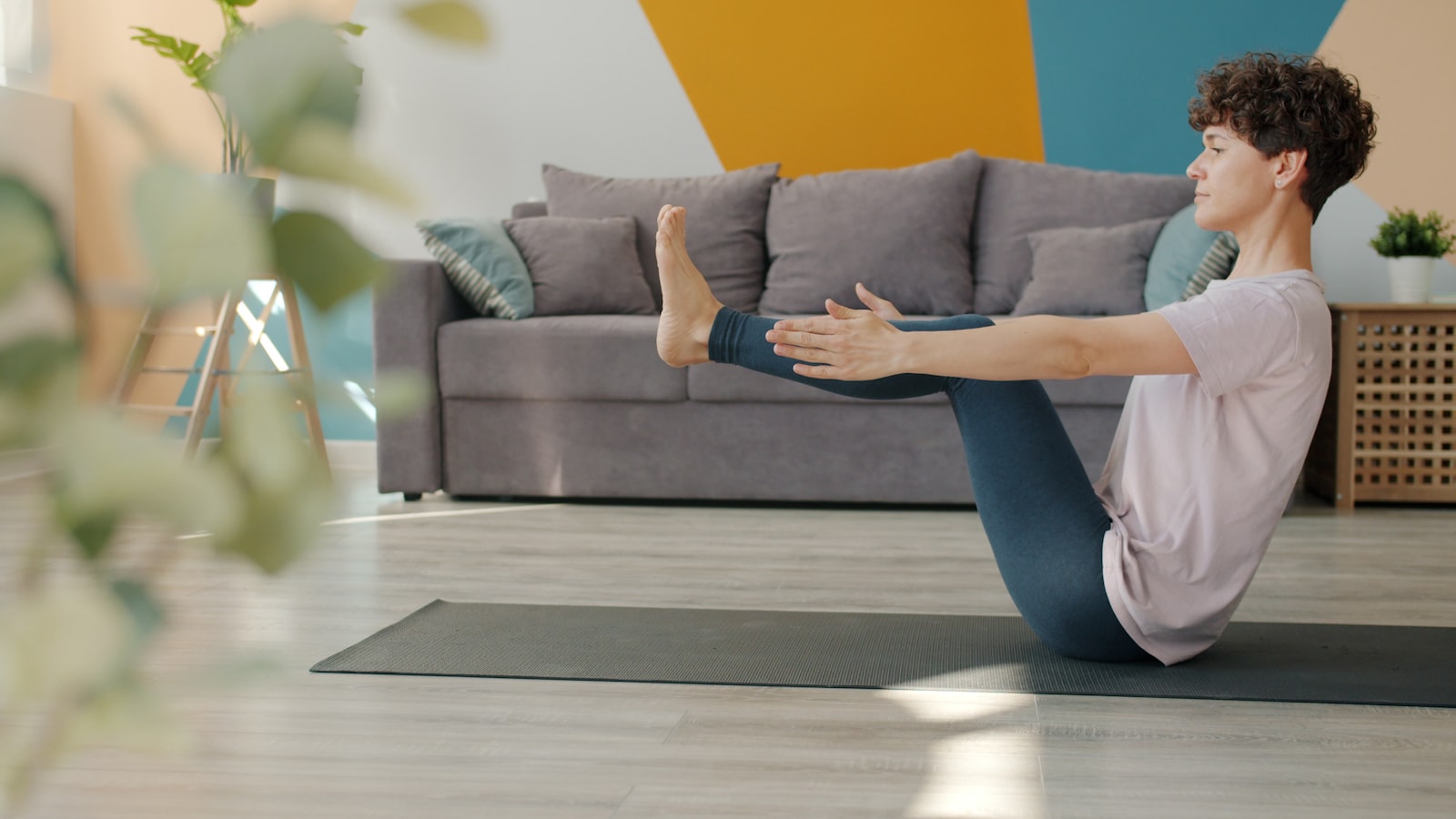
If you want a full body workout for a tiny apartment, you do not need a bench, a rack, or enough floor space to stage a small yoga retreat. You need a few square feet, movements that stay mostly in place, and a session simple enough to repeat.
That’s the whole game.
Below is a real tiny-apartment workout: full body, no equipment, low-noise, beginner-friendly, and built for the kind of living room where the coffee table is already in the way. It won’t look fancy. Good. Fancy is how a lot of home routines die by week two. A basic session you can actually do in a cramped space is much more useful.
If you want the broader version of this idea, start with quiet apartment workout no jumping, then come back here for the full-body template.
A tiny-apartment full body workout should solve three problems
Most “small space” workouts quietly ignore the hard part. They say no equipment, then give you burpees, broad jumps, and three directions of lunges like you live in an empty loft.
A good apartment workout needs to do three things:
- Train your whole body
- Stay mostly in place
- Keep the noise low enough that you don’t feel weird doing it at 7 a.m.
That still counts. The U.S. Physical Activity Guidelines say adults should do muscle-strengthening activity on 2 or more days per week, and they also say inactive people can start with small amounts of activity and build up over time rather than waiting for some magical threshold where it suddenly “counts.” The guidelines Q&A says that plainly.
The 20-minute full body workout that fits in a tiny apartment
You can do this in roughly the footprint of a yoga mat. If your apartment is truly tiny, clear enough room to lie down and stand up safely. That’s it.
Format
- Work: 40 seconds
- Rest/transition: 20 seconds
- Exercises: 5
- Rounds: 4
- Total time: 20 minutes
If 40 seconds feels too long right now, start with 30 seconds work / 30 seconds rest for 3 rounds. Consistency beats pretending you’re advanced.
The workout
1. Squat to chair-height
Stand with feet about shoulder-width apart. Sit your hips back, lower until your thighs are as low as you can control comfortably, then stand back up.
What it trains: quads, glutes, core
Tiny-apartment note: no jumping, no traveling, no stomping
Make it easier: squat to a couch or chair
Make it harder: slow the lowering for 3 seconds
2. Incline push-up on couch or countertop
Put your hands on a stable couch edge, sturdy table, or countertop. Walk your feet back, keep your body in one line, lower your chest toward your hands, then press away.
What it trains: chest, shoulders, triceps, core
Tiny-apartment note: much more apartment-friendly than dropping to the floor if space is tight
Make it easier: use a higher surface
Make it harder: use the arm of the couch or the floor
3. Reverse lunge or split squat in place
Step one foot back and lower straight down, then come back up. If stepping feels awkward in a cramped room, keep your feet planted in a split stance and do split squats instead.
What it trains: legs, glutes, balance
Tiny-apartment note: in-place version saves space and avoids banging into furniture
Make it easier: hold onto a wall
Make it harder: add a pause at the bottom
4. Glute bridge
Lie on your back, knees bent, feet flat. Press through your heels, lift your hips, squeeze at the top, lower slowly.
What it trains: glutes, hamstrings, core
Tiny-apartment note: zero impact, basically silent
Make it easier: smaller range of motion
Make it harder: single-leg bridge or 2-second hold at the top
5. Forearm plank or dead bug
If you like planks, do a forearm plank. If planks make you hate your life immediately, do dead bugs: lie on your back, arms up, knees bent, slowly lower opposite arm and leg, then switch.
What it trains: core stability
Tiny-apartment note: both options stay in one spot and make almost no noise
Make it easier: plank from knees, or shorten the work interval
Make it harder: longer exhale on each rep, slower tempo
The easiest way to run it without overthinking
If you want the workout in plain English:
- 40 sec squats
- 20 sec rest
- 40 sec incline push-ups
- 20 sec rest
- 40 sec reverse lunges or split squats
- 20 sec rest
- 40 sec glute bridges
- 20 sec rest
- 40 sec plank or dead bugs
- 20 sec rest
Repeat that circuit 4 times.
That gives you a full-body session with:
- a squat pattern
- a push
- a single-leg lower-body move
- a hip-dominant posterior-chain move
- a core exercise
That’s enough for a real workout. It does not need ten more exercises to become legitimate.
Why this works, even if it looks basic
Because basic works when you repeat it.
The practical point here is simple: train the major muscle groups regularly, and don’t make the plan so complicated that you stop doing it. ACSM’s recent resistance-training guidance says the quiet part out loud: the best resistance training program is the one you will actually do, and a solid starting point is training all major muscle groups at least 2 days per week and building gradually over time. Their 2026 infographic spells that out.
That matters in a tiny apartment because your main bottleneck usually is not exercise science. It’s friction:
- no room
- no gear
- too much noise
- too many setup steps
- feeling like it’s not “real” unless it looks intense
A workout that clears those bottlenecks is often the better workout.
If your bigger problem is getting yourself to start in the first place, how to start working out at home is the better next read.
How often to do this tiny-apartment full body workout
For most beginners, start with 2 to 3 days per week on nonconsecutive days.
A simple week could look like:
- Monday: full body workout
- Wednesday: full body workout
- Saturday: optional third session or a walk
That lines up well with public-health guidance for muscle-strengthening frequency. If you are also trying to move more overall, the broader guideline for adults is 150 to 300 minutes of moderate-intensity aerobic activity per week alongside those strength sessions. The federal guidelines Q&A covers that progression clearly.
If that sounds like a lot, don’t panic. Your first job is not to build the perfect week. Your first job is to become the person who can do this workout regularly in the space you already have.
How to make it quieter for real apartment life
This is where most home-workout advice gets weirdly unrealistic, so here are the actual tiny-apartment tweaks:
Use a towel or mat
Not because it’s spiritual. Because it cuts noise and stops your hands from sliding.
Replace jumps with tempo
Want more challenge? Don’t jump. Slow down the lowering phase, add a pause, or reduce your rest.
Pick in-place versions
Reverse lunges, split squats, bridges, planks, incline push-ups. These all work without needing runway.
Don’t slam reps
Quiet feet, controlled lowering, no collapsing to the floor between exercises.
Use furniture strategically
A couch turns push-ups into a beginner-friendly upper-body exercise without needing extra gear. A chair gives you a depth target for squats.
How to progress without buying equipment
You do not need dumbbells on day one. You need progression.
Here are the cleanest ways to make this routine harder over time:
1. Add time
Go from 30 seconds to 40, then 45.
2. Add rounds
Move from 3 rounds to 4, then maybe 5.
3. Slow the tempo
Try a 3-second lowering on squats and push-ups.
4. Upgrade the variation
- couch push-up → lower surface → floor push-up
- bodyweight squat → pause squat
- glute bridge → single-leg bridge
- split squat with wall support → unsupported split squat
5. Shorten rest
Cut the 20-second transitions to 15 if you want a denser session.
This is also where tracking helps. Not in a spreadsheet-goblin way. Just enough to know whether you did 3 rounds last week and 4 this week.
What if you’re very new?
Then start smaller. Seriously.
Here’s a 10-minute version:
- 30 sec squats
- 30 sec rest
- 30 sec incline push-ups
- 30 sec rest
- 30 sec split squats
- 30 sec rest
- 30 sec glute bridges
- 30 sec rest
- 30 sec dead bugs
- 30 sec rest
Do 2 rounds.
That still gives you a full body workout that fits in a tiny apartment. It still counts. The CDC notes that a single session of moderate-to-vigorous physical activity can provide immediate health benefits, so the session you do today matters even if it is short and unglamorous.
The honest tradeoff
A tiny-apartment no-equipment workout is great for:
- getting started
- building consistency
- improving general strength and fitness
- removing excuses related to space, gear, and setup
It is not the ideal setup if you’re an advanced lifter chasing very specific strength goals. At some point, more external resistance helps. But that is not a reason to do nothing now.
For most people searching this keyword, the better question is not “Is this the optimal program for the next 5 years?” It is “Can I do a real full-body session in the apartment I have tonight?”
The answer is yes.
If you want this to be easier to repeat
This is exactly where an app can help — not because you need more features, but because remembering what to do is its own form of friction.
OgamicX fits this use case pretty naturally:
- it has 30 prebuilt bodyweight templates for home, no-equipment training
- the free tier lets you enroll in up to 3 active templates
- it keeps your workouts, meals, fasting, and streak in one place instead of splitting your day across a pile of apps
That matters if you’re the kind of person who does better when the workout is already there and opening one app feels easier than assembling your routine from scratch. It’s also free to download, no card, which is a much better fit for “I just need something I’ll actually use in my apartment” than another fake-trial situation.
A simple plan for this week
If you want the lowest-friction version, do this:
Day 1
20-minute workout above
Day 2
Walk, stretch lightly, or rest
Day 3
20-minute workout above
Day 4
Rest
Day 5
Optional third session, or repeat the 10-minute version
That is enough to get moving. Enough to train your whole body. Enough to stop waiting for a bigger apartment, a better setup, or a more serious version of yourself.
Bottom line
The best full body workout for a tiny apartment is the one that stays:
- simple
- quiet
- repeatable
- full-body enough to matter
- small enough to start today
Clear a little floor space. Do squats, push-ups, split squats, bridges, and core work. Run it for 20 minutes, 2 to 3 times a week, and let boring consistency do its job.
Keep going:

Written by
The OgamicX Team
Tips, guides, and insight on fitness, nutrition, fasting, and building habits that last — from the team behind OgamicX.
About OgamicXFound this useful? Share it.