
Beginner Home Workout Routine From Scratch
Beginner home workout routine from scratch: build a simple 3-day full-body plan you can actually stick with, plus sets, reps, and a realistic first month.
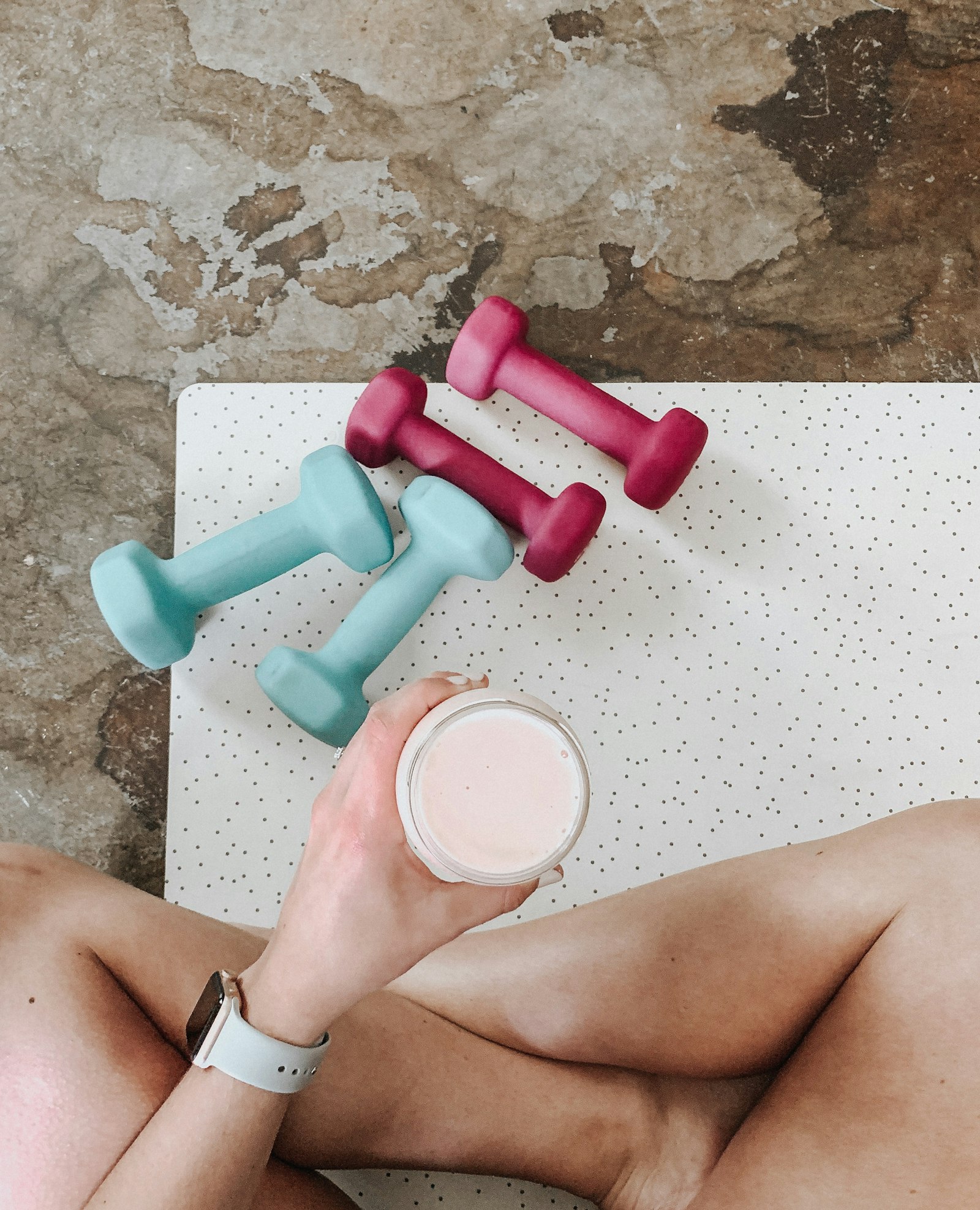
You know the moment. You’re standing in your room in old shorts, phone in hand, maybe after saving six different “beginner workout” videos, and realizing none of them actually tell you how to build a routine you can keep doing next week.
Here’s the honest answer: a good beginner home workout routine from scratch is usually 2 to 3 full-body sessions per week, 20 to 40 minutes each, built around a squat, a push, a pull, a hinge, and a core move. That is enough to start. You do not need a fancy split, a punishment circuit, or a personality transplant. U.S. physical activity guidance says adults should do muscle-strengthening activity on at least 2 days per week, and it also makes the underrated point that activity does not have to happen in one giant block to count.
This post will walk you through how to build that routine step by step, how many exercises to use, how hard it should feel, and what a real first month can look like if you’re starting from zero.
What a beginner home workout routine should actually do
Your first routine has one job: make consistency easy enough that you keep showing up.
Not maximize soreness. Not imitate an advanced gym plan. Not leave you lying on the floor rethinking your life choices.
A beginner routine should do four things well:
- train the main movement patterns
- fit your actual week
- be hard enough to count, but not so hard you dread it
- leave room to improve a little over time
If it does those four things, it’s good enough.
If you want the mindset piece behind that, read streaks beat willpower. It pairs well with this post because the real beginner problem is usually not knowledge. It’s repeatability.
Start with the simplest possible weekly structure
If you’re building from scratch, start here.
Option A: the best default for most beginners
3 full-body workouts per week
For example:
- Monday
- Wednesday
- Friday
This works well because you practice the same basic movements often enough to improve, but you still get recovery days between sessions.
Option B: if your week is chaotic
2 full-body workouts per week
For example:
- Tuesday
- Saturday
Two sessions is still enough to begin. Honestly, two sessions you repeat for eight weeks beats a “perfect” four-day plan you abandon after nine days.
Option C: if you’re restless and want short sessions
3 short workouts + 2 walks
For example:
- Mon: workout
- Tue: brisk walk
- Wed: workout
- Thu: brisk walk
- Fri: workout
That setup is completely legitimate. The U.S. guidelines explicitly say aerobic activity can be spread throughout the week rather than saved for one heroic session.
Build each workout around 5 movement patterns
This is the easiest way to create balance without overthinking it.
Your workout should usually include:
- Squat — sit down / stand up pattern
- Push — push something away from you
- Pull — pull something toward you
- Hinge — bend at the hips / work the back side of the body
- Core — resist movement, brace, stay stable
You do one exercise from each category. That’s the whole structure.
Here’s what those patterns can look like at home.
1) Squat options
- chair squat
- bodyweight squat
- box squat to couch or bed
- split squat hold
2) Push options
- wall push-up
- incline push-up on counter or table
- knee push-up
- regular push-up
3) Pull options
Pulling is the hardest pattern to train at home with no equipment, so don’t feel weird if this section takes creativity.
Options:
- backpack row
- towel row using a sturdy anchor
- band row if you own a resistance band
- reverse snow angels on the floor as a light starter
If you do have a backpack, loading it with books is the easiest beginner fix.
4) Hinge options
- glute bridge
- hip hinge drill
- backpack Romanian deadlift
- good morning with bodyweight
5) Core options
- dead bug
- bird dog
- plank
- side plank
- hollow hold regression
That gives you a routine with structure without needing a spreadsheet.
How many exercises, sets, and reps to use
This is where most beginners get lost, mostly because the internet loves to make simple things look expensive.
Start with this:
The easiest working template
- 5 exercises total
- 2 sets each
- 8 to 12 reps per set
- Rest 60 to 90 seconds between sets
- 20 to 40 minutes total
That’s it.
For planks or holds:
- 20 to 30 seconds
- repeat for 2 sets
Why 8 to 12 reps? Because it’s a beginner-friendly range that gives you room to learn the movement and still make the set feel like real work without turning every workout into a max-effort event.
If 8 reps feels impossible with good form, make the exercise easier. If 12 reps feels laughably easy, make it a little harder.
How hard should a beginner workout feel?
Hard enough that it feels like exercise. Easy enough that you could do it again in two days.
A useful rule: stop most sets with 1 to 3 reps left in the tank. In other words, the set should feel challenging, but not like a survival test.
For cardio or circuits, the CDC recommends the talk test as a practical intensity cue: during moderate effort, you can talk but not sing; during vigorous effort, saying more than a few words gets tough. It’s an aerobic guideline, but the spirit is useful here too: if every session leaves you wrecked and gasping, you probably started too hot.
A lot of people quit because they mistake “destroyed” for “effective.” It usually isn’t.
Your first beginner home workout routine from scratch
If you want a plug-and-play starting point, use this.
Workout A
- Chair squat — 2 sets of 8 to 12
- Wall or incline push-up — 2 sets of 8 to 12
- Backpack row — 2 sets of 8 to 12
- Glute bridge — 2 sets of 10 to 15
- Dead bug — 2 sets of 6 to 10 per side
Weekly schedule
- Monday: Workout A
- Wednesday: Workout A
- Friday: Workout A
Do that for 2 weeks.
Then, if it feels manageable, move to this slightly more varied setup.
Workout A
- Chair squat
- Incline push-up
- Backpack row
- Glute bridge
- Dead bug
Workout B
- Reverse lunge or split squat
- Knee push-up or incline push-up
- Towel row or backpack row
- Hip hinge or backpack Romanian deadlift
- Bird dog or plank
Weekly schedule
- Monday: Workout A
- Wednesday: Workout B
- Friday: Workout A
Next week: - Monday: Workout B
- Wednesday: Workout A
- Friday: Workout B
That is a real routine. Not a placeholder. Not “better than nothing.” A real beginner routine.
How to warm up without turning it into a second workout
Your warm-up should take about 5 minutes, not 25.
Try this:
- 1 minute easy marching or walking in place
- 8 bodyweight good mornings
- 8 chair squats
- 8 wall push-ups
- 20 seconds arm circles
- 20 seconds gentle plank or dead bug setup breathing
The goal is simple: raise your temperature a little, move the joints you’re about to use, and make the first working set feel less abrupt.
If you need a longer on-ramp, do one very easy practice set of the first two exercises.
How to progress your routine without rebuilding it every week
Beginners often think progress means finding new exercises constantly. Usually it doesn’t. Usually it means repeating the same basics long enough to get better at them.
Use this order:
Progression step 1: add reps
If your target is 8 to 12 reps, keep the exercise the same until you can do all sets near the top of the range with good form.
Example:
- Week 1: 8 reps
- Week 2: 9 reps
- Week 3: 10 reps
Progression step 2: add a set
Once 2 sets feels solid, move to 3 sets for one or two exercises first.
Progression step 3: make the exercise harder
Examples:
- chair squat → bodyweight squat → split squat
- wall push-up → incline push-up → knee push-up → floor push-up
- glute bridge → single-leg glute bridge
- light backpack row → heavier backpack row
Progression step 4: slow the tempo
Pause for a second at the bottom. Lower more slowly. Keep the movement cleaner.
That’s enough progression for your first 8 to 12 weeks.
If you want the next layer after this, make home workouts more effective is the natural follow-up.
What beginners usually get wrong
1) They build for their best day, not their normal week
If your plan only works when you sleep great, finish work on time, and feel unusually inspired, it is not a beginner plan. It is fantasy fiction.
Build for your most average week.
2) They choose too many exercises
A 12-exercise workout is not more serious. It’s just harder to start.
Five movements is plenty.
3) They make every session a test
Your routine is practice, not audition day.
4) They change the plan too fast
You do not need muscle confusion. You need familiarity.
5) They skip pulling movements
This happens all the time in home workouts because push-ups are obvious and rows are annoying. Still, try to include some form of pull if you can, even if it’s just a backpack row.
A realistic 4-week roadmap
Here’s what “from scratch” can look like without the usual fake transformation nonsense.
Week 1
Your main job is learning the exercises and proving you can show up three times.
Week 2
The movements feel a little less clunky. You may still be sore, but the routine starts to feel familiar.
Week 3
You’re ready to add a rep here and there, or add a third set to one exercise.
Week 4
You should know whether the routine fits your life. That matters more than whether it looked impressive on paper.
That’s the honest early win: not perfection, not dramatic body changes, but a routine that has stopped feeling random.
How to know your routine is working
Good signs:
- you’re completing your planned sessions
- exercises feel more controlled
- reps that felt hard now feel normal
- you recover well enough to train again
- starting feels less mentally heavy than it did in week one
That is progress.
The physical activity guidelines also make an underrated point here: some activity is better than none, and benefits begin accumulating even at lower amounts of movement than the full weekly target. That’s useful because it gives beginners permission to think in weeks, not all-or-nothing days.
When to switch from full-body beginner workouts
Stay with a simple full-body routine until at least one of these is true:
- you’ve been consistent for 8 to 12 weeks
- your sessions are getting too long
- you want more volume than three full-body days comfortably allow
- your goals have become more specific
Until then, full-body training is usually the right call.
It gives you more practice with the basics, which beginners need most.
If you want the shortest possible version
If this whole post felt like a lot, here’s the stripped-down answer.
Build your beginner home workout routine like this:
- train 2 to 3 days per week
- do 5 exercises each workout
- include squat, push, pull, hinge, core
- do 2 sets of 8 to 12 reps
- keep workouts around 20 to 40 minutes
- make it a little harder only when the current version feels solid
That’s the skeleton.
The honest tradeoff
A home routine built from scratch is great for starting, building consistency, and getting stronger with basic movements. It is not perfect for every person forever.
If you’re an advanced lifter who wants very precise loading, or you love chasing tiny programming details, eventually you may want more equipment or a more specialized plan. But that is not a beginner problem. The beginner problem is usually getting from “I should work out” to “I know exactly what I’m doing on Monday.”
Solve that first.
If you want help turning this into a repeatable habit
Once you’ve built the routine, the next challenge is usually not exercise science. It’s remembering, repeating, and not letting one missed day turn into three.
That’s where OgamicX can fit naturally. If you want structure without building everything yourself, the app includes 30 prebuilt bodyweight templates, with up to 3 active template enrollments on the free tier, and adults really do benefit from making strength work a regular weekly habit rather than an occasional burst of motivation. The app side is simply a tool that makes that easier to repeat.
If you want the next step after this, read how to start working out at home. It helps with the part after the plan: actually showing up and sticking with it.
Keep going:

Written by
The OgamicX Team
Tips, guides, and insight on fitness, nutrition, fasting, and building habits that last — from the team behind OgamicX.
About OgamicXFound this useful? Share it.