
How to Warm Up Before a Home Workout
How to warm up before a home workout: a simple 5–8 minute no-equipment routine that gets you loose, ready, and less likely to skip the session.
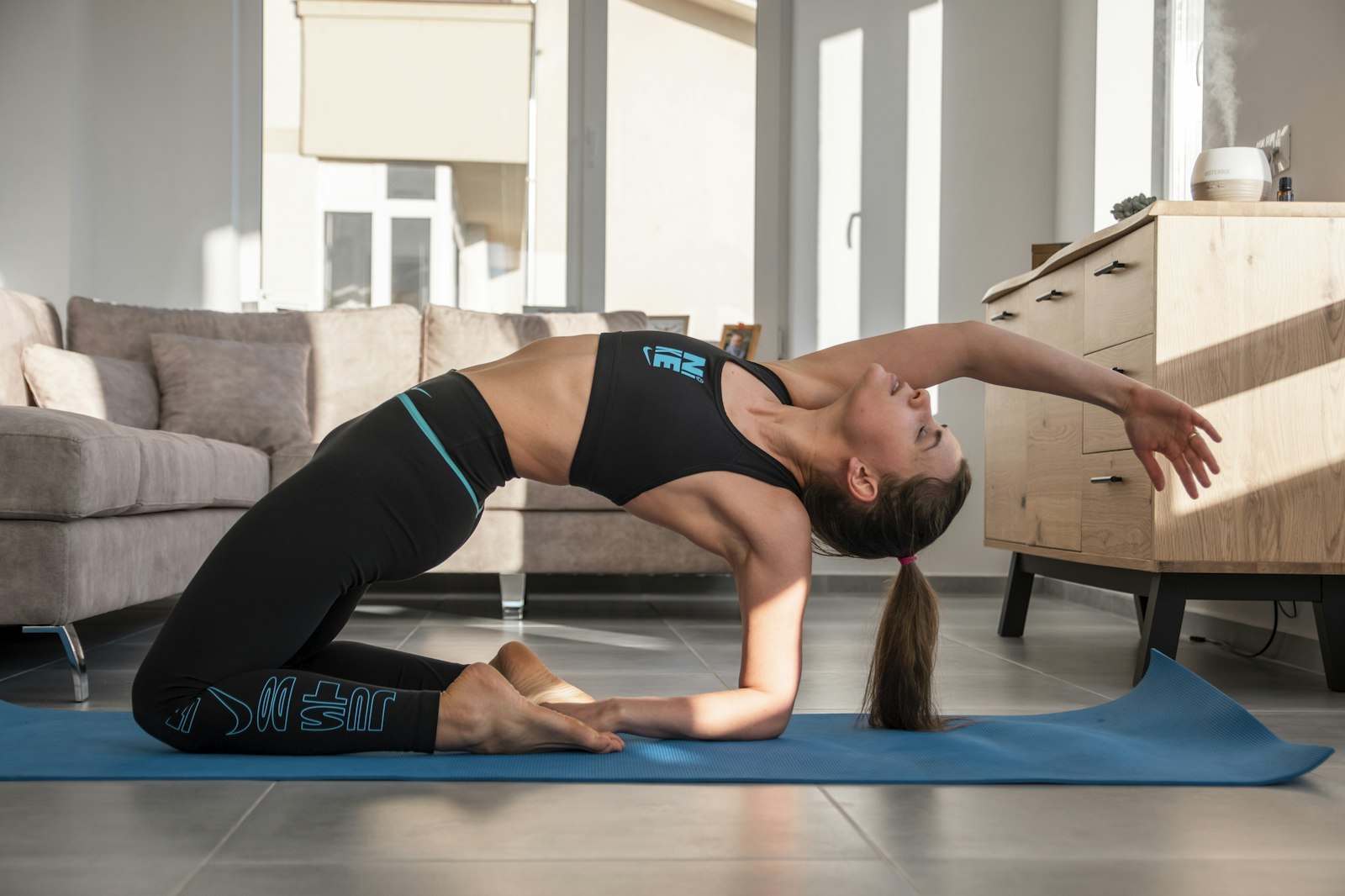
How to Warm Up Before a Home Workout No Equipment
You know the moment. You roll out the mat, open your workout, and your brain goes, “I’ll just start with the first set.” A few arm circles, maybe. One dramatic toe touch if you’re feeling responsible. Then straight into squats, push-ups, or burpees while your body is still very much in desk-chair mode.
The short answer: before a home workout, spend 5 to 8 minutes gradually raising your heart rate, moving the joints you’re about to use, and rehearsing the patterns in the session. For most people, that is enough to feel less rusty and more ready. Public-health guidance from the NHS recommends warming up by starting slowly and building up, and its sample routine takes at least 6 minutes. A recent sports-medicine review also found the strongest evidence for dynamic warm-ups improving readiness and immediate performance, while injury-reduction claims are more supportive than magical. the NHS warm-up guide
How to warm up before a home workout no equipment
If you want the short version, use this:
- 1–2 minutes: easy whole-body movement
March in place, step side to side, or do light step jacks. - 2–3 minutes: dynamic mobility
Arm circles, shoulder rolls, hip circles, ankle rocks, leg swings. - 2–3 minutes: workout-specific rehearsal
Slow bodyweight squats, wall push-up reps, glute bridges, dead bugs, or easy lunges.
That structure works because it follows the boring-but-useful rule most good warm-ups share: start easy, then move toward the session you’re actually about to do. The NHS models the same progression by opening with marching before layering in bigger movements. the NHS warm-up guide
What a good no-equipment warm-up is actually trying to do
A warm-up is not punishment before the real workout. It has three jobs.
1. Raise the temperature a bit
You want to feel slightly warmer, slightly looser, and a little more awake. The NHS warm-up guidance starts with easy marching for exactly that reason: you are preparing the body before asking for harder effort. the NHS warm-up guide
2. Move the joints you’re about to use
If your workout includes squats, lunges, push-ups, planks, or mountain climbers, your ankles, hips, shoulders, and trunk should all get a little attention first. This is where dynamic movement fits better than long static holds right before training. The current review literature generally favors dynamic warm-ups before exercise because they support immediate performance and readiness better than static stretching as the main pre-workout strategy.
3. Rehearse the pattern
The best warm-up for squats includes some kind of squat. The best warm-up for push-ups includes some kind of pushing pattern. That sounds obvious, but it is the part most people skip. A good warm-up closes the gap between “awake” and “ready” by making the first hard reps feel less abrupt.
A simple 6-minute warm-up before a home workout
If you mostly do bodyweight workouts at home, this is a solid default.
Minute 1: March in place
Swing your arms. Breathe normally. Don’t overthink it.
Minute 2: Step jacks or side steps
If your downstairs neighbors hate you, keep it low impact.
Minute 3: Arm circles + shoulder rolls
20 to 30 seconds each way.
Minute 4: Hip circles + ankle rocks
Easy circles at the hips, then rock the knee gently forward over the foot.
Minute 5: 8 slow bodyweight squats + 5 alternating reverse lunges each side
You’re practicing, not grinding.
Minute 6: 20 seconds dead bug or bird dog + 20 seconds wall push-up pattern + 20 seconds plank shoulder taps
Now your trunk, shoulders, and hips have all checked in.
Simple is the point. The warm-up you remember will beat the perfect routine you skip.
Best warm-up moves for common home workouts
Not every home workout needs the exact same prep. Match the warm-up to the session.
Before a lower-body home workout
Use:
- Marching or step-ups on the spot
- Hip circles
- Leg swings front to back
- Ankle rocks
- Slow squats
- Reverse lunges
- Glute bridges
Why these work: they prepare the hips, knees, and ankles, then rehearse the patterns you’ll use.
Before an upper-body home workout
Use:
- Marching with arm swings
- Arm circles
- Shoulder rolls
- Scapular wall slides
- Wall push-up reps
- Slow bear plank shoulder taps
Why these work: they bring some blood flow up and let pressing muscles join the meeting before the real sets.
Before a cardio or HIIT home workout
Use:
- Marching
- Step jacks
- High-knee march
- Butt kicks
- Lateral steps
- Half-speed versions of the workout moves
For HIIT especially, the useful part is the dynamic, activity-specific prep, not random stretching for the sake of stretching.
Do you need to stretch before a home workout?
Usually, dynamic stretching yes, long static stretching no—at least not as the main event right before you train.
Dynamic stretching means movement: leg swings, arm circles, torso rotations, inchworms, easy lunges. Static stretching means holding one position for a while. The best-supported middle ground is that dynamic warm-ups generally fit better before training when the goal is to feel ready and perform well right away. Static stretching is not evil; it just usually fits better after training or as separate mobility work.
How long should a warm-up be?
For most home workouts, 5 to 10 minutes is enough.
That is consistent with public guidance: the NHS sample routine runs at least 6 minutes, and the practical point is to warm up long enough to feel ready, not to turn the warm-up into a second workout. the NHS warm-up guide
The honest answer: the right warm-up is the shortest one that gets you from stiff and distracted to loose and ready.
Signs your warm-up is working
You do not need to be sweating hard. You’re looking for:
- breathing a little faster
- joints feeling less creaky
- first reps feeling smoother
- better balance and coordination
- less “whoa, okay, not yet” on the first hard movement
That first-set shock is usually the cue that your warm-up was too short, too random, or skipped entirely.
Common warm-up mistakes at home
Starting too hard
If your warm-up already feels like round one of the workout, you missed the point. Build gradually instead of launching straight into hard effort. the NHS warm-up guide
Doing only one token stretch
One hamstring reach is not a warm-up. It’s a ritual.
Warming up parts you won’t use, skipping parts you will
Ten neck rolls before a squat workout is not the move. Your ankles and hips would like a word.
Making it so complicated you stop doing it
A warm-up you can remember beats a perfect one you skip.
A no-equipment warm-up for beginners
If you’re getting back into exercise, keep it even simpler:
- 2 minutes marching in place
- 30 seconds shoulder rolls
- 30 seconds arm circles
- 30 seconds hip circles
- 30 seconds ankle rocks
- 5 chair squats or box squats
- 5 wall push-ups
- 20 seconds bird dog
That’s enough. You do not need an athlete’s pregame ritual to earn a beginner home workout. If your bigger goal is consistency, manageable beats impressive. For the rest of that puzzle, how to start working out at home pairs well with this.
What to do if you still feel stiff
Two honest possibilities:
-
You need a slightly longer ramp.
Add another 2 to 3 minutes of easy movement and repeat the specific pattern. -
That movement needs a regression today.
If deep lunges feel rough cold, use shorter-range lunges first. If floor push-ups feel abrupt, start with wall or countertop reps.
That is not cheating. It is just better sequencing.
The evidence, without pretending it’s cleaner than it is
Here’s the useful middle ground: dynamic warm-ups are well supported for improving immediate readiness and performance, and there is some supportive evidence for injury reduction in certain settings, but exercise science is not handing us one perfect universal six-move recipe for every person and every workout. The practical advice stays the same: warm up dynamically, make it specific to the session, and build intensity gradually. the NHS warm-up guide
Less exciting than “three secret moves,” sure. Much more useful.
How this fits into a better home-workout routine
A warm-up works best when it is attached to the workout itself, not treated like an optional bonus round. If you always do the same short sequence before you train, it becomes a cue: shoes on, mat down, march, move, start.
That is also why the best warm-up is usually boring in the best way. Repeatable beats impressive. If you want the next layer after this, make home workouts more effective is the natural follow-up.
A late, earned app bridge
This is one of those places where an app can help a little, but only if it removes friction instead of adding another task. If you’re the kind of person who opens a home workout and then spends five minutes deciding what counts as “ready,” having a simple routine saved inside the same place as your workout helps.
That’s one thing OgamicX does well when you’re training at home: your workouts, streaks, and the rest of the day live in one app, so the warm-up can become part of the ritual instead of a thing you keep forgetting. If you miss a day, Ogi can check in on you like a supportive nudge, not a guilt trip. It’s free to download, no card.
A good default to keep
If you only remember one thing, make it this:
Warm up for 5 to 8 minutes, move dynamically, and rehearse the workout you’re about to do.
That’s the whole game. Not fancy. Not equipment-heavy. Just enough to stop asking your body to go from laptop mode to lunge mode with no introduction.
Keep going:
- Beginner Home Workout Routine From Scratch
- Full Body Bodyweight Workout for Absolute Beginners
- The 10-Minute Workout for Busy People (No Gym)
- Morning Workout Routine at Home (No Equipment)
- Track Home Workout Progress Without a Gym
- Bodyweight Leg Workout at Home for Beginners
- At Home Couples Workout No Equipment That Sticks

Written by
The OgamicX Team
Tips, guides, and insight on fitness, nutrition, fasting, and building habits that last — from the team behind OgamicX.
About OgamicXFound this useful? Share it.