
The 10-Minute Workout for Busy People (No Gym)
A real 10-minute full-body workout you can do on the floor tonight — no gym, no gear — plus the honest answer to whether 10 minutes is enough.
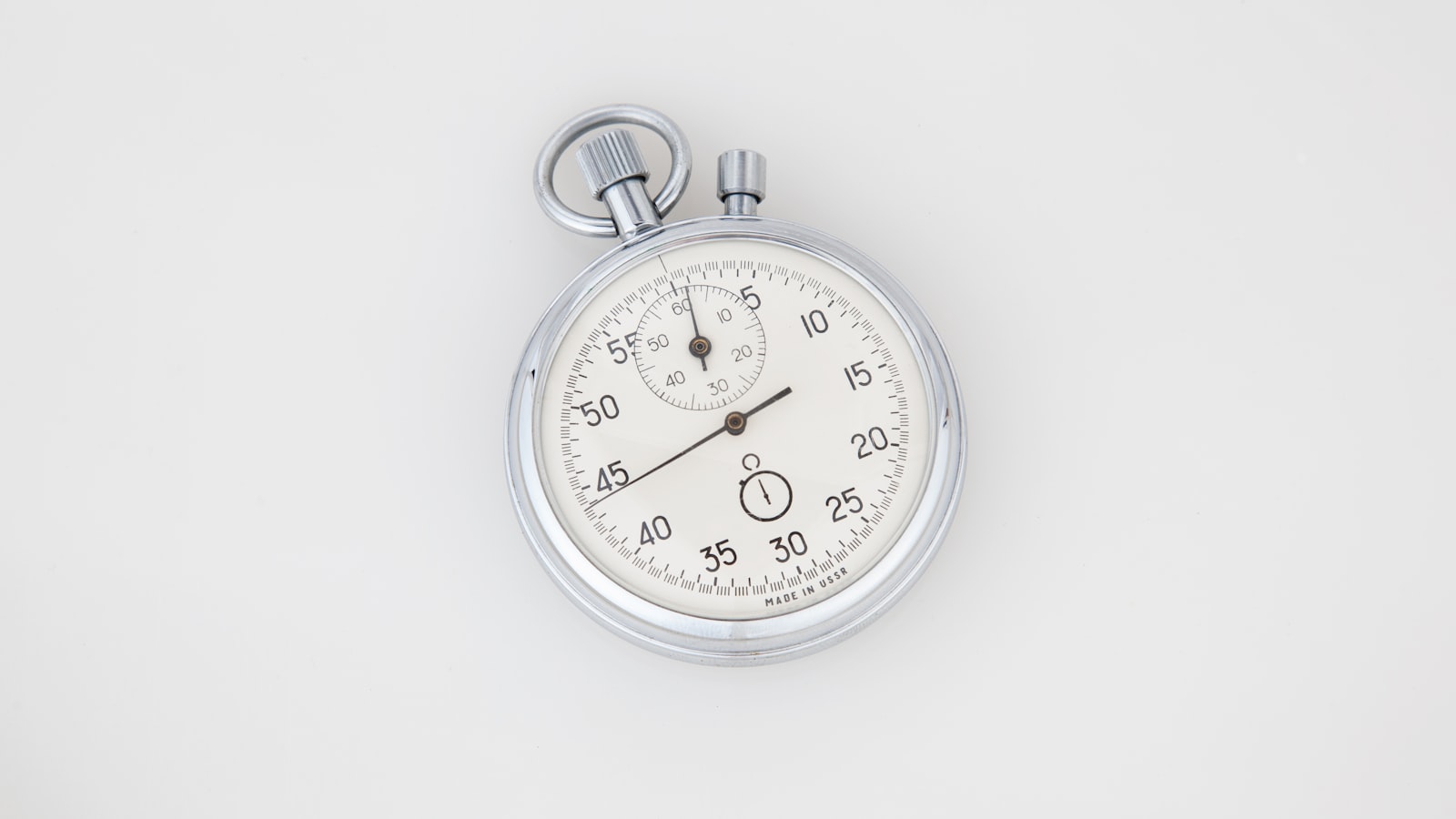
Ten minutes is the length of a coffee break, a commute podcast intro, or the time you’ll spend tonight deciding what to watch before watching nothing. It is also, it turns out, enough time for a genuinely useful full-body workout — no gym, no equipment, no commute, no changing into a special outfit. The reason most busy people never do the ten-minute version isn’t that it doesn’t work. It’s that nobody handed them one to do, so “I’ll work out later” stays vague and later never arrives.
So here’s the concrete thing: a real 10-minute workout for busy people you can do on your living-room floor tonight, plus an honest answer to the question lurking underneath it — is ten minutes actually enough, or am I kidding myself? (Spoiler: more than you’d think, and the research backs it up.) This is the smallest complete session in the toolkit. If you’ve got a bit more room some days, the 20-minute bodyweight HIIT is the next size up — but start here, because ten minutes is the one that actually fits.
Why a 10-minute workout feels too small to count (and why that’s a lie)
The mental block is real: ten minutes feels like nothing, so your brain files it under “not worth changing clothes for.” We’ve been trained by gym culture and fitness content to believe a workout has to hurt for an hour and leave you crawling, or it doesn’t qualify. So a ten-minute session sits in an awkward dead zone — too short to feel legitimate, which somehow makes it easier to skip than a session you never had time for in the first place.
The science quietly demolishes this. In a twelve-week study, people doing brief ten-minute sessions — built around just one minute of all-out effort each — improved their cardiorespiratory fitness by 19%, exactly matching a group doing 45-minute endurance workouts, despite a five-fold lower time commitment. Your body builds fitness in response to how hard you make it work, not how long you make it look. And the official line agrees: health authorities are clear that any amount of activity beats none and that you can break your week into “smaller chunks of time”. Ten focused minutes isn’t a consolation prize. It’s a complete, legitimate dose. The only thing that makes it “not count” is not doing it.
The 10-minute full-body workout, move by move
No equipment. Enough floor space to do a lunge. A timer — your phone’s interval timer or any free app. The shape is dead simple: one minute to warm up, eight minutes of work, one minute to come down. Four moves, each hitting a different part of your body, run as a circuit twice through.
Minute 1 — warm up (don’t skip this)
Cold-starting into squats is how something tweaks. Spend sixty seconds waking up:
- Marching in place — 20 seconds, get the blood moving.
- Arm circles — 20 seconds, forward then back, loosen the shoulders.
- Slow bodyweight squats — 20 seconds, easy and controlled, grooving the pattern you’re about to use.
You want to feel slightly warm, not tired. The point is to arrive ready.
Minutes 2–9 — the circuit: 40 seconds on, 20 seconds off
Four moves, 40 seconds of work and 20 seconds of rest each. One time through all four is a four-minute round. You’ll do two rounds back-to-back — that’s your eight minutes of work.
- Bodyweight squats — sit back into your heels, chest up, go as deep as you cleanly can. Legs and glutes, the biggest muscles you’ve got.
- Push-ups — on your toes or your knees, whichever lets you keep clean form. Chest, shoulders, triceps, and a braced core.
- Reverse lunges — step back, drop the back knee toward the floor, alternate legs the whole 40 seconds. Legs again, plus balance and single-leg control.
- Plank shoulder taps — in a plank, tap each hand to the opposite shoulder, slow and steady, hips as still as you can keep them. Core and shoulders.
That’s a true full-body hit: a push, two leg patterns, and a core-and-shoulder finisher, with your heart rate climbing the whole time. Run the four, then immediately run them again. No long breather between rounds — the 20-second rests inside the circuit are your recovery.
Minute 10 — cool down
When the second round ends, don’t just flop and grab your phone. March in place until your breathing settles, then hold a couple of easy stretches — quads, chest, hamstrings, maybe 15–20 seconds each. Sixty seconds. Then you’re genuinely, completely done. Total elapsed time: ten minutes.
How to scale your 10-minute workout up or down
The exact same skeleton works whether it’s day one or day three hundred — you just change what goes inside the intervals. This is what makes it yours.
If that was too much right now:
- Push-ups on your knees, or standing against a wall — a clean wall push-up beats a collapsing toe push-up every time.
- Swap squats and lunges for slower, shallower versions, and hold a regular plank instead of the shoulder taps.
- Run the circuit once instead of twice for a true 6-minute version. Still counts. Show up at the size you can finish.
If that was too easy:
- Add a beat of tempo: lower into every squat and push-up over a slow 3-count. A push-up with a 3-second descent is brutally harder than a fast one — and it’s one of the levers that lets you keep progressing with zero added weight.
- Swap squats for jump squats and lunges for jumping lunges to add power.
- Tighten the rest to 15 seconds, or add a third round to nudge toward a 14-minute session.
The principle underneath all of it: you should finish a little winded but not wrecked, and never with your form falling apart. If you’re cruising, make it harder. If you’re flailing, make it easier. Both are smart. Neither is cheating.
The mistakes that make a 10-minute workout pointless
A ten-minute session is short enough that small errors eat a big chunk of it. A few worth dodging:
- Treating it as a stroll. This is the big one. When you only have ten minutes, intensity is what buys back the time you didn’t spend — so a relaxed, distracted, half-effort circuit genuinely does waste the session. You don’t need to destroy yourself, but you should know you worked. If you could’ve held a full phone conversation throughout, push harder next time.
- Checking your phone between moves. The 20-second rests are recovery, not scroll breaks. Glance at a notification and your “ten-minute workout” quietly becomes a sixteen-minute one with half the heart-rate benefit. Put the phone on the timer screen and leave it there.
- Skipping the warm-up to “save time.” Cold-starting into squats and push-ups is how you tweak something and how rep one feels awful. Sixty seconds of warm-up is not the place to economize — it’s what makes the other nine minutes good.
- Chasing speed over form. With a clock running it’s tempting to turn squats into shallow bounces and push-ups into worm-like flops to rack up reps. Don’t. One clean rep beats three sloppy ones, for both results and not getting hurt. Speed is a vanity metric; form is the actual stimulus.
Avoid those four and a ten-minute workout punches genuinely above its weight. Fall into them and you get the cardio equivalent of skimming a book — technically you turned the pages, but nothing went in.
When 10 minutes is genuinely enough — and when it isn’t
Honesty time, because you deserve it. Ten minutes, done consistently a few times a week, is genuinely enough to:
- Build and maintain real baseline fitness — a stronger heart and lungs, legs that don’t complain on stairs.
- Hold onto strength in the major movement patterns, especially if you push the tempo and difficulty over time.
- Keep the habit alive on weeks when the alternative was nothing — which, over a year, is the entire ballgame.
- Break up long sitting and give your energy, focus, and mood a genuine lift for the hours afterward — a benefit you feel the same day, long before any fitness gain shows up.
Ten minutes is not the right tool if you’re training for a specific endurance event, chasing serious strength numbers, or trying to add a lot of muscle — those goals need more total volume than a single short session provides. And no workout of any length out-trains a careless diet if body composition is the target; that’s settled in the kitchen, not on the mat.
But here’s the thing about the actual choice you face on a Tuesday at 9pm: it’s almost never “ten minutes versus the perfect hour.” It’s “ten minutes versus zero.” And ten minutes beats zero every single time it comes up. String enough of those wins together and you’re not a person who “should really start working out” anymore — you’re a person who works out. That’s a quietly enormous identity shift, and it’s built ten minutes at a time. On the days you’ve got more in the tank, graduate to the longer 20-minute HIIT session; on the days you don’t, this is your floor — and the floor is high enough.
Make the 10 minutes automatic
The hardest part of a ten-minute workout was never the ten minutes. It’s the friction wrapped around them: deciding which ten minutes, remembering the moves, and actually coming back the third time when the novelty’s gone. That friction is exactly what a tool can strip away. OgamicX ships with short prebuilt bodyweight circuits like this one — home, no equipment, follow-along — so you open the app and go instead of standing on your mat trying to remember what comes after squats. And because the whole battle is consistency, every finished session feeds a unified streak where even a tiny ten-minute effort keeps the chain alive — so the smallest session on your busiest day still lands as a win you can see. It’s free to start, no card needed; the app just removes the two things most likely to make you skip — deciding and remembering — and leaves you with the part that actually works.
The bottom line
A ten-minute workout for busy people isn’t a watered-down version of fitness — it’s the concentrated one, with the filler removed. One minute to warm up, eight minutes of a four-move full-body circuit, one minute to cool down, no equipment and no commute. The research says short, focused sessions build real fitness; your schedule says this is the version that’ll actually happen. Do it tonight. Then figure out how to fit a few of these into your week on purpose — because the magic was never one great session. It’s the small ones, repeated.
Keep going:

Written by
The OgamicX Team
Tips, guides, and insight on fitness, nutrition, fasting, and building habits that last — from the team behind OgamicX.
About OgamicXFound this useful? Share it.