
Track Home Workout Progress Without a Gym
Track home workout progress without a gym by logging reps, holds, effort, and exercise variations so improvement stops feeling like a guess.
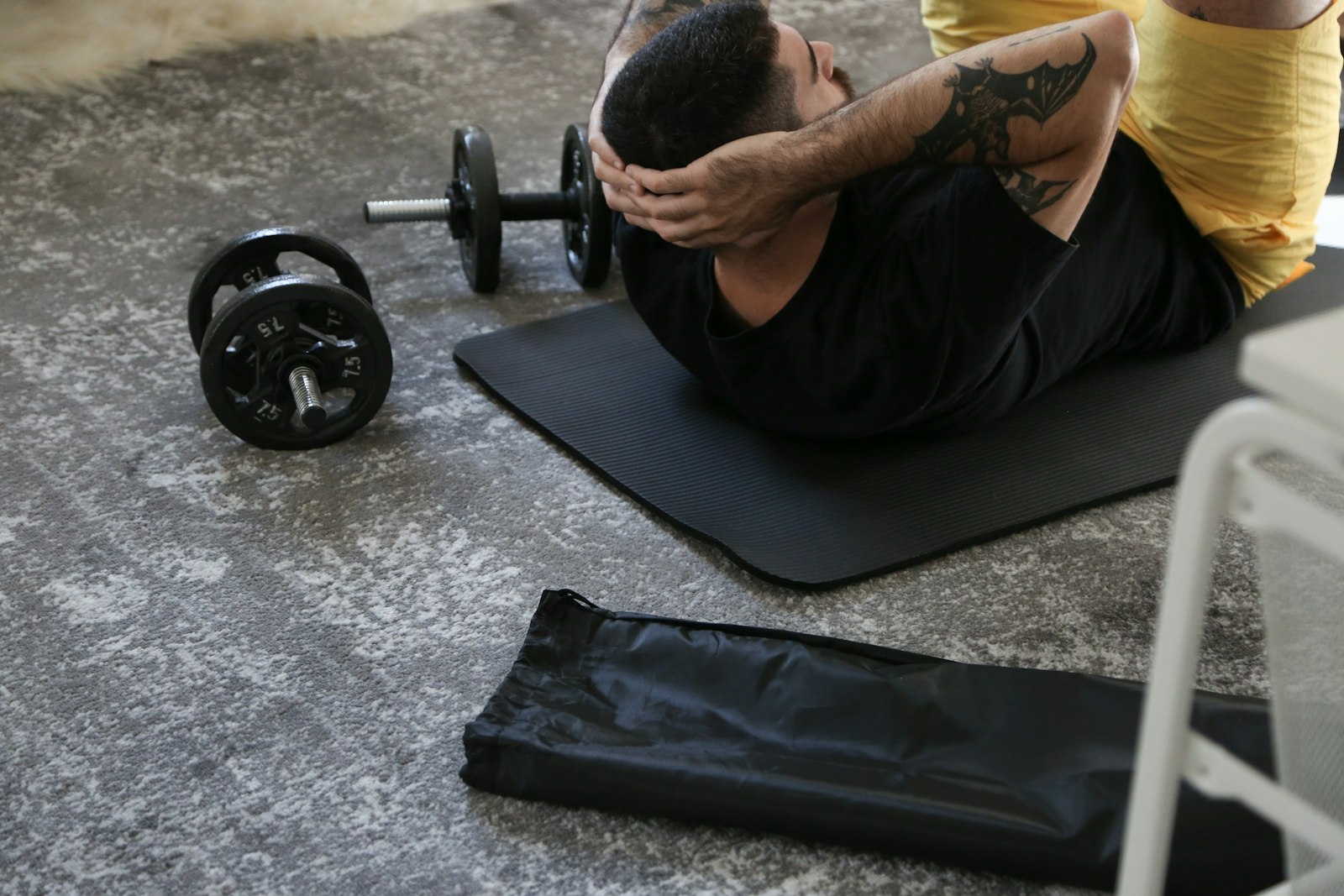
You know the moment. You finish a bodyweight workout in your bedroom, drop onto the edge of the bed, and think: Cool… but am I actually getting better, or just sweating in the same corner three times a week?
That’s the real problem with home training. It’s usually not effort. It’s the lack of obvious markers. No plates on a bar. No machine numbers. No trainer saying, “Yep, that’s progress.”
The good news: you do not need a gym to track progress well. You need a few repeatable signals: what you did, how hard it felt, how your reps or holds changed, and whether your movement got cleaner over time.
How to track home workout progress without a gym
The short version: track performance, not just whether you “worked out.”
If all you record is “did workout,” you’ll know whether you showed up. That’s useful. But you won’t know whether your training is actually moving forward.
A better home-workout log includes:
- exercise
- sets
- reps or time
- variation used
- rest time
- difficulty
- notes on form or range of motion
If you log the same movements the same way for a few weeks, progress stops being a guess.
The 5 best signs you’re improving at home
If you’re training without machines or barbells, these are the markers that matter most.
1. You can do more reps at the same difficulty
This is the cleanest signal for most people.
If last month your incline push-ups were:
- 3 x 6 at about 8/10 effort
And now they’re:
- 3 x 10 at about 8/10 effort
That’s progress.
Same exercise. Same rough effort. More output.
2. You can hold positions longer
This works well for planks, wall sits, hollow holds, and similar movements.
Example:
- Week 1: plank for 20 seconds
- Week 3: plank for 40 seconds
If the hold is still solid, longer time counts.
3. You can use a harder variation
At home, progression often comes from leverage rather than weight.
Examples:
- wall push-up → hands on a counter → hands on a lower sturdy surface → floor push-up
- glute bridge → single-leg glute bridge
- squat to chair → bodyweight squat → pause squat → split squat
- dead bug → slower dead bug with full exhale
This is one of the easiest ways to “add load” without owning any.
4. Your form improves at the same rep count
This one is easy to miss if you only look at numbers.
Real progress can look like:
- deeper squats
- steadier balance
- slower lowering
- less wobbling
- fewer ugly last reps
If your squat is deeper and more stable now than it was a month ago, that’s real progress even if the rep count stayed the same.
5. The same session feels easier
This is why logging difficulty matters. Rating of perceived exertion is a widely used way to judge how hard exercise feels, and resistance-training researchers also use RPE and repetitions-in-reserve scales to help prescribe and monitor effort in the real world.
If last week’s split squats were 3 sets of 8 at 8/10 effort, and this week’s are 3 sets of 8 at 6/10, something improved. Usually that means you’ve earned the right to add reps, slow the tempo, or move to a harder setup next time.
What to write down after each home workout
Keep it boring. Boring is what makes it usable.
A simple log can look like this:
| Exercise | Sets x reps/time | Variation | Rest | Difficulty | Notes |
|---|---|---|---|---|---|
| Push-up | 3 x 8 | Incline, desk | 75 sec | 7/10 | Last reps shaky |
| Squat | 3 x 15 | Bodyweight | 60 sec | 6/10 | Better depth |
| Glute bridge | 3 x 12 | 2-sec pause | 45 sec | 7/10 | Hamstrings less crampy |
| Plank | 3 x 25 sec | Forearm | 45 sec | 8/10 | Hips stayed level |
That “difficulty” column is what tells you whether to repeat the session, add reps, or make the exercise harder.
Use a simple effort scale
After each exercise, rate it from 1 to 10:
- 6/10 = challenging but comfortable
- 7/10 = a few reps left
- 8/10 = tough, maybe 1–2 reps left
- 9/10 = near your limit
- 10/10 = absolute max
You do not need lab-grade precision. You’re just trying to answer: Was this too easy, about right, or too hard?
Take a quick video sometimes
Not every session. Just enough to compare.
A 10-second clip from the same angle every couple of weeks can help you spot changes in depth, balance, and rep consistency that are easy to miss in real time. There’s research showing that visual feedback can improve movement execution when paired with clear cues, which is basically the home version of “film one set and check what changed.”
This is especially useful for squats, split squats, push-ups, planks, and rows with bands or backpacks.
The caveat: video helps with consistency and self-review. It’s a mirror, not a diagnosis tool.
Don’t rely on soreness as a progress metric
Soreness is a terrible scoreboard.
You can be very sore from a random hard session and not be progressing at all. You can also be progressing well and feel less sore because your body adapted. A Cochrane review found that post-exercise stretching does not produce clinically important reductions in delayed-onset muscle soreness, which is a useful reminder that DOMS is its own thing, not a gold-star proof that a workout “worked.”
If you need a simple rule, use this:
Treat soreness as information, not proof.
A weekly check-in that actually works
Once a week, look back at your log and ask:
Did I do the sessions I planned?
Showing up is still the floor.
Did at least one exercise improve?
Look for:
- +1 rep
- +5 to 10 seconds on a hold
- cleaner video
- a tougher variation
- lower effort at the same workload
Was anything clearly too easy or too hard?
That tells you what to change next week.
That’s enough for most people. You do not need a giant spreadsheet with twelve color codes and a tab called “hypertrophy dashboard.”
You need a record you’ll still be using three weeks from now.
How often should you expect progress?
Usually, not every workout.
Some progress is visible session to session, especially early on. A lot of it shows up over weeks, not days.
So if you’re wondering whether your home workouts are “working,” judge in blocks like:
- 2 weeks
- 4 weeks
- 8 weeks
Not: I did squats twice, where are my dramatic signs of progress?
The biggest mistake: changing everything too often
This is where people accidentally erase their own evidence.
If you swap exercises every session, change the format every week, and train entirely on mood, progress gets harder to spot.
Variety is fun. It’s also great at hiding whether anything is moving forward.
For tracking purposes, keep a few anchor movements in your plan for a while:
- push
- squat
- hinge or bridge
- core
- pull, if you have bands or a setup for rows
Run those for a few weeks before changing them. Same movement family. Same basic setup. Same logging method. Now you can actually compare.
If you need help choosing those anchor movements in the first place, how to start working out at home is a good next step.
A practical progression system for home workouts
If you never know what to do next, use this:
When an exercise feels too easy
Progress one variable:
- add 1 to 3 reps per set
- add 5 to 10 seconds to a hold
- slow the lowering phase
- pause at the hardest point
- reduce assistance
- move to a harder variation
When an exercise feels too hard
Regress one variable:
- reduce reps
- shorten holds
- elevate your hands for push-ups
- use a chair or wall for support
- increase rest
When it feels about right
Keep it for another session and try to beat it slightly.
That’s it. Home training is usually less about finding the perfect plan and more about making tiny, repeatable upgrades.
Don’t turn tracking into a second workout
Some people quit because they overbuild the system.
Be careful with:
- weighing every tiny outcome
- taking progress photos too often
- changing plans based on one bad session
- treating one missed workout like the whole month collapsed
A rough, honest log beats an elaborate system you resent.
If you want the simplest possible tracking template
Use this after every session:
Date:
Workout length:
Exercises:
Best set for each:
Hardness from 1–10:
One note: what got easier, harder, or cleaner?
Example:
Date: June 13
Workout length: 28 min
Exercises: incline push-up, squat, split squat, plank
Best set: push-up 10 reps, squat 15 reps, split squat 8/side, plank 30 sec
Hardness: 7/10
One note: push-ups felt steadier; left leg still wobblier on split squats
That is enough data to make your next workout smarter.
When an app actually helps
You do not need an app to make progress. A notes app or paper log works fine.
An app is useful if your real problem isn’t knowing what to do — it’s remembering, comparing, and staying consistent long enough to notice patterns.
Any tool that lets you log reps, difficulty, and previous sessions can do that. OgamicX is one option if you want bodyweight templates plus workout logging in one place. It also fits if you like having your workout log, food logging, fasting timer, and streak in the same app instead of spread across five tabs.
The honest tradeoff
Home workouts are easy to start and slightly harder to measure than gym sessions. That’s real.
In a gym, progress is often obvious because the dumbbell changed from 20 to 25. At home, progress is more subtle. You have to notice that your push-ups got deeper, your rests got shorter, your plank got calmer, and your split squats stopped looking like you were trying to stand on a canoe.
But that does not make home training fake or untrackable. It just means your markers are different.
If you can compare this week to two weeks ago in a way that’s honest and repeatable, you’re tracking well enough.
If you want to make your home sessions more productive overall, the next step is make home workouts more effective.
Keep going:

Written by
The OgamicX Team
Tips, guides, and insight on fitness, nutrition, fasting, and building habits that last — from the team behind OgamicX.
About OgamicXFound this useful? Share it.