
How to Make Home Workouts More Effective
Results gone quiet? You've hit the ceiling of an unstructured home workout, not your living room. Six levers to fix it — without buying a thing.
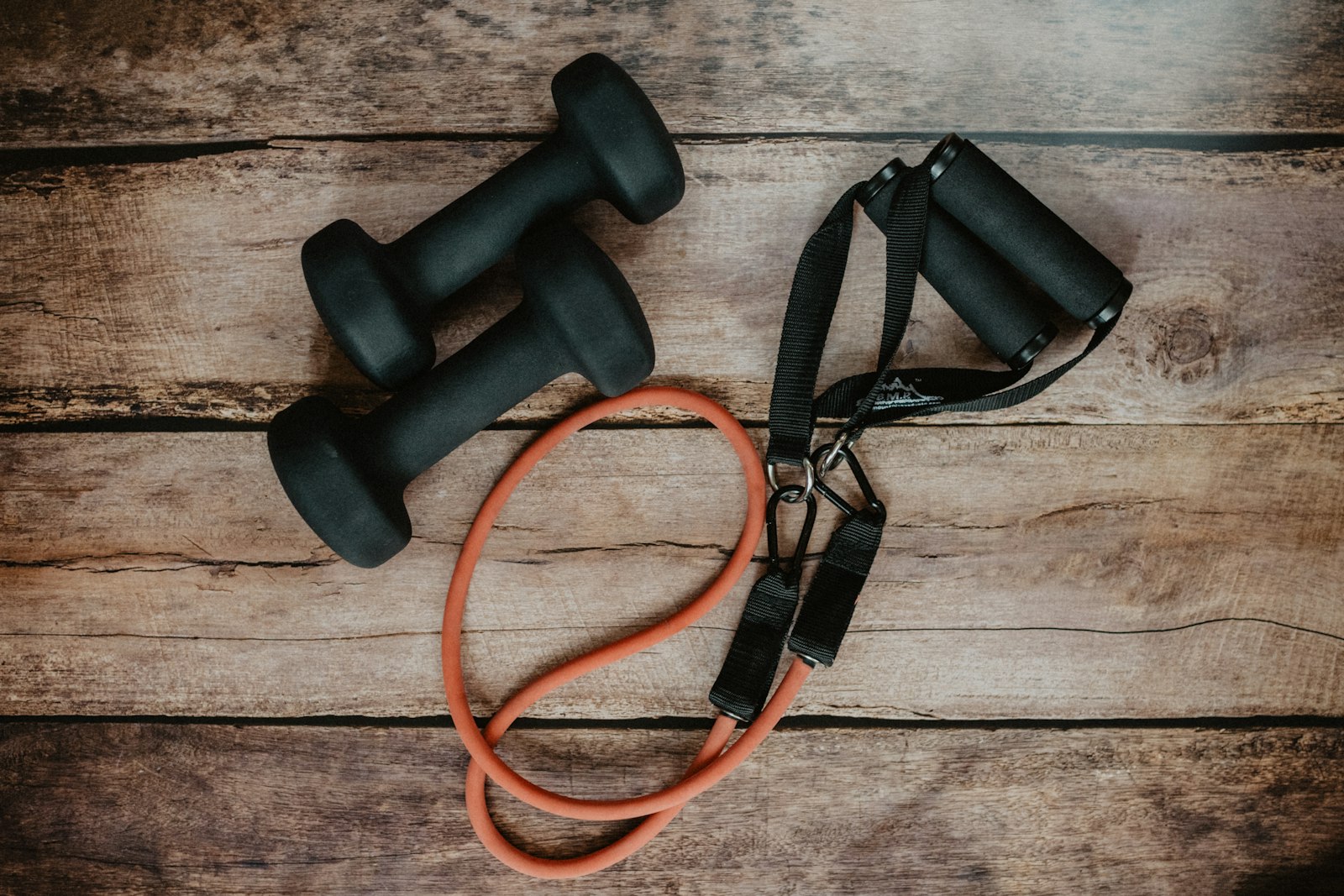
You’ve been working out at home for a few weeks. You’re showing up, you’re sweating, you feel vaguely virtuous — and yet the results have gone quiet. The push-ups feel the same. The mirror’s not moving. And the nagging suspicion creeps in that home workouts are just inherently less effective, that you’ve hit the ceiling of what a living room can do. You almost certainly haven’t. What you’ve hit is the ceiling of an unstructured home workout — and the gap between “doing some exercises” and “running an effective program” is huge, and entirely closeable without buying a thing. Here’s how to make home workouts more effective, lever by lever.
First, the thing that’s actually missing
Most home workouts aren’t failing because of the exercises. They’re failing because they have no direction. The same circuit, the same reps, the same effort, week after week — which feels like consistency but is actually just repetition. And repetition, past the first few weeks, stops producing change.
Your body adapts to a challenge and then has zero reason to keep adapting if the challenge never grows. So the master principle behind every fix below is the one the gym crowd takes for granted: progressive overload — gradually, deliberately making the work harder over time. The official ACSM progression guidelines are built on exactly this; their position stand on resistance-training progression makes systematic, progressive increases in demand the core requirement for continued gains. The mistake isn’t training at home. It’s training at home without progressing. Everything that follows is a way to keep the demand climbing when you have no plates to add.
1. Make every hard set count by training close to failure
The single biggest difference between an effective home set and a junk one is how hard the last few reps are. Bodyweight training works — when sets are taken near failure, light loads build muscle about as well as heavy ones — but that whole finding hinges on the words “near failure.” Stop a set of push-ups at a comfortable round number with five reps left in you, and you’ve left most of the stimulus on the floor.
So on your working sets, push until you’re within a rep or two of genuine failure (form breaking down = stop, that doesn’t count). This one change — actually finishing your hard sets hard — is often the difference between a home workout that does nothing and one that delivers. It costs zero dollars and zero extra time. It just requires you to stop being polite to yourself in the last few reps.
2. Use intensity techniques instead of more equipment
When you can’t add weight, you add difficulty — and there’s a whole toolbox for it. These are how you keep a bodyweight movement challenging long after the basic version got easy. (We go deep on the five core progression levers in progressive overload without weights — this is the session-design layer on top.)
- Slow your tempo. Take 3–4 seconds to lower into each rep and pause at the hardest point. A push-up with a slow descent and a one-second bottom hold is brutally harder than a bouncy one — same movement, far more time under tension, far more stimulus. Tempo is free intensity.
- Add pauses. A two-second pause at the bottom of a squat or the bottom of a push-up kills momentum and forces the muscle to do all the work from a dead stop. Instantly harder.
- Go unilateral. One limb doing the job of two doubles the load with zero equipment. Split squats, single-leg hip thrusts, archer push-ups, pistol progressions. This is how you push past the easy beginner phase, especially on legs.
- Increase range of motion. Deeper squats, deficit push-ups (hands on books so your chest drops lower), a fuller stretch at the bottom of every rep. More range, more loaded muscle.
Rotate these in as a movement gets easy and you’ll never run out of road. The point isn’t to use all of them at once — it’s to always have a next, harder version queued.
3. Manipulate rest and density (your secret cardio-and-strength lever)
Here’s one most people completely ignore: the clock between sets is a dial you can turn. Do the same workout in less time and your muscles work harder with less recovery — that’s progression you can apply without changing a single rep.
Trim your rest from 90 seconds to 60, then to 45, over the coming weeks. Or run a density block: set a timer for, say, 10 minutes and do as many quality rounds of a short circuit as you can, then try to beat that number next time. EMOM (“every minute on the minute”) is the cleanest version — start a set at the top of each minute, rest with whatever time’s left, and as you get fitter the rests shrink automatically. Push density far enough and the session becomes genuine conditioning on top of strength — which is the whole idea behind a 20-minute bodyweight HIIT. One honest caveat: shorter rest trades some pure-strength stimulus for conditioning, so if maximal strength on a given movement is the goal, keep that movement’s rest longer and use density elsewhere.
4. Fix the structure, not just the moves
An effective workout has a shape, not just a list of exercises. A few cheap structural upgrades:
- Order matters. Do your hardest, most skill-demanding movements first, when you’re fresh — pistol squats and one-arm push-up work belong at the start, not after you’re fried from twenty minutes of circuits. Save the easy, high-rep finishers for the end.
- Hit the whole body across the week. Make sure your week covers a push (push-ups), a squat, a hinge (glute bridges, single-leg hip thrusts), a pull (inverted rows under a table — the one most home routines skip), and core. A program that’s all push-ups and squats leaves your back and hamstrings behind, and unbalanced programs stall and ache.
- Warm up for two minutes. A few minutes of easy movement to get warm means you can train harder and safer in the actual sets. It’s not optional padding; it’s how you access more intensity.
- Pick a rep range and progress in it. Use “double progression”: add reps within a target range (say, work a movement up to 3×15), and once you hit the top, switch to a harder variation and let the reps reset lower. Reps up, then difficulty up. That’s a complete, self-driving progression model.
5. Recover on purpose (effort without recovery just digs a hole)
More is not better; better is better. The adaptation you’re training for actually happens during recovery, not during the workout — so an effective program protects recovery as deliberately as it pushes effort. Hammering the same muscles hard every single day doesn’t accelerate progress; it stalls it, because the muscle never gets to rebuild before you tear it down again.
So take real rest days, and don’t treat them as wasted time — they’re when the gains get banked. Exactly how many rest days you need each week depends on how hard and how often you’re training, but “some” is non-negotiable. Sleep does more for your results than any intensity technique here. And if a movement’s form is degrading or you feel beaten up, back off for a few days — pushing through that isn’t toughness, it’s how you stall (or get hurt).
6. Track it, or you’re just guessing
This is the unglamorous one that quietly makes everything else work. You cannot progressively overload what you don’t measure — and bodyweight progress is too gradual to feel week to week, so memory will lie to you. Without a record, “a bit more than last time” is a guess, and a guess is how routines drift into doing the exact same thing forever.
Write down your movements, reps, sets, and rest. Even a note that says “push-ups: 3×12, 60s rest” gives you a concrete target to beat next session — and beating last week’s number, on purpose, is progressive overload in action. The act of tracking also quietly boosts adherence; a visible record of progress is its own motivation to keep showing up. This single habit converts random sweating into an actual program.
The mistakes that quietly cancel out your effort
Even people who do everything above sometimes spin their wheels, almost always because of one of these:
- Changing five things at once. More reps and slower tempo and less rest and a harder variation in the same week isn’t five times the progress — it’s a mess you can’t learn from and an injury waiting to happen. Change one variable at a time so you always know what’s working.
- Progressing out of boredom, not readiness. Jumping to pistol squats because regular squats got dull, rather than because you earned them, wrecks your form and stalls real gains. Earn the next rung; don’t escape to it.
- Going hard every single day. Effort without recovery just digs a hole — see the rest-day point above.
- Skipping the unsexy stuff. No warm-up, no tracking, no pull movements. These feel optional and are exactly what separates a program from a vibe.
Effective home training isn’t about doing more. It’s about doing the right things deliberately and letting them compound.
Where an app does the optimizing for you
Read back over that list — progress every movement, take sets near failure, rotate intensity techniques, balance the week, manage rest and density, recover deliberately, and track all of it so you can beat it. That’s a real cognitive load, and it’s exactly the part that quietly collapses when you’re tired and just want to “do something.” Which is how optimized intentions decay back into the same stale circuit.
That’s the load OgamicX is built to carry. Its prebuilt bodyweight templates are sequenced as actual progressions — the next harder variation is already queued, the week is already balanced across push/squat/hinge/pull/core, so the structure is handled and you just execute. You log each session, turning “I think I’m progressing” into a record you can see and beat. Ogi, the built-in coach, is there to answer “is this variation right for me yet?” without you having to project-manage your own programming. It’s free to start — no trial, no card; three active templates and the tracking are free forever, and Premium adds an AI-built plan tailored to your level and goals. The techniques on this page are the difference-makers; the app’s job is making sure you actually apply them, session after session.
The bottom line
Home workouts aren’t less effective — unstructured home workouts are. Make every hard set count by training near failure, swap in intensity techniques (tempo, pauses, unilateral, deeper range) when a movement gets easy, use rest and density as their own progression lever, give your week a real shape, recover on purpose, and track everything so you can beat last week. Do that and your living room out-produces a gym membership you half-use. Want the deeper case that home training works at all? Read are home workouts effective. Wondering specifically about building visible muscle this way? That’s do bodyweight workouts build muscle. Now go make today’s session measurably harder than the last one.
Keep going:
- How to Progress Bodyweight Workouts Without Weights
- How to Warm Up Before a Home Workout
- Beginner Home Workout Routine From Scratch
- How to Track Progress on Bodyweight Workouts
- Stay Motivated to Work Out at Home Alone
- Fun Ways to Exercise Without Realizing It
- Track Home Workout Progress Without a Gym
- Bodyweight Leg Workout at Home for Beginners

Written by
The OgamicX Team
Tips, guides, and insight on fitness, nutrition, fasting, and building habits that last — from the team behind OgamicX.
About OgamicXFound this useful? Share it.