
How to Track Progress on Bodyweight Workouts
No plate to add doesn't mean no progress. Six dials that prove bodyweight training works — and a template to log them.
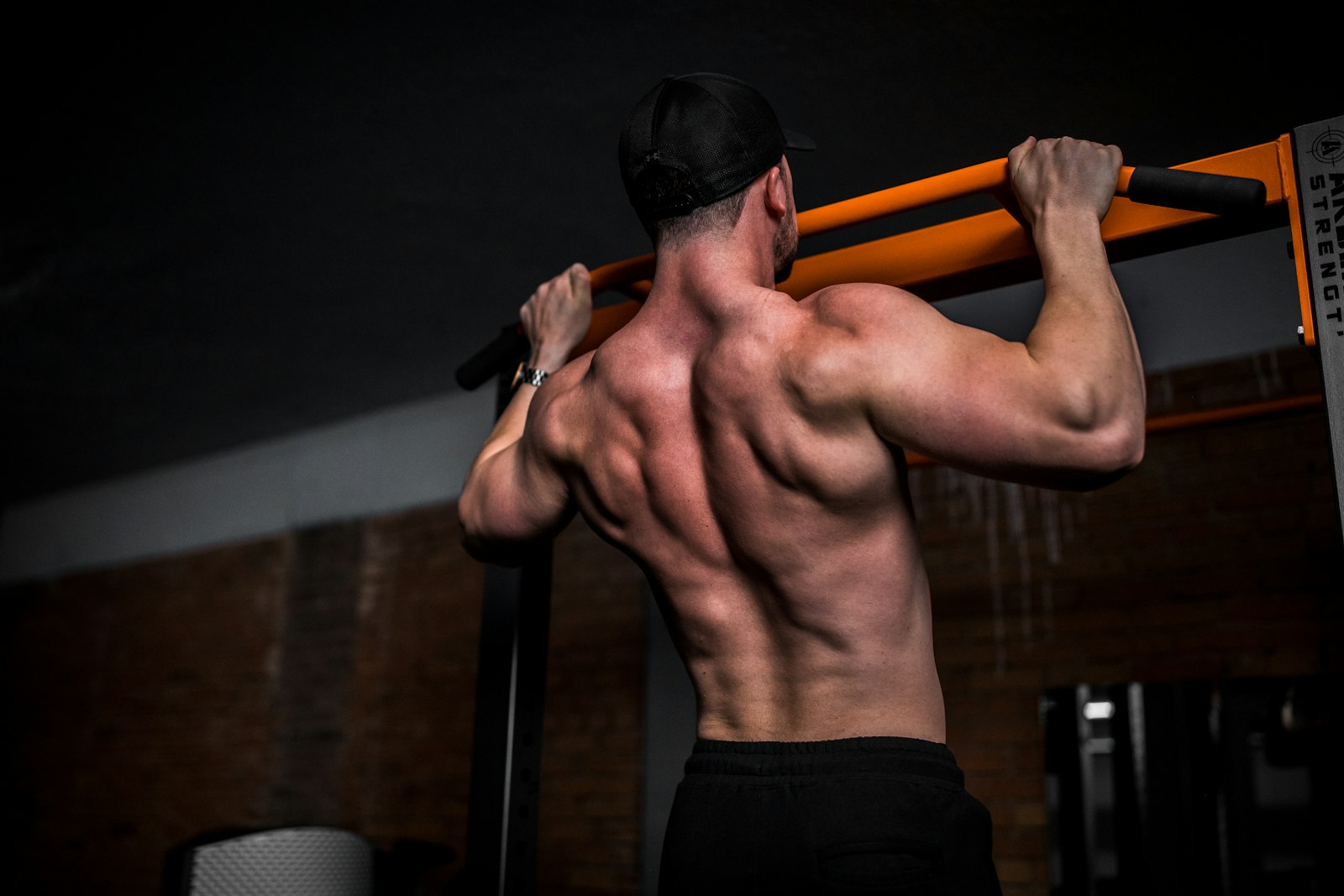
With a barbell, tracking progress is easy: the number on the plate went up, you got stronger, done. It’s a built-in scoreboard. So when people switch to bodyweight training, they hit a strange wall — there’s no plate to add, no number to write down, and progress suddenly feels invisible. “Did I get stronger this week, or did I just do push-ups again?” Without a scoreboard, the whole thing can feel like running on a treadmill: lots of effort, no sense of moving forward.
Here’s the good news, and it’s bigger than it sounds: bodyweight training has more ways to measure progress than the barbell, not fewer. The barbell has basically one dial — load. Your body has at least six. Once you know them, you’ll have a richer, more honest scoreboard than anyone counting plates — you’ve just got to know which dials to read. Let’s build that scoreboard.
Quick note on scope: this post is about measuring bodyweight progress — how to see that you’re getting stronger. The how-to of actually making the progression harder is its own thing, covered in progressive overload without weights. Here we’re focused on the scoreboard, not the training plan.
Why “no weight” doesn’t mean “no progress”
First, let’s kill the myth that bodyweight progress is somehow lesser or harder to see. Your muscles respond to challenge, not to the specific source of that challenge — and there are six ways to crank up the challenge with nothing but your body. Each one is also a way to measure that you’ve improved. These are your six dials:
- Reps — more repetitions of the same movement.
- Variation difficulty — a harder version of the movement.
- Tempo — slower, more controlled reps.
- Range of motion — going deeper or fuller.
- Density — more work in the same time, or the same work with less rest.
- Perceived effort (RPE) — how hard it actually felt.
Turn any dial up and you’ve progressed. Track any dial and you’ve measured it. Let’s take them one at a time.
1. Reps — the obvious scoreboard
The simplest and most honest. Last week 10 push-ups, this week 12. That’s a clean, unfakeable improvement — there’s no way to do extra clean reps without being stronger. Write down the reps for each set every session, and your scoreboard maintains itself: you’re chasing “one more than last time.”
The one trap: chasing reps forever turns strength training into endurance training. Once a movement feels easy for, say, 20+ reps, the smart move isn’t 30 reps — it’s to switch dials and make the movement harder (dial #2), then start the rep count over from a lower, harder number. Which is itself a sign of progress.
2. Variation difficulty — your “added weight”
This is the bodyweight equivalent of putting plates on the bar, and it’s the most powerful dial you’ve got. Movements live on a ladder from easier to brutally hard, and climbing a rung is unambiguous progress:
- Push-ups: wall → incline → knee → full → feet-elevated → archer → one-arm.
- Squats: assisted → bodyweight → split squat → Bulgarian split squat → pistol squat.
- Rows/pulls: incline table row → inverted row → feet-elevated row → pull-up.
When you do your first full push-up after weeks of knee push-ups, that’s exactly as real as adding 20 pounds to a bench press — arguably more impressive, because you moved a bigger fraction of your own body. Track which variation you’re on, and the ladder becomes your long-term progress map. The whole reason this works is the same principle that drives all strength training — and it’s why bodyweight genuinely builds muscle, the full case for which is in do bodyweight workouts build muscle.
3. Tempo — make the same rep harder
Same movement, slower. A push-up lowered over 4 seconds, paused at the bottom, is dramatically harder than a bouncy one-second rep — more time under tension, less momentum doing the work for you. So “I now do my squats on a 3-second descent” is real progress even if the rep count didn’t change. Track your tempo (e.g. “3 seconds down, 1 second pause”) and you’ve got a dial that lets you keep progressing a movement you’ve otherwise “maxed.”
4. Range of motion — deeper is harder
A squat to full depth is harder and more productive than a half squat. A push-up with your chest touching the floor beats one where you dip a few inches. Deficit work — push-ups on books so your chest drops below your hands — extends the range further still. If you couldn’t reach full depth before and now you can, that’s progress, even at the same reps. Note your range (“full-depth squats now, no more half-reps”) and you’re measuring a dial most people don’t even know exists.
5. Density — more work, less time
Density is how much work you pack into a window of time, and it’s a fantastic conditioning scoreboard. Two ways to read it:
- Same work, less rest. Last week you needed 90 seconds between sets; this week the same sets felt fine on 60. That’s improved work capacity — measurable, and a sign your engine got better.
- More work, same time. Last week, 8 rounds of a circuit in 15 minutes; this week, 9 rounds in the same 15. Faster, fitter, stronger.
Time your workouts and jot the rest periods, and density becomes one of the most satisfying numbers to watch climb — especially for bodyweight HIIT-style sessions where the clock is the whole point.
6. Perceived effort (RPE) — the dial inside your head
Here’s the most underrated measure, and it’s the one that catches the progress the other dials miss. RPE — rating of perceived exertion — is just how hard a set felt, often framed as “reps in reserve”: how many more reps you could have done before failure. An RPE of 10 means you couldn’t do another; RPE 8 means you had about two left in the tank.
This isn’t a soft, hand-wavy metric — it’s a validated training tool. The repetitions-in-reserve-based RPE scale, described by Helms and colleagues in the Strength and Conditioning Journal, was built precisely so people could gauge and self-regulate intensity by feel, and the research found trainees can estimate their reps-in-reserve with a useful degree of accuracy, especially as a set nears failure. Why it matters for tracking: if last month 12 push-ups left you at RPE 10 (nothing left) and today the same 12 sit at RPE 8 (two in reserve), you got stronger — even though the rep count is identical. RPE catches exactly the progress a plain rep count hides. Note a rough effort score next to your reps and you’ve added a dial that sees what the others can’t.
Why writing it down is non-negotiable here
With a barbell you can sometimes remember “I did 100 last time.” With bodyweight, you’re juggling six dials at once — reps and variation and tempo and rest and effort — and there’s no chance you’ll hold all that in your head week to week. Memory will quietly tell you you’re progressing when you’ve plateaued, or that you’re stuck when you’ve actually climbed a rung. You need a record.
And recording isn’t just bookkeeping — it’s one of the most effective things you can do for results, period. A meta-analysis of 138 studies in Psychological Bulletin found that prompting people to monitor their progress toward a goal reliably increased the rate at which they reached it. The act of logging your sets doesn’t just measure progress — it helps cause it. So the log isn’t optional admin. It’s part of the training.
A simple bodyweight tracking template
You don’t need to track all six dials every session — that’s a recipe for quitting. Log the two primary ones always, and note the others only when they change:
- Always: the movement, the variation, and reps per set. (e.g. “Feet-elevated push-ups: 12, 10, 9.”)
- When it changes: a note for tempo, range, rest, or a rough RPE. (e.g. “RPE ~8, full depth, 60s rest.”)
- Each session, the one question: can I beat last time on any dial? One more rep, a harder variation, a slower tempo, less rest, or the same work at a lower RPE. Win on any single dial and you’ve progressed.
That last line is the whole game. “Beat last week on at least one dial” turns six abstract metrics into one concrete decision you make every session — and it guarantees you’re always moving forward on something. For the bigger picture of which signals matter beyond the gym, how to track workout progress zooms out, and how to measure progress without the scale covers the body-level signals (clothes, energy, resting heart rate) that round out the scoreboard.
How OgamicX keeps your six dials in one place
The honest friction with bodyweight tracking is the mental load: six dials, every session, with no plate to make it obvious. A scrap of paper can’t tell you whether you actually beat last week across all of them. That’s the gap OgamicX closes. Every session you log becomes visible history, so when you face the same movement you can see exactly what you did last time — reps, variation, the lot — and aim to beat it by one notch on any dial. The 30 prebuilt bodyweight templates are sequenced as actual progressions, so “what’s the next, harder variation” is already mapped out for you up the ladder. And every logged session feeds a unified streak and an XP system that climbs through eight tiers — which turns the slow, six-dial grind of bodyweight progress into a single number that visibly goes up, the scoreboard the barbell crowd takes for granted. It’s free to start (no card, no trial games); three active templates and the core tracking are free forever, and Premium ($4.99/mo) adds an AI-built plan and more enrollments later. The point isn’t the app — it’s that bodyweight progress is real and measurable, and it’s a lot easier to chase when something’s keeping the scoreboard for you.
The bottom line
“No weights, no way to track” is exactly backwards — bodyweight training gives you six dials instead of the barbell’s one: reps, variation difficulty, tempo, range of motion, density, and perceived effort. You don’t need to move all of them; you just need to beat last session on one. Write it down (the logging is part of what makes it work), chase a single notch of improvement each time, and your invisible progress turns into a scoreboard as clear as any plate on a bar. The bar isn’t loaded — but make no mistake, you’re absolutely getting stronger, and now you can prove it.
Keep going:

Written by
The OgamicX Team
Tips, guides, and insight on fitness, nutrition, fasting, and building habits that last — from the team behind OgamicX.
About OgamicXFound this useful? Share it.