
Are Home Workouts Effective? An Honest Answer
Yes — and the research agrees. A no-equipment program done with real effort builds real strength and muscle. Here's why, plus where a gym truly wins.
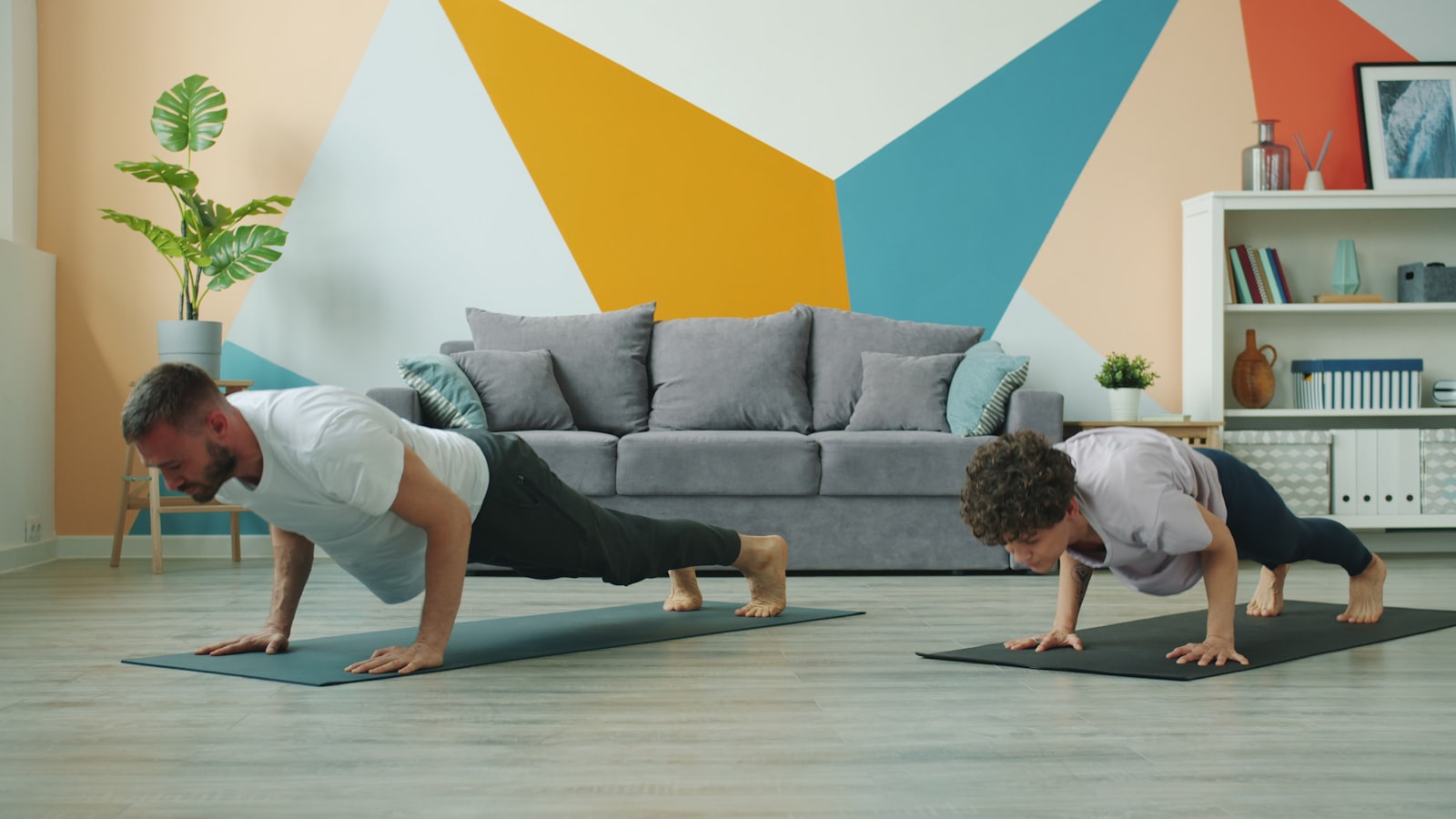
Type “are home workouts effective” into Google and look at who’s answering. A company selling a $3,000 wall-mounted cable machine. A gym franchise that needs your monthly dues. A dumbbell brand. Every single one of them has a financial reason to tell you the same thing: sure, home workouts are “fine,” but you’ll really need our gear/membership to get serious results.
We sell a home-workout app, so we have our own bias — fair warning. But it points the other way, and it happens to line up with the actual research: yes, home workouts are genuinely effective. A no-equipment program done with real effort and a bit of structure builds real strength, real muscle, and real conditioning. The catch isn’t that home “doesn’t work.” It’s that most people run home workouts on autopilot and then blame the lack of equipment. Let’s fix the framing — honestly, including where a gym really does win.
The honest answer, up front
Here’s the version with no spin: for the vast majority of people, in the goals they actually care about — getting stronger, building visible muscle, improving cardio, feeling better, fitting in their clothes — a well-run home workout will get you the result.
There’s a real ceiling, and we’ll get to it. If your goal is to deadlift 500 pounds or step on a powerlifting platform, your living room runs out of road. But “I want to be fit, strong, and look like I lift” is not that goal, and that goal lives entirely within reach of your bodyweight and a sturdy chair. The thing standing between most people and results at home isn’t equipment. It’s consistency and progression — two problems the gym doesn’t actually solve for you either.
Why it works: your muscles can’t see your equipment
Strength and muscle aren’t built by lifting heavy objects. They’re built by giving a muscle a challenge slightly beyond what it’s used to, recovering, and repeating — a principle called progressive overload. A barbell is one convenient way to keep raising that challenge. It is not the only way, and your muscles genuinely cannot tell the difference between “hard because the plate is heavy” and “hard because the leverage is brutal.”
The research backs this up more strongly than most people realize. When sets are taken close to failure, light loads build muscle about as well as heavy loads — a meta-analysis by Schoenfeld and colleagues found strength and hypertrophy gains were broadly comparable across low- and high-load training. A separate meta-analysis on muscle-fiber growth reached the same place: no significant difference between low- and high-load training on the growth of either fiber type when sets were pushed to failure. The number on the plate matters far less than the effort near the end of a hard set — and effort is free.
And it’s not just lab abstractions. A randomized trial comparing progressive bodyweight squats to barbell back squats in previously sedentary women concluded that bodyweight squats “can achieve a similar increase in knee joint strength as double-leg barbell squats with 60–80% 1RM in short term,” with measurable muscle growth — no rack, no plates, just smart progression. The mechanism that makes training work is available to you in your living room. That’s the whole ballgame.
Where equipment honestly helps (no spin)
Now the part the gym ads are technically right about — just wildly overweighted. There are real things a gym and a pile of iron do better:
- Adding load to your strongest movements. Your legs and back get strong fast. Squats and deadlifts can eventually outpace bodyweight progressions, and loading a bar is a cleaner way to keep adding resistance than balancing on one leg in a doorway. This is the genuine ceiling.
- Maximal strength and powerlifting goals. If a big one-rep max is the literal goal, you need external load. No way around it.
- Pulling muscles, conveniently. Your back and biceps are the hardest to train with zero gear. You can absolutely do it (inverted rows under a table, a doorway towel row), but one cheap pull-up bar or a set of resistance bands removes the awkwardness entirely.
- The accountability of leaving the house. For some people, the ritual of driving somewhere flips a mental switch. That’s a real psychological lever, not nothing.
Notice what’s not on that list: getting a beginner or intermediate strong, building visible muscle, getting lean, improving cardio. Those don’t require a gym — they require consistent, progressive effort, which you can run anywhere. A pull-up bar and a $20 set of bands close most of the remaining gap for the price of one month of most memberships. Honest verdict: equipment expands your ceiling and adds convenience; it does not determine whether home workouts “work.” They do.
What about cardio and conditioning?
The whole “you need a gym” conversation tends to fixate on strength, but plenty of people come to home workouts for their heart and lungs, not their biceps — so it’s worth saying plainly: cardio is the easiest thing to do effectively at home, and it always has been. Your body is a perfectly good cardio machine. Burpees, jumping jacks, mountain climbers, high-knees, squat jumps, shadow-boxing — string them together and your heart rate goes exactly where a treadmill would put it, minus the treadmill.
Both ends of the cardio spectrum live happily in a living room. High-intensity intervals — short, brutal bursts with brief rests — torch conditioning in 15–20 minutes flat; a 20-minute bodyweight HIIT needs nothing but floor space. And steadier, lower-intensity work (the kind you can do for longer while holding a conversation) is just as doable — we break down when to use which in HIIT vs zone 2 cardio. The treadmills and rowers at the gym are convenient ways to get your heart rate up. They are not the only ways, and for conditioning the gym’s edge is close to zero. If anything, the no-commute factor means you’ll actually do the cardio more often — which, again, is the part that decides results.
The three myths that talk people out of home training
Most of the doubt about home workouts comes down to a handful of sticky myths. Worth clearing:
- “Bodyweight only gets you toned, not built.” “Toned” isn’t a real physiological state — muscle gets bigger, smaller, or stays put. Bodyweight grows it, as long as you progress. (The full case: do bodyweight workouts build muscle.)
- “No weights means no way to progress.” Load is one progression lever out of at least five. Harder leverage, unilateral work, tempo, range of motion, and density all raise the demand with zero equipment — the entire point of progressive overload without weights.
- “You won’t push yourself without the gym environment.” This one’s real for some people and pure projection for others. The honest move is to know which you are — and if motivation in an empty room is your actual problem, that’s a structure-and-accountability problem, which is very solvable (more below).
So which home-workout question is actually yours?
“Are home workouts effective” is really three different questions wearing a trench coat, depending on what you’re after. Here’s the router — jump to the one that’s yours:
“Can I build actual muscle at home, or just get ‘toned’?” This is the hypertrophy question, and the answer surprises people. Muscle grows from mechanical tension and training near failure — not from heavy external load specifically — which is exactly why bodyweight can grow it, and exactly where it eventually caps. We break down the science and the progressions in do bodyweight workouts build muscle.
“I’m mainly trying to lose fat — is home as good as the gym for that?” Different question, different answer, and honestly the easiest “yes” of the three. Fat loss is driven by a calorie deficit and the routine you actually keep — not by the venue. We compare the two strictly on the thing that decides it (the routine you’ll stick to) in home workout vs gym for weight loss.
“I’m already sold — how do I get more out of each session?” This is the optimization question for people who’ve started and want to stop spinning their wheels. Progressive overload without weights, intensity techniques, structure, recovery, tracking — the full playbook lives in how to make home workouts more effective.
If you haven’t actually started yet, none of those are step one — how to start working out at home is. And if it’s the idea of the gym that’s been holding you back, that’s a real and common thing; working out at home when the gym gives you anxiety is for you.
The variable nobody’s selling you: consistency
Here’s the uncomfortable truth that no equipment brand will lead with, because they can’t monetize it: the best workout is the one you’ll actually keep doing. A perfectly optimized gym program you abandon in five weeks loses, every time, to a “good enough” home routine you run for a year.
This is where home quietly wins for most people. No commute, no packing a bag, no waiting for a rack, no closing time. The barrier to “just do the workout” is about as low as it gets — and lower barriers mean more sessions, and more sessions is the entire game. In a randomized trial comparing gym-based exercise to home-based exercise as long-term maintenance programs, the researchers found “similar long-term clinical outcomes and long-term exercise adherence” between the two. Same results, less friction. For a lot of people, that’s not a tie — that’s home winning.
The gym doesn’t solve consistency or progression for you. It just has nicer equipment in the room while you fail to solve them. A treadmill you visit twice a month is not more effective than a living-room session you actually do four times a week — it’s the opposite, and it’s not close. Which is exactly why the structure you bring, and the routine you keep, matter far more than the address on the building.
Where an app earns its keep
If home workouts fail people, it’s almost never the exercises — it’s the project management. Knowing what to do today, knowing when you’ve earned the next, harder version, keeping an honest record so you can beat last week, and showing up on the days you’d rather not. That’s a lot to run in your head, and “winging it in the living room” is exactly how home workouts decay into the same stale circuit until you conclude, wrongly, that home “stopped working.”
That gap is the entire reason OgamicX exists. The 30 prebuilt bodyweight templates aren’t a random list of moves — they’re sequenced as actual progressions, calibrated to you (men’s and women’s templates differ in emphasis), so “what do I do next” is already answered and built to keep getting harder. You log each session, so the climb from last week is visible instead of imagined. Every workout feeds one unified streak — because the variable that decides whether home workouts work for you is whether you keep showing up, and a streak is a quietly effective reason to do exactly that. It’s free to start (no card, no trial games); three active templates and the core tracking are free forever, and Premium ($4.99/mo) adds an AI-built plan and more enrollments if you want them later. The point isn’t the app — it’s that the two things that make home workouts effective, structure and consistency, are the two things software is actually good at holding for you.
The bottom line
Are home workouts effective? Yes — for getting strong, building muscle, and getting lean, a no-equipment program done with real effort and real progression genuinely works, and the research is on its side. A gym extends your ceiling and adds convenience, especially for maximal strength and loaded leg work; it does not decide whether you get results. Your consistency does — and that’s the one thing a living room makes easier, not harder. Pick the question that’s actually yours above, and go run the rep.
Keep going:

Written by
The OgamicX Team
Tips, guides, and insight on fitness, nutrition, fasting, and building habits that last — from the team behind OgamicX.
About OgamicXFound this useful? Share it.