
Do Bodyweight Workouts Build Muscle? Yes, Here's How
'Toning' isn't a thing — muscles only grow or shrink. Bodyweight builds real size: the mechanism, the progressions, and where it honestly caps out.
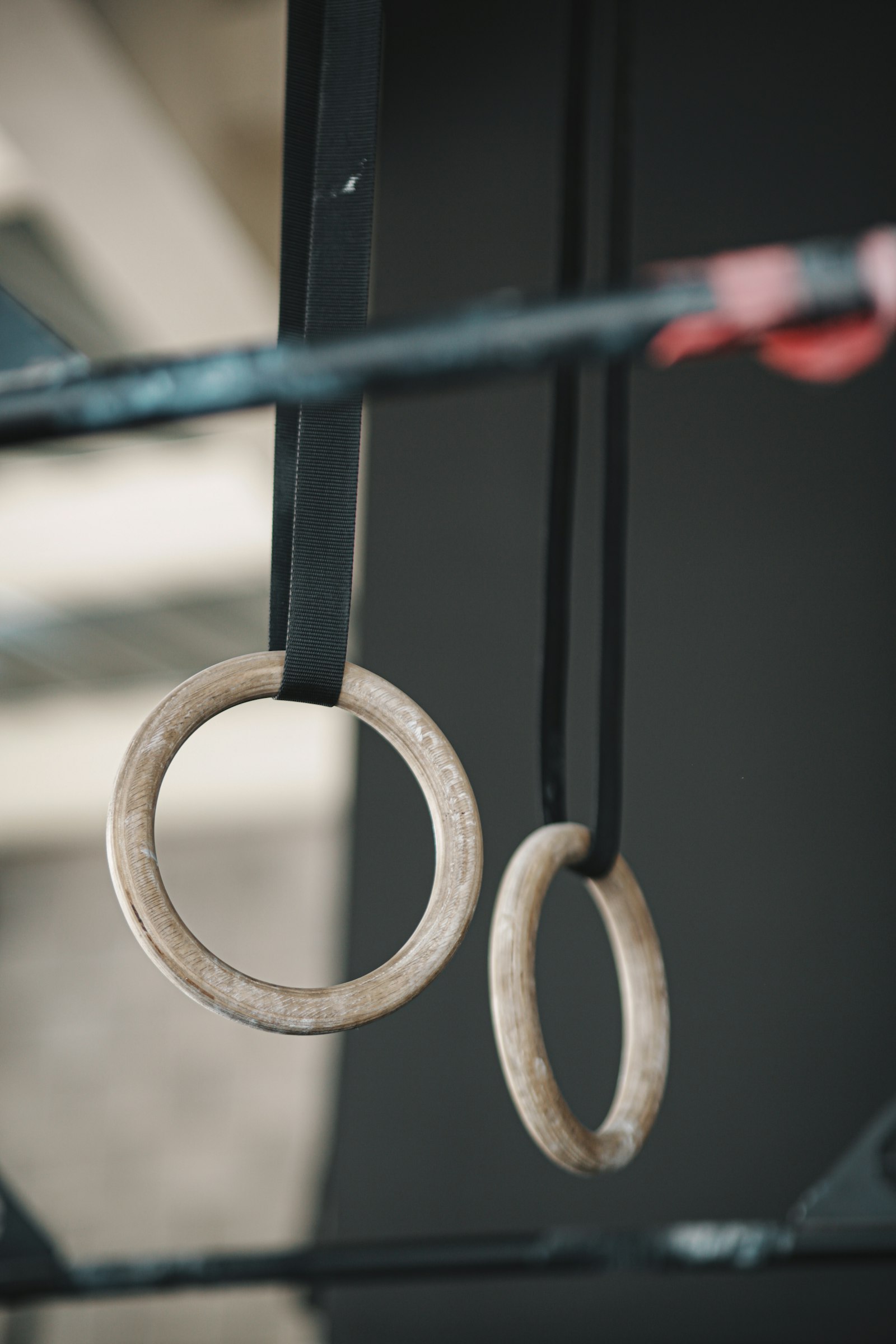
There’s a sentence that gets repeated so confidently it sounds like physics: “Bodyweight workouts are great for toning, but if you want to actually build muscle, you need weights.” It’s everywhere — gym forums, fitness TikTok, the guy at the cookout who benches. And it’s wrong in a specific, fixable way. “Toning” isn’t even a thing that happens; a muscle can only get bigger, smaller, or stay the same. So the real question is the honest one: do bodyweight workouts build muscle — actual, visible size? Yes. Here’s the mechanism, the progressions that make it happen, and the genuine point where bodyweight starts to cap out.
The real question hiding under “do bodyweight workouts build muscle”
What people are really asking is: “Will push-ups and squats grow my muscles the way a bench press and a barbell squat would?” And the reason they doubt it is they’ve absorbed a belief that muscle growth comes from heavy weight. Lift heavy thing, get big. No heavy thing, no big.
But that’s not the mechanism. Muscle grows primarily from mechanical tension — the force a muscle produces against resistance, especially as that resistance gets hard to overcome near the end of a set. External load is just one way to generate that tension. It’s a very convenient way, which is why gyms are full of iron. It is not the only way, and your muscle fibers don’t have a sensor for “kilograms.” They respond to effort and tension, whatever’s producing it.
Once you internalize that, the whole “you need weights” claim collapses into something much narrower and much more true: you need progressive tension taken close to failure — and a barbell is one delivery method among several.
What the research actually says
This isn’t motivational hand-waving; it’s one of the better-settled findings in strength science. When sets are taken close to muscular failure, the load you use matters far less than people assume.
A meta-analysis on muscle-fiber hypertrophy compared low-load and high-load resistance training and found no significant difference in the growth of either Type I or Type II fibers when sets were performed to failure. Read that again: light resistance grew muscle fibers about as well as heavy resistance — provided the effort went deep enough. The growth signal was the near-failure effort, not the size of the load.
The “but does it work with actual bodyweight, not just light dumbbells” objection has an answer too. A randomized trial pitting progressive bodyweight squats against barbell back squats at 60–80% of max found the bodyweight group achieved “a similar increase in knee joint strength” plus measurable increases in muscle thickness — and concluded bodyweight squats “can be used as an alternative to traditional resistance training.” Real bodies, real muscle, no barbell. The “toning only” myth doesn’t survive contact with the data.
How to actually make bodyweight build muscle
The reason some people don’t build muscle at home isn’t that bodyweight can’t — it’s that they do the same 20 push-ups forever and never make it harder. Muscle grows in response to a rising challenge, not a repeated one. Without external plates to add, you raise the challenge with these five levers (we go deep on the mechanics in progressive overload without weights — here’s how each one specifically drives growth):
1. Harder leverage and variations. This is bodyweight’s superpower for hypertrophy. By changing the angle and leverage, you make the same muscle work dramatically harder: incline push-ups → flat → feet-elevated → archer → one-arm progressions. Each step loads the muscle more — it’s your “add weight to the bar,” except the increments never run out. A one-arm push-up progression challenges your chest as much as a heavy bench does.
2. Unilateral (single-limb) work. The cleanest way to double the load on a muscle is to make one limb do the job of two. A pistol squat puts your entire bodyweight through one leg; a single-leg hip thrust does the same for your glutes. Suddenly “just bodyweight” is a serious load on the working muscle — this is the trick that takes legs past the easy beginner phase.
3. Reps and sets taken close to failure. Since the research hinges on training near failure, higher-rep bodyweight sets work — but only if you push them. The growth happens in those last few grinding reps where the muscle is genuinely struggling. Stopping a set because you hit a round number, with five reps left in the tank, leaves most of the stimulus on the table. Take your hard sets to within a rep or two of failure.
4. Slower tempo and pauses (time under tension). Take three to four seconds to lower into each rep and pause at the hardest point. A push-up with a slow descent and a one-second hold at the bottom generates far more tension than a bouncy one — same movement, much more growth stimulus. Tempo is how you wring intensity out of a movement that’s become “too easy” before you’re ready for the next variation.
5. Greater range of motion. Deeper squats, push-ups with your chest dropping below your hands (deficit push-ups off books or low surfaces), a full stretch at the bottom of every rep. More range loads more of the muscle through more of the movement — and there’s growing evidence the stretched, lengthened position is especially potent for growth.
Stack these and a single movement becomes a multi-year project. The push-up alone climbs from knees to incline to flat to feet-elevated to archer to one-arm — and you’ll be visibly more muscular long before you reach the top of that ladder.
Where bodyweight genuinely caps out (the honest part)
We’re not going to pretend the ceiling doesn’t exist, because that’s how you lose your trust. Here’s where bodyweight training honestly gets harder than the gym:
- Your legs and back outgrow it fastest. These muscles get strong quickly, and you can run out of bodyweight progressions for them before you run out of desire to grow. Pistol squats are brutal, but there’s a point where adding external load to a squat is simply a more practical way to keep progressing your strongest muscles. This is the real ceiling, and it’s mostly a lower-body one.
- Pulling muscles are awkward to load. Your back and biceps are the hardest to hit with truly zero equipment. You can — inverted rows under a sturdy table, doorway towel rows — but a single pull-up bar (or a $20 set of resistance bands) transforms how much back you can build. If you add one piece of equipment ever, make it this.
- Fine-tuning a lagging muscle is harder. Isolating one specific muscle for extra volume is easier with dumbbells than with compound bodyweight moves.
None of that means “bodyweight doesn’t build muscle.” It means bodyweight builds plenty of muscle for most people, and the people who eventually bump into the ceiling are the ones who already built a real physique at home and now want to chase the top 10%. That’s a great problem to have, and a pull-up bar plus bands buys you a long way further before it’s even a question.
The four mistakes that stall bodyweight muscle
Most people who “can’t build muscle with bodyweight” are making one of these, not running into a real limit:
- Never progressing. Doing the same 20 push-ups for six months. Your muscles adapted in week three and have been coasting since. If today’s workout isn’t harder than last month’s in some way, there’s no reason to grow.
- Stopping sets way short of failure. Quitting at a comfortable round number with five good reps left. The growth lives in those last grinding reps; leave them in the tank and you trained for almost nothing.
- Chasing soreness instead of progression. Soreness measures novelty, not growth — a brand-new movement makes you sore precisely because you’re bad at it. The goal is doing measurably more than last time, not feeling wrecked.
- Ignoring the pulling muscles. Going all push-ups and squats and skipping rows entirely, then wondering why the back never develops. Hit a pull every week, even an awkward one.
Fix those four and “bodyweight can’t build muscle” quietly stops being your experience.
A quick note for women: no, you won’t get bulky
The single most common reason women avoid pushing bodyweight training hard enough to grow muscle is the fear of getting “bulky.” It doesn’t work like that. Building visible muscle is slow and hard — it takes months of deliberate, progressive effort and enough food, and it doesn’t happen by accident from challenging push-ups. What progressive bodyweight training actually does is build the lean, strong shape most people are after in the first place. The randomized trial above was run on women specifically, and the result was strength and healthy muscle development — not bulk. Train hard; the “bulky” worry is a myth that’s mostly just keeping people from the results they want.
Don’t forget the other half: you have to eat for it
Tension builds the signal for muscle; food provides the bricks. Bodyweight training will grow muscle, but only if you’re giving your body enough protein and enough total energy to build with. If you’re simultaneously trying to get leaner and more muscular at the same time, that’s its own balancing act — we cover exactly how that works (and who it works best for) in body recomposition. The short version: train hard enough to demand growth, eat enough protein to supply it, and be patient — muscle is built in months, not weeks, in any gym or living room on earth.
Where an app keeps the progression honest
The science says bodyweight builds muscle if you keep progressing it near failure. That “if” is where most home lifters quietly fail — not because the exercises are hard to find, but because tracking your own progression is a part-time job. Which variation are you on? What did you hit last week? Have you earned the harder version, or are you just bored? Get those wrong and you plateau, then conclude bodyweight “stopped working” when really your programming did.
That’s the part OgamicX takes off your plate. Its prebuilt bodyweight templates are sequenced as genuine progressions — the next, harder variation is already queued, so you’re climbing the leverage ladder by default instead of repeating the same easy set forever. You log each session, which turns “I think I’m getting stronger” into a visible record you can actually beat. Three active templates and the core tracking are free forever (no trial, no card); Premium adds an AI-built plan tailored to your level and goals. The growth was always available in your bodyweight — the app just makes sure you keep raising the bar that produces it.
The bottom line
Do bodyweight workouts build muscle? Yes — because muscle grows from progressive mechanical tension taken near failure, and that’s something you generate with leverage, unilateral work, tempo, full range, and hard reps, no plates required. The research finds light and bodyweight loads grow muscle comparably to heavy loads when you push the effort. Bodyweight does cap eventually, mostly on your strongest lower-body and pulling muscles — but that ceiling is far past where most people ever get, and one cheap bar or band pushes it further still. The myth was never the muscle. It was the missing word: progressive. Now go make today’s set harder than last week’s — and if you want the full optimization playbook, how to make home workouts more effective is the next read. Not convinced home training holds up at all yet? Start with the proof piece: are home workouts effective.
Keep going:

Written by
The OgamicX Team
Tips, guides, and insight on fitness, nutrition, fasting, and building habits that last — from the team behind OgamicX.
About OgamicXFound this useful? Share it.