
Do Beginners Need Rest Days? Yes — Here’s Why
Do beginners need rest days? Yes. Here’s how many to take, what counts as recovery, and how to keep your routine going without burning out.
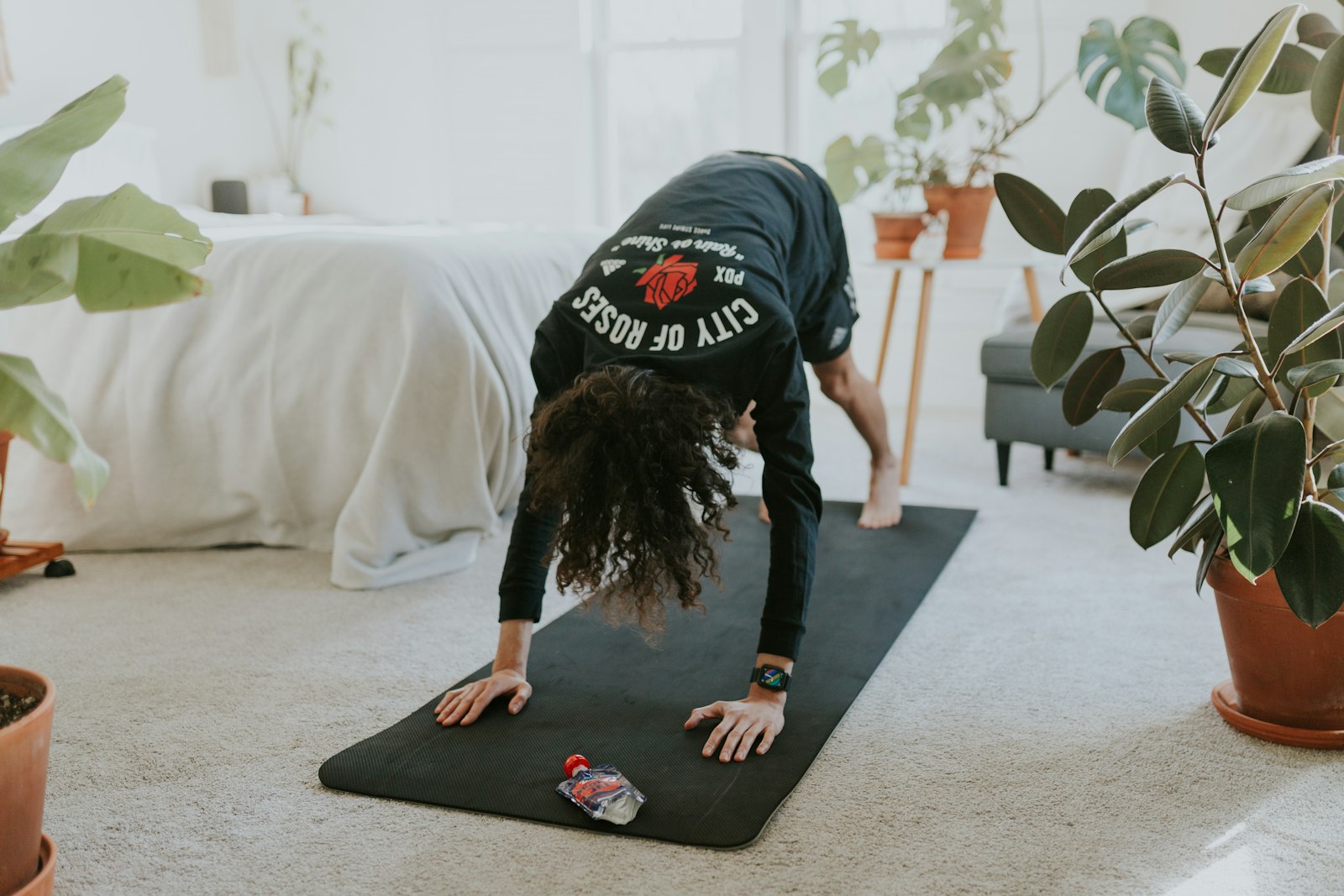
You know the moment. It’s day four of your new routine, your legs are weirdly angry about stairs, and a tiny part of your brain is already doing the old thing: If I take today off, I’ll lose momentum. If I push through, maybe I’m finally being disciplined.
Here’s the short answer: yes, beginners need rest days. Not because you’re weak, and not because your plan is falling apart. Because recovery is part of training, especially when your body is still getting used to the stress of exercise. Public-health guidance points most adults toward at least 150 minutes of moderate activity a week and muscle-strengthening work on 2 or more days per week—not seven hard lifting days in a row. (cdc.gov)
The good news is that a rest day does not mean “start over on Monday.” For most beginners, it means learning the difference between productive effort, normal soreness, and the kind of fatigue that’s your body asking for a little room to adapt. That difference is what keeps a week-one routine alive long enough to become a real habit.
Yes, beginners do need rest days
If you’re new to working out, your body is adapting to a lot at once: the movement itself, the coordination, the soreness, the schedule change, and the basic shock of doing more than usual. A beginner’s biggest problem usually isn’t undertraining. It’s doing too much too soon, getting wrecked for three days, then quietly deciding they’re “just not consistent.”
That’s why the baseline advice is so boring and so useful. The CDC says adults should aim for 150 minutes of moderate activity a week and 2 days of muscle-strengthening activity. WHO gives the same broad structure, with strengthening work on 2 or more days a week. (cdc.gov)
For beginner strength work, that usually looks like:
- 2 to 3 strength sessions per week
- At least 1 full rest day each week
- Often 48 to 72 hours before training the same muscle groups hard again
That last point is practical, not precious. In one small 12-week trial, recreationally active men training on three consecutive days or three non-consecutive days saw similar improvements overall, even though the non-consecutive group had 48–72 hours between sessions. The useful takeaway is not “recovery doesn’t matter.” It’s “your plan does not need to be perfectly optimized to work.” (pmc.ncbi.nlm.nih.gov)
If you’re still building your first routine, how to start working out at home is the better next step. If your real fear is “I’ll lose the chain if I rest,” read do rest days break your workout streak next.
What a rest day actually does
A rest day is not laziness with better branding. It’s the part where your body catches up.
When you train, you create stress. Recovery is where adaptation happens: soreness settles, fatigue comes down, and the next workout becomes possible without feeling like punishment. For beginners, the point of rest is not to do nothing forever. It’s to make the week repeatable.
1. It stops soreness from running your whole week
Some soreness is normal when you start, especially after unfamiliar or harder training. Delayed-onset muscle soreness typically builds after the session and often peaks around 24 to 72 hours later, which is exactly why back-to-back hard sessions for the same muscles can feel rough in week one. (pmc.ncbi.nlm.nih.gov)
2. It lowers the risk of the classic beginner mistake
The classic beginner mistake is not “taking too many rest days.” It’s going from zero to daily all-out effort because motivation is loud on day one. NHS inform guidance on reducing exercise injury risk advises people to avoid consecutive days training in the same sport, ensure at least one rest day per week, and include recovery days with light activity like gentle walking. (nhsinform.scot)
3. It makes consistency more realistic
If every workout leaves you too sore to move, the routine won’t feel sustainable. A plan you can repeat beats a heroic week that scares you off. This is where beginner consistency lives: not in proving how hard you can go, but in building a week your body doesn’t dread.
How many rest days does a beginner usually need?
For most beginners, 2 to 3 rest days per week is a normal place to start if you’re doing full-body strength workouts a couple of times a week. That could look like:
- Monday / Wednesday / Friday workouts
- Tuesday / Thursday / weekend recovery or lighter movement
Or:
- Tuesday / Thursday strength
- Walking or easy movement on other days
- One day that is genuinely just rest
You do not need a seven-day training split to make progress as a beginner. Two solid strength sessions a week already line up with the public-health baseline for muscle-strengthening activity. (cdc.gov)
If you’re mostly doing cardio, walking, cycling, or easy home workouts, you may tolerate more frequent activity. But “more days moving” is different from “more hard days.” A daily walk and a daily high-effort workout are not the same stress.
Signs you should take a rest day
This is where beginners get tripped up, because fitness culture loves extremes. Either you’re “making excuses” or you’re “overtraining.” Real life is less dramatic.
A rest day is probably the right call if:
- The soreness is strong enough that your form will obviously be worse
- The target muscles are still heavily sore from the last session
- You feel generally wiped out, not just a little unmotivated
- Your joints feel cranky in a way that normal muscle soreness doesn’t
- Your warm-up feels bad and you’re getting stiffer, not better
- You’re dreading the workout because your body feels cooked, not because you simply don’t feel like it
A recovery day might be better than a hard workout if you’re somewhere in the middle: tired, a little sore, but otherwise fine.
What counts as a good rest day?
A rest day has levels. It doesn’t have to mean lying on the floor like a fallen video-game character.
For a beginner, a good rest day might be:
- A walk
- Gentle mobility work
- Light stretching
- Easy cycling
- Normal life, minus the hard workout
NHS inform specifically suggests a recovery day with light activity and movement like gentle walking. That’s a useful model because it keeps the habit alive without stacking more hard stress on top of a body that’s already adapting. (nhsinform.scot)
Full rest day
You intentionally skip training and let recovery happen.
Active recovery day
You move, but the session should leave you feeling better, not more drained.
The test is simple: tomorrow should feel more possible because of today.
Rest day vs soreness: should you still work out?
Sometimes yes. Sometimes no.
If you’re mildly sore in one area, you can often still train a different area or do easier movement. Sore legs do not automatically cancel an upper-body session. A little stiffness that eases up as you warm up is different from pain that gets sharper as you move.
A simple beginner rule:
- Mild soreness: usually okay for light movement or training something else
- Moderate soreness: consider active recovery or an easier session
- Heavy soreness or pain: take the rest day
That’s not a medical diagnosis. It’s just a practical way to stop treating every discomfort like either a badge of honor or a personal failure.
The mistake beginners make: confusing rest with quitting
This is the part that matters most.
A lot of beginners don’t struggle with exercise. They struggle with the story they attach to one lighter day. If you think rest means you’ve broken the streak, you’ll keep forcing sessions your body isn’t ready for. Then the plan starts to feel miserable, and “consistency” becomes a fight instead of a rhythm.
A better mindset is: rest is part of the program, not a detour from it.
That sounds obvious, but it changes everything. It means you can take Wednesday lighter and still come back Friday. It means you stop grading yourself on daily perfection and start judging the week as a whole. It means you’re less likely to burn the routine down because one day felt off.
If that’s the piece you struggle with, streaks beat willpower is the bigger-picture version of this idea.
A simple beginner week that includes rest days
If you want something concrete, start here:
Option 1: Two strength days
- Monday: Full-body workout
- Tuesday: Walk or rest
- Wednesday: Light movement
- Thursday: Full-body workout
- Friday: Rest
- Saturday: Walk, mobility, or easy cardio
- Sunday: Rest
Option 2: Three strength days
- Monday: Full-body workout
- Tuesday: Rest or easy walk
- Wednesday: Full-body workout
- Thursday: Rest
- Friday: Full-body workout
- Saturday: Easy movement
- Sunday: Rest
That’s enough. Seriously. For a beginner, the goal is not to prove how much you can survive. The goal is to build a week you can repeat next week.
Do rest days slow your progress?
For beginners, rest days usually help progress because they make the plan sustainable.
You do not get extra points for being too sore to train well. You also do not build a lasting routine by white-knuckling seven intense days, then disappearing for two weeks. The CDC’s guidance is still the most useful lens here: adults need regular movement, strengthening work on 2 days a week, and some activity is better than none. (cdc.gov)
This is also where the evidence is worth keeping in perspective. Exercise science can give us broad patterns. What it cannot do is hand you one magical number of rest days that fits every person, every schedule, and every workout style. So use the guidelines, then adjust to reality.
The honest answer
So: do you need rest days as a beginner working out? Yes. Not because you’re falling behind. Because training only works if recovery is built in.
If you’re brand new, start with 2 to 3 strength workouts per week, leave space between harder sessions, and stop treating recovery like a moral test. Rest days are not wasted days. They’re the reason your next workout still happens.
And if your real problem is not knowledge but follow-through, that’s where a tool can help. OgamicX fits naturally here because it keeps workouts, meals, fasting, and streaks in one place, which makes the week easier to see as a system instead of a series of pass/fail days. The app is free to download, no card, and if you’re the kind of person who needs a gentle nudge more than a lecture, Ogi and the Care Plan can check in without pretending to auto-rewrite your plan for you.
But the core point comes before the app: a beginner routine should include rest on purpose.
The problem usually isn’t you. It’s the strategy. And “work out hard every day” is a bad strategy for most beginners.
Keep going:

Written by
The OgamicX Team
Tips, guides, and insight on fitness, nutrition, fasting, and building habits that last — from the team behind OgamicX.
About OgamicXFound this useful? Share it.