
Working Out at Home When You Have Gym Anxiety
Gym anxiety? Working out at home removes the trigger entirely — no audience, no judgment. Here's how to get genuinely fit without ever setting foot in one.
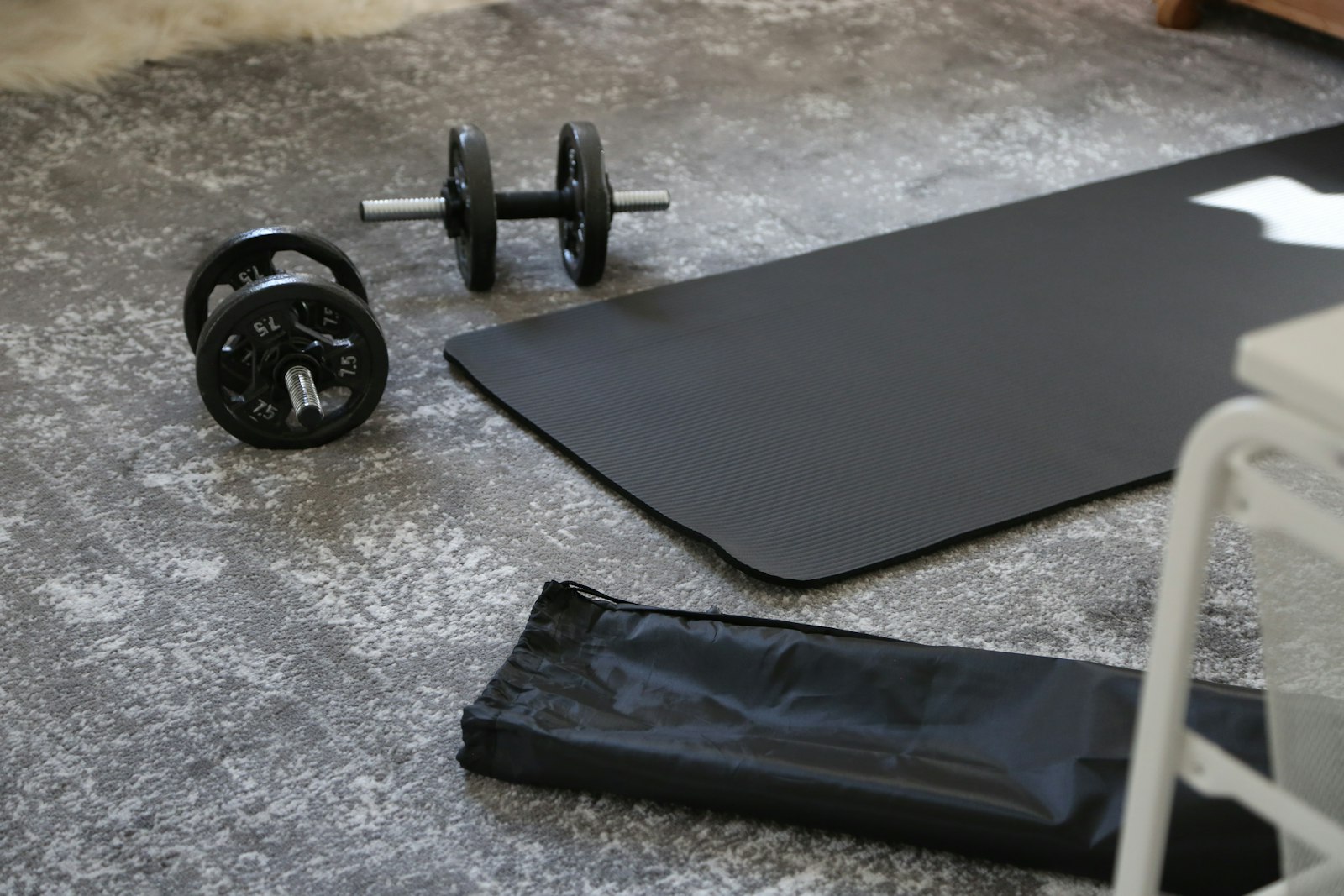
Here’s something nobody at a gym will ever tell you, for obvious reasons: you don’t have to go to one. If the thought of walking onto a gym floor fills you with dread, you have a complete, legitimate alternative that gets you genuinely fit — working out at home, where the audience you’re afraid of doesn’t exist.
This isn’t a consolation prize or a “until you’re brave enough for the real thing” stopgap. For a huge number of people, home is the real thing — the place they build strength, lose fat, get consistent, and feel good, without ever resolving their gym anxiety because they never need to. And for the people who do eventually want the gym, training at home first is the single best on-ramp there is: you arrive already strong, already in the habit, already a regular in everything but address. Let’s talk about how to actually do it.
Why working out at home solves gym anxiety completely (not partially)
Most gym anxiety advice tries to help you tolerate the gym — go at quiet hours, wear headphones, ignore the imaginary spotlight. That stuff works, and we cover it in the gym anxiety hub. But there’s a more direct fix that often gets skipped because the entire fitness industry is built on selling you a membership: remove the trigger.
Gym anxiety is a social fear — the dread of being watched, judged, compared. At home, there is no one to watch you, no one to judge you, no one to compare yourself to. You can fumble a movement, take a long break, look red-faced and ridiculous, restart an exercise five times — and the only witness is you. The anxiety doesn’t get managed. It has nowhere to exist. That’s not avoidance; for the thing you’re actually afraid of, it’s a complete solution.
And the freedom cuts deeper than just dodging judgment. No commute, no waiting for machines, no packing a bag, no membership fee, no opening hours. The friction that kills most fitness habits — I have to drive there, find parking, change, deal with people — just evaporates. You can train in your pajamas at 11pm. The lowest-friction workout is the one that’s always the one you actually do.
You need less equipment than you think (basically none)
The biggest myth keeping people tied to the gym is that you need its racks of machines to get results. You don’t, especially as a beginner. Your own bodyweight is a complete, scalable resistance system — it’s how gymnasts and calisthenics athletes build genuinely impressive strength.
Squats, lunges, push-ups (on your knees or against a wall to start), glute bridges, planks, and a bit of standing cardio cover every major muscle group with zero gear. As you get stronger, you make moves harder by changing leverage, slowing the tempo, adding reps, or shrinking your rest — a method called progressive overload that works just as well without weights as with them. A knee push-up becomes a full push-up becomes a feet-elevated one; a split squat eventually becomes a pistol squat. We lay out the whole system in progressive overload without weights.
When you’re ready for a little more, a single set of resistance bands or one pair of adjustable dumbbells extends your home setup for years — but you genuinely don’t need them to start, and “I don’t have equipment” is not a reason to wait.
A real home plan, not just “do some push-ups”
The thing home workouts usually lack isn’t equipment — it’s structure. At a gym, the environment nudges you; at home, you have to bring your own plan or you’ll end up doing a half-hearted set of something and calling it a day. So the move is to follow an actual program.
We’ve got a complete beginner version in how to start working out at home — a four-week, no-equipment progression you can run start to finish. The short shape of a good home session looks like this:
- A few minutes of easy movement to warm up — marching, arm circles, gentle squats.
- A lower-body move — bodyweight squats or lunges, 2–3 sets.
- A push move — push-ups, scaled to your level, 2–3 sets.
- A posterior move — glute bridges, 2–3 sets.
- A core hold — a plank, building up the seconds over time.
- Optional cardio finisher — a few rounds of high knees, or a brisk walk outside.
Twenty to thirty minutes, no gear, no audience. If you want something faster and more structured on the days you’re short on time, a 20-minute bodyweight HIIT session does the job. Follow a plan and home training stops being “messing about on the living room floor” and starts being real, progressive exercise.
The thing home workouts actually lack — and how to replace it
Let’s be honest about the one real downside. A gym gives you two things home doesn’t: ambient accountability (you went, so you’ll probably train) and the feeling that you’re not doing this entirely alone. At home, on the day you don’t feel like it, there’s nothing and no one to make you — and that’s where home routines quietly die.
This is the exact gap a good app fills — and it’s why training at home with one feels different from winging it solo. In Ogamic, the pieces that replace what a gym gives you for free are the unglamorous ones. There’s a library of free bodyweight templates, so you never open the app to a blank page wondering what to do today — you just press start. Every session feeds one streak you don’t want to break, which turns out to be a shockingly good stand-in for the gym’s “well, I’m already here” logic — and if you miss a day, a Streak Shield covers it so one off day doesn’t wipe the chain (why streaks beat willpower makes the case). And when you go quiet for a few days, the app checks in — a gentle nudge signed “Ogi,” not a guilt trip, which is about the closest thing there is to a workout buddy texting “you coming today?” minus the buddy and the gym. You can also message Ogi directly when you’re stuck on how to do a move, so training alone never means being lost.
None of that requires you to set foot in a gym, talk to a stranger, or be seen by anyone. It’s accountability and structure without the audience — which is the whole point.
“But will I be stuck at home forever?”
No — and this is the part that makes home training such a smart play even if you do eventually want the gym. Every week you train at home, two things happen: you get physically stronger, and you build the identity of someone who works out. (That identity piece is more powerful than it sounds; we get into it in identity-based habits.)
So picture walking into a gym six months from now. You’re not a nervous beginner who’s never squatted — you’re someone who’s been training consistently, who knows what the movements feel like, who already thinks of themselves as fit. The spotlight effect — our tendency to wildly overestimate how much other people notice us — has nothing to grab onto, because you’re not pretending to belong; you do. A lot of people use home as the runway and find the gym is suddenly no big deal. Others love home so much they never bother. Both are completely valid outcomes.
The home-workout case, in five lines
- Home removes the trigger, not just the symptom. No audience means the social fear has nowhere to live.
- You need almost no equipment. Bodyweight is a complete, scalable system; progressive overload works without weights.
- Follow a real plan. Structure is what home workouts lack — a template beats winging it.
- Replace the gym’s accountability with an app’s. Streaks, check-ins, and a pocket coach do what the gym environment did for free.
- It’s a runway, not a cage. Build strength and identity at home; the gym becomes easy later, if you ever want it.
Start tonight, where you’re comfortable
The best workout isn’t the one at the fancy gym you’re too anxious to enter. It’s the one you’ll actually do — and for a lot of people, that’s the one in their own living room, tonight, with no one watching.
So clear two square meters of floor, pick a simple routine (or open a free template and press start), and do twenty minutes. Then do it again tomorrow, or the day after. Build the streak. Let it become the thing you just do. And if the gym ever calls, you’ll walk in already strong, already consistent, already past the fear. The gym was always optional. Getting started was the only part that mattered — and you can do that right where you are.
Keep going:

Written by
The OgamicX Team
Tips, guides, and insight on fitness, nutrition, fasting, and building habits that last — from the team behind OgamicX.
About OgamicXFound this useful? Share it.