
Gym Anxiety: Why It Happens and How to Beat It
Gym anxiety is your brain overestimating an audience that isn't watching. Here's the psychology behind it — and the small, scripted way to beat it.
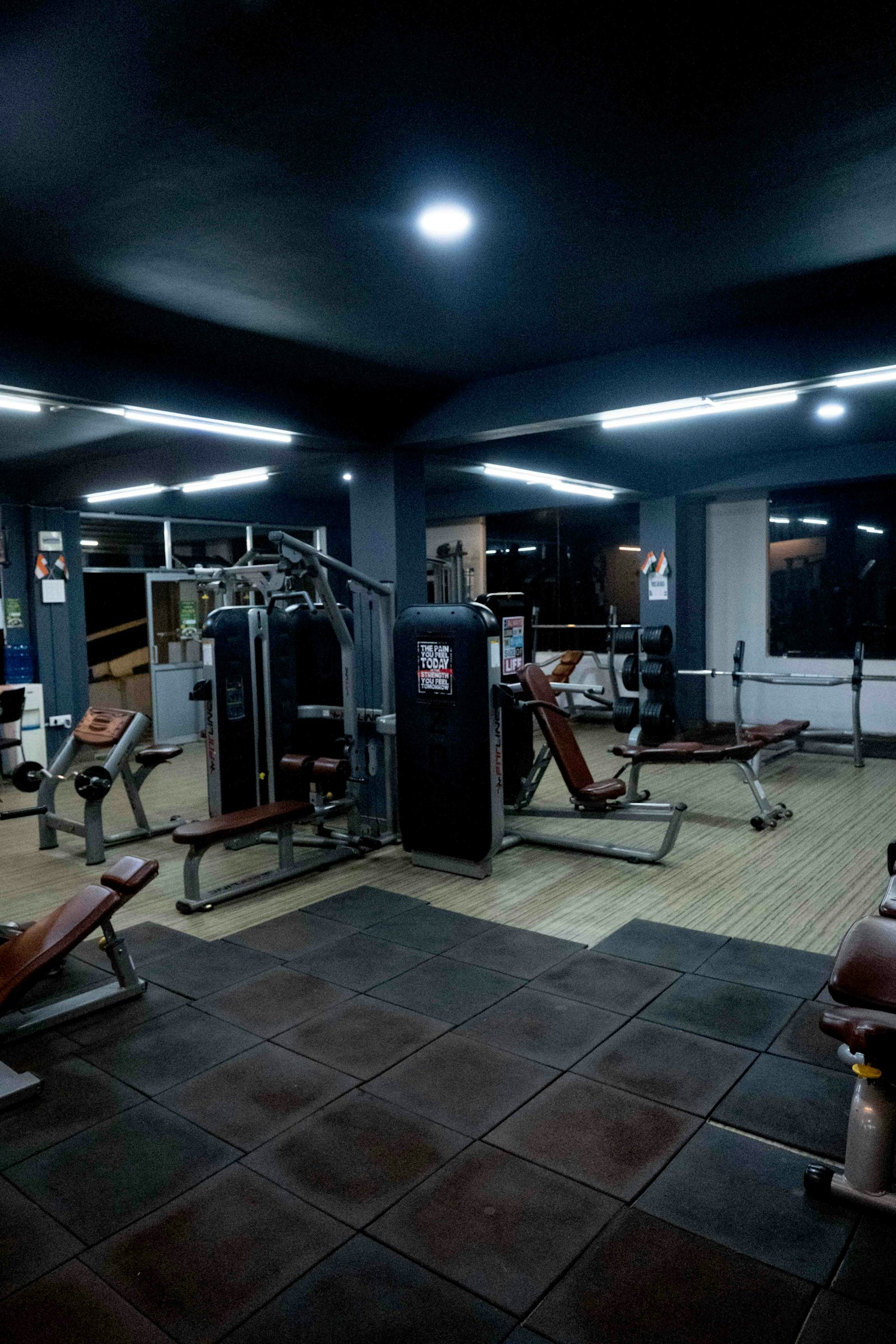
You stand outside the gym for a second longer than you need to. Through the glass, everyone looks like they know exactly what they’re doing — moving between machines with purpose, lifting things that look heavy, not even slightly unsure. And there’s you, with a vague plan to “do some weights,” suddenly certain that the moment you walk in, every single person will clock that you don’t belong.
That feeling has a name. Gym anxiety is the low-grade dread — sometimes a full stop — that comes from the fear of being watched, judged, or exposed as a beginner in a space that feels built for people who already have it figured out. It’s extremely common, it’s not a character flaw, and almost none of it is true. This is the hub for everything we’ve written about it: why your brain does this, what actually helps, and the three situations people get stuck in — I’m a total beginner, I feel like everyone’s staring, and I’m not sure I can face the gym at all. If you’re deep in one of those, jump to the post that fits. Otherwise, start here.
What gym anxiety actually is
Gym anxiety isn’t really about exercise. It’s a social fear that happens to take place near barbells. Strip it down and it’s the same machinery behind stage fright or walking into a party where you don’t know anyone: you’ve put yourself in a visible, evaluative space, and your brain has decided everyone there is a judge.
It shows up in a few flavors. Some people fear looking incompetent — using a machine wrong, racking the wrong weight, doing an exercise “the embarrassing way.” Some fear being seen in workout clothes, out of breath, red-faced, body on display. Some just feel a vague, paralyzing self-consciousness the second they walk in, like a spotlight clicked on. Often it’s all three at once, and the result is the same: you either avoid the gym, or you go and spend the whole time too tense to actually train.
Here’s the reframe that matters most, and we’ll keep coming back to it: the gym is not a performance. Nobody bought a ticket to watch you. The people around you are tired, mid-set, counting their own reps, and thinking about their own workout — not yours.
Why your brain manufactures gym anxiety (and why it’s lying)
Three well-documented quirks of human psychology stack up to create gym anxiety. Naming them takes away a lot of their power.
The biggest is the spotlight effect — our tendency to massively overestimate how much other people notice us. In the original experiments, people who wore an embarrassing T-shirt into a room were convinced roughly twice as many onlookers had noticed it than actually had. We walk around feeling like the star of a show everyone else is watching, when the truth is everyone else is starring in their own show and barely registering yours. At the gym, the spotlight effect is turned up to maximum — and it is simply wrong about how visible you are.
The second is social comparison. Psychologist Leon Festinger’s social comparison theory says we evaluate ourselves by measuring against the people around us — and in a gym, you’ve surrounded yourself with the worst possible reference group: people mid-workout, often months or years in, frequently the most experienced members because they’re the ones who show up most. You’re comparing your day one to their day five hundred. That’s not a fair fight, and your brain stages it anyway.
The third is self-presentation anxiety — the specific worry about how your body looks while it’s being evaluated. Researchers even have a scale for it: social physique anxiety, the distress people feel when they believe their physical selves are on display. It’s why the gym mirror, meant to help your form, can feel like a courtroom.
All three share one fatal flaw: they assume an audience that isn’t paying attention. The person you’re sure is judging your form is, with overwhelming probability, thinking about their next set, their playlist, or what they’re having for dinner.
The honest part: knowing this doesn’t instantly fix it
You can understand the spotlight effect completely and still feel your stomach drop walking through the door. Insight isn’t the same as comfort. So the actual fix isn’t to “think your way calm” in the moment — it’s to change the situation so there’s less to be anxious about in the first place. A few principles run underneath everything in this cluster:
Lower the stakes before you lower the fear. You don’t need to feel confident to start; you need a first session so small and so scripted that confidence isn’t required. Walking in with a plan beats walking in brave.
Familiarity does the heavy lifting. Anxiety is highest in the unknown. The fourth time you do something, it’s boring. Most gym anxiety doesn’t get argued away — it gets worn away by repetition, which is really just a habit forming. (We get into how long that takes in how long to form a habit — the short version is: less time than it feels like.)
You get a vote on the venue. This is the one nobody tells you: the gym is one option, not the only one. You can build real fitness — and real confidence — at home first, and walk into a gym later already feeling like a regular. More on that below, because it’s the door most people don’t realize is open.
The three doors out
Whatever’s actually going on for you right now, it’s probably one of these three. Pick the one that fits.
-
You’re brand new and the whole thing feels like a foreign country. You don’t know what to do, what to wear, or where to stand. → How to overcome gym anxiety as a beginner — the first-thirty-days playbook, from what to bring to a simple starter circuit you can run without asking anyone.
-
You can go, but you feel like everyone’s watching and judging you. The “gymtimidation” feeling. → How to feel less intimidated at the gym — the in-the-moment tactics that shrink the imaginary audience and make you feel like you belong.
-
Honestly, you’d rather not set foot in a gym at all right now. → How to work out at home when the gym feels like too much — build the habit and the confidence on your own turf, no audience required, and decide about the gym later (or never).
There’s no wrong door. Plenty of people walk through the third one, get strong and consistent at home, and either never look back or stroll into a gym a year later completely unbothered.
Where an app actually helps with gym anxiety
A gym is intimidating partly because you’re alone with a hundred unspoken questions and no one to ask. Am I doing this right? What should I even do today? Is it okay that I skipped Tuesday? That’s the gap a good app closes: it puts answers in your pocket.
In Ogamic, the parts that help here are the quiet ones. There’s a library of prebuilt bodyweight workouts you can run at home with zero equipment (the first few are free, which is plenty to start) — so you build a base, and a habit, before you ever deal with a gym floor. And when you hit one of those questions you’d feel silly asking a stranger — what is this exercise, how do I scale it down, what do I even do today — you can just ask Ogi, the in-app coach, instead of standing there guessing. Everything counts toward one streak, so even home sessions stack proof that you’re someone who shows up — the exact identity that makes a gym feel less like enemy territory. All of it’s free to start.
One honest note before you pick a door: if what you’re feeling goes beyond gym nerves — if it’s part of broader anxiety that shows up in lots of places — that’s worth talking to a professional about, and there’s no shame in it. For the everyday “I feel weird walking into the gym” version, though, the fix is mostly mechanical, and it’s very learnable.
The whole thing, in one line
Gym anxiety is your brain overestimating an audience that isn’t watching. You beat it less by arguing with the feeling and more by making the first reps small, scripted, and repeated — wherever you’re most comfortable doing them. Pick your door above, run the playbook, and let the habit do the rest. The gym was never the test you thought it was.
Keep going:

Written by
The OgamicX Team
Tips, guides, and insight on fitness, nutrition, fasting, and building habits that last — from the team behind OgamicX.
About OgamicXFound this useful? Share it.