
Short Workouts for a Busy Schedule (That Work)
You don't need an hour. Build a week that assumes you have almost none — short, repeatable sessions that beat the perfect workout you keep skipping.
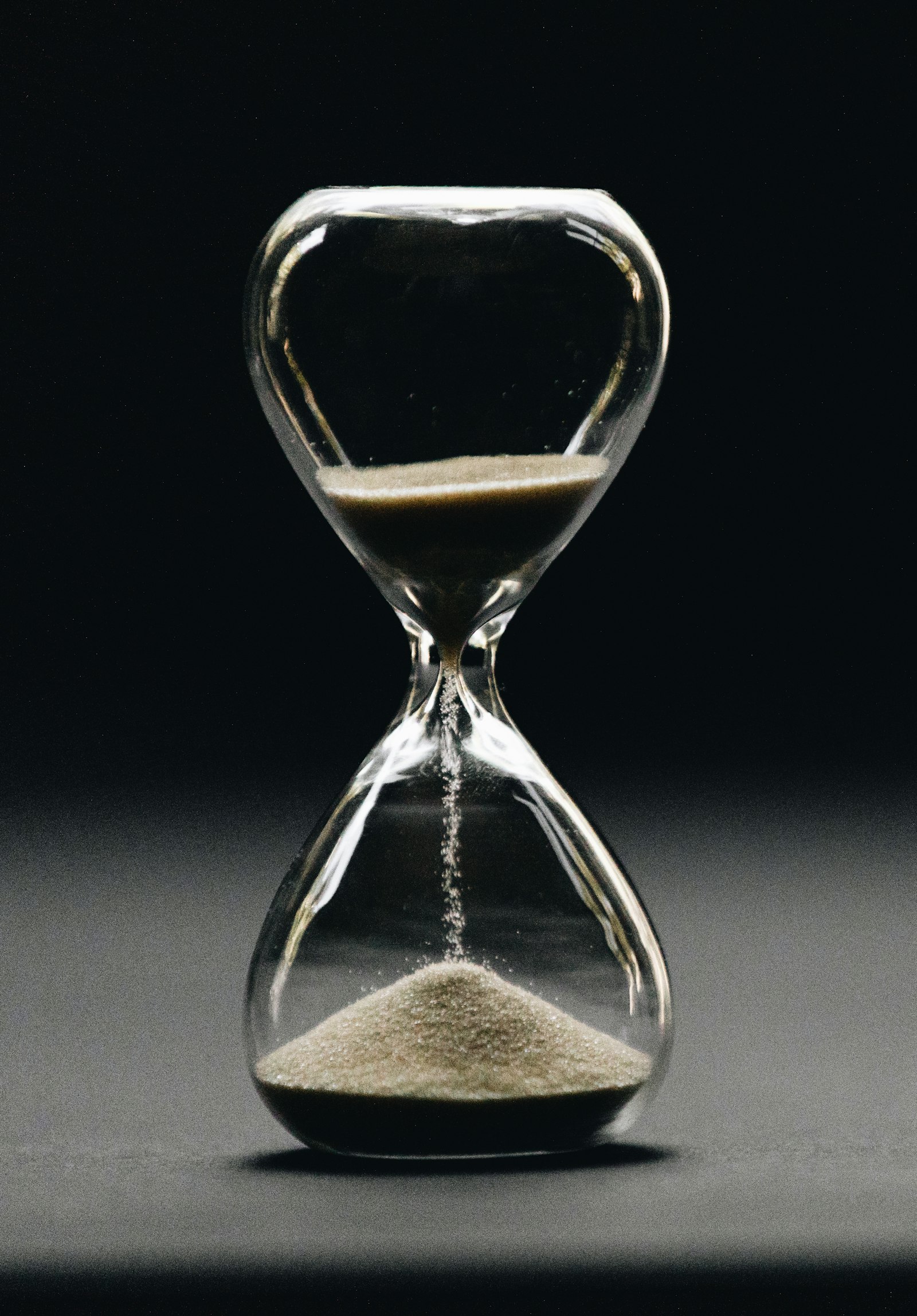
You don’t have a motivation problem. You have a calendar problem. Somewhere between the standup that ran long, the commute, the three unread group chats, and the dinner you didn’t plan, the workout you “definitely meant to do” got quietly evicted from your day — again. And the story you tell yourself afterward is the dangerous part: that you’ll do it properly when life calms down. When you have a real hour. When you can get to a gym. That hour is not coming. Life is not calming down. The good news is that you never needed the hour in the first place.
The whole premise that fitness requires big, uninterrupted blocks of time is what’s actually keeping you stuck. Short workouts for a busy schedule aren’t a sad compromise — they’re a better system, because the workout you can repeat three times a week beats the perfect one you do twice and abandon. The trick isn’t finding more time. It’s building a week that assumes you have almost none, and works anyway. Let’s build that week.
Why short workouts actually work (the part nobody tells busy people)
Here’s the reframe that changes everything: the official target for health isn’t “an hour a day.” The CDC recommends adults get about 150 minutes of moderate activity a week, and explicitly says you can “spread your activity out during the week and break it up into smaller chunks of time” — with the blunt, freeing footnote that some physical activity is better than none. Read that again. The people who write the guidelines are not asking you to find a daily hour. They’re asking for roughly 20–30 minutes most days, and they don’t care whether it arrives in one block or several.
That’s not a watered-down version of “real” exercise, either. The fitness adaptations are real even when the sessions are tiny. In one twelve-week trial, people doing 10-minute workouts — with just one minute of genuinely hard effort inside each — improved their cardiorespiratory fitness (VO2 peak) by 19%, identical to a group grinding out 45-minute endurance sessions, despite a five-fold lower time commitment. The body responds to the stimulus, not to how impressive your session looked. A short, focused workout that actually challenges you is not a token gesture — it’s the active ingredient with the filler removed.
And if you can’t even carve out one clean 20-minute slot? You can stack the pieces. A meta-analysis pooling 19 studies found no difference in cardiorespiratory fitness between exercise done in one continuous bout and the same exercise broken into shorter bouts across the day — and the accumulated, broken-up version actually had a small edge for body-mass change. Translation: three 7-minute pockets scattered through a chaotic day genuinely count. Your fitness adds them up even when your schedule feels like it doesn’t.
So the question stops being “when will I have an hour” and becomes a much more answerable one: what’s the minimum effective dose I can fit into the life I actually have, and how do I make sure it happens?
The minimum effective dose: what a “complete” short week looks like
Minimum effective dose is the smallest amount that still moves you forward. For a busy person who isn’t training for anything in particular but wants to be genuinely fitter, stronger, and less wrecked by stairs, a realistic week looks like this:
- 3 to 4 short sessions, 10–25 minutes each. That’s it. Not seven. Three or four.
- A mix, not a monotone. Roughly: two sessions that get you out of breath (a circuit or intervals), and one or two that build strength (bodyweight resistance — squats, push-ups, lunges, planks).
- The rest of the week protected for recovery and life. Off days aren’t failures; they’re where the gains actually consolidate.
A sample week that survives a real calendar:
- Monday — 15-min full-body circuit (squats, push-ups, rows, plank)
- Tuesday — off, or a brisk walk if you’ve got it
- Wednesday — 10-min intervals (the do-it-in-the-kitchen kind)
- Thursday — off
- Friday — 20-min strength + core
- Saturday — 15-min circuit or a longer thing if the weekend gifts you time
- Sunday — off
Notice what this isn’t: it isn’t a punishing daily grind, and it doesn’t depend on a single piece of equipment or a commute to a building. Every session here can be done on the floor of your apartment in the clothes you’re already wearing. The structure does the heavy lifting, not your willpower. Speaking of which — short and frequent isn’t a license to go hard every single day. Even tiny sessions need recovery between the intense ones, which is exactly why the “off” rows above are load-bearing. If you’re not sure how much rest your body actually wants, here’s how many rest days a week most people genuinely need.
The one rule that makes short sessions actually work
Here’s the catch that separates a short workout that works from one that’s just a token gesture: when you cut the time, you have to bring a little more intensity to buy it back. An hour of strolling and a fifteen-minute session that genuinely challenges you are not the same trade — the short one only pays off because you’re working harder inside it. That’s the entire reason ten- and fifteen-minute workouts deliver real results: you compress the effort instead of diluting it across an hour.
In practice that means three things. One, minimal rest — keep your circuits moving, with short breaks rather than long ones, so your heart rate stays up and you’re never really coasting. Two, compound moves — squats, push-ups, lunges, and planks hit big chunks of your body at once, so every minute does more than an isolation exercise ever could. Three, finish slightly winded. Not wrecked, not crawling — but you should know you did something. If you can hold a relaxed conversation the whole way through a 15-minute session, it was a warm-up, not a workout, and you’ve got room to push.
This is also the answer to the most common short-workout mistake: treating a quick session like a casual one. Short does not mean easy. It means concentrated. Bring even a modest amount of intensity to ten focused minutes and you’ll get more out of it than a distracted, phone-checking forty-minute amble — which, conveniently, is also the workout that takes four times as long to skip.
Anchor the workout to something that already happens
A slot in your calendar at “5:00 PM” is a wish. A workout attached to a thing you already do every single day is a plan. This is the single highest-leverage move for busy people, and it costs nothing.
Instead of scheduling your workout against the clock, anchor it to an existing, non-negotiable event: after I pour my morning coffee, I do my 10-minute circuit. Before I shower in the evening, I do my session. The minute I close my laptop for the day, mat goes down. You’re borrowing the reliability of a habit you already have and letting it drag the new one along behind it. This is the science of if-then planning, the one-line trick that reliably gets people to work out more — and it works precisely because it removes the daily decision. You’re not deciding whether to work out anymore. The coffee already decided for you.
The other half of anchoring is protecting the slot once it exists. A 15-minute workout is small enough that the world will happily steal it — a “quick” message, one more email, the doom-scroll that eats the window. Treat the slot like a meeting you’d be embarrassed to no-show. Put it in your calendar with a real start time. Lay your gear out the night before so there’s zero friction. And accept the deal that an imperfect 8-minute version of today’s session beats the heroic 30-minute one you keep postponing into next week.
The honest caveat: short doesn’t mean magic
Let’s keep this real, because the internet is full of people who won’t. Short workouts are enough to build genuine fitness, real strength, and a durable habit. They are not a cheat code that erases everything else. If your goal is changing your body composition, that’s decided overwhelmingly in the kitchen — no workout, short or long, out-trains a careless diet. And if you’re chasing a specific athletic feat, a marathon, or a serious strength number, you will eventually need more volume than a 15-minute floor session can give you.
For the overwhelming majority of busy people, though, whose actual choice is between a short workout and no workout — not between a short workout and a perfect 90-minute one — short wins every time it’s even slightly contested. The enemy here was never “not enough exercise.” It was zero. Short workouts beat zero, and they keep beating it for years if you let them.
Find your situation — and the playbook that fits it
“Busy” isn’t one problem. It’s a few different problems wearing the same coat, and each one has a different fix. Pick the version that sounds most like your week:
-
You can find one small slot, but you need a workout that fits it. You’ve got 10 minutes and the will to use them — you just need a real, complete session to drop in. Start with a 10-minute full-body workout built for busy people. (Want a slightly longer one for the days you do have the time? The 20-minute bodyweight HIIT is the next step up.)
-
You genuinely can’t see where the time is hiding. It’s not that you won’t — it’s that your day looks like a wall with no gaps in it. The fix is a set of time-finding tactics: habit-stacking, calendar-blocking, the lunch-break session, the non-negotiable 15. Here’s how to fit a workout into a busy schedule when there’s seemingly no room.
-
You have, by your honest accounting, no time at all. Newborn, two jobs, brutal shift pattern — the days where 20 uninterrupted minutes is a fantasy. There’s still a real floor, and it involves splitting movement across the day instead of finding one block. Read the short workout for when you have no time.
Most people are some blend of all three depending on the week. The pillar idea ties them together: the unit of fitness is the short, complete session, and the skill is fitting those units into the gaps you already have.
Where an app quietly does the annoying parts
Building this week yourself is doable. The friction isn’t the workouts — it’s everything around them: programming the sessions, remembering which day is which, and the silent killer, simply showing up the third time when no one’s watching. That last one is where a tool earns its place.
OgamicX is built for exactly this shape of week. It ships with 30 prebuilt bodyweight templates — home, no equipment, follow-along — including short HIIT and cardio circuits, so you’re never freestyling or staring at a blank mat wondering what to do for 15 minutes; you just open the template and go. The free tier lets you keep a few of these running at once, which is plenty to anchor the 3–4-session week above. Because the slots are short, the real game is consistency, and that’s where the unified streak comes in: any logged activity — a 10-minute circuit, a strength session, even a walk — keeps the chain alive, so a tiny session on a chaotic day still counts as a kept promise. And when you do slip and a day goes by empty, Ogi — the in-app AI coach — sends a gentle Care Plan nudge signed “- Ogi,” the quiet tap on the shoulder that gets you back two days later instead of two weeks later. The workouts are short. The system that protects them is the whole point, and that’s the part you don’t have to build yourself. It’s free to start, no card required.
The one-line version
Stop waiting for the hour that isn’t coming: build a week of three or four short, complete sessions, anchor each one to a habit you already have, protect the slot like a meeting — and let the small reps stack into something that actually lasts.
Keep going:

Written by
The OgamicX Team
Tips, guides, and insight on fitness, nutrition, fasting, and building habits that last — from the team behind OgamicX.
About OgamicXFound this useful? Share it.