
How to Break a Fast Without a Blood-Sugar Crash
How to break a fast the right way: lead with protein and fat, add fiber, let carbs ride along — and skip the refined-carb sugar bomb that triggers the crash.
It’s noon. You’ve made it sixteen hours, the window is finally open, and your brain has spent the last forty minutes constructing a vivid fantasy involving a pastry, an iced caramel something, and possibly a second pastry. You earned it, right? So you cave gloriously — and an hour later you’re foggy, irritable, and somehow hungrier than you were before you ate. The fast was the easy part. The first meal is where it quietly went sideways.
Here’s the thing almost nobody tells you: how you break a 16-hour fast matters more than how you survive it. The classic mistake — opening on a refined-carb sugar bomb on a completely empty stomach — sets off a fast blood-sugar rise and the crash-and-rebound that follows, which is exactly the hunger spiral that undoes the deficit your fast just built. This is the dedicated deep dive on getting that one meal right: what to eat, in what order, how fast, and how to do it without erasing the work. (If you want the wider list of fasting slip-ups, the blood-sugar bomb is one of seven mistakes — this post is the full how-to for that single one.)
Why the meal that breaks a fast hits so hard
After sixteen hours without food, the first thing you eat lands on an empty system with nothing to slow it down. That’s not a problem in itself — your body is built for it. It becomes a problem when the first thing you eat is fast-digesting sugar and refined carbs with no protein, fat, or fiber riding alongside.
The principle is plain food science: refined carbohydrates — white bread, pastries, juice, sweetened coffee, big bowls of white rice — are digested quickly and raise blood glucose faster and higher than meals built around protein, fat, and fiber — in head-to-head testing, a protein-rich meal produced a lower glucose rise than the carbohydrate-heavy version. A glass of orange juice and a croissant arrive almost as pure fast sugar. Add protein, fat, and fiber to the same plate and that rise is blunted and stretched out, because those nutrients physically slow how quickly the meal leaves your stomach and enters your bloodstream.
Why do you care about a gentle rise versus a sharp one? Because the sharp version is what produces the crash. A rapid spike tends to be followed by a quick drop, and that drop is when you feel foggy, low-energy, and ravenous again — often within the hour. That rebound hunger is what powers the over-eating that quietly erases your calorie deficit. A steadier rise from a balanced meal keeps your energy level and your appetite far more even through the afternoon. Same calories, completely different rest of your day.
This is everyday nutrition, not a medical claim. If you have a blood-sugar condition like diabetes or prediabetes, the stakes around post-meal glucose are different and genuinely medical — talk to your doctor about how to break a fast, because the general advice below isn’t built for you specifically.
How to break a fast: protein and fat first
The single highest-leverage move when breaking a fast is sequencing. Lead with protein and a healthy fat, bring in fiber, and let any quick carbs ride along with that food instead of arriving solo and first.
Protein is the anchor. It’s the most satiating macronutrient — protein keeps you fuller for longer than the same calories of carbs or fat, which is the entire point of the meal that opens your window. It also blunts the post-meal glucose rise and gives your body something substantial to work with. Aim for a real serving: eggs, Greek yogurt, chicken, tofu, fish, cottage cheese — roughly 25–40 grams of protein is a solid target for a main meal.
Healthy fat slows everything down. Avocado, olive oil, nuts, the yolk in your eggs — fat is the natural brake on digestion. A little of it on the plate flattens the curve and adds staying power.
Fiber does the same job from the vegetable side. Berries, leafy greens, beans, whole vegetables — fiber slows absorption and fills you up on very few calories. It’s also the part most people skip when they’re starving and reaching for the fastest option.
Then carbs, attached to all of the above. You don’t have to fear carbs when you break a fast — you just don’t want them flying solo. A bed of rice under a protein-and-veg bowl is fine. Berries with your yogurt are great. The difference between “fine” and “blood-sugar bomb” isn’t the carb itself; it’s whether it arrives alone on an empty stomach or wrapped in protein, fat, and fiber. The sequencing is doing real work: in one trial, eating protein and vegetables before the carbs cut the post-meal glucose peak by roughly 45% versus carbs-first.
Break-fast meal templates that actually work
Theory is nice; you want to know what to put on the plate at noon. Here are four templates that all follow the same rule — protein and fat first, fiber present, carbs along for the ride — across different cravings and effort levels.
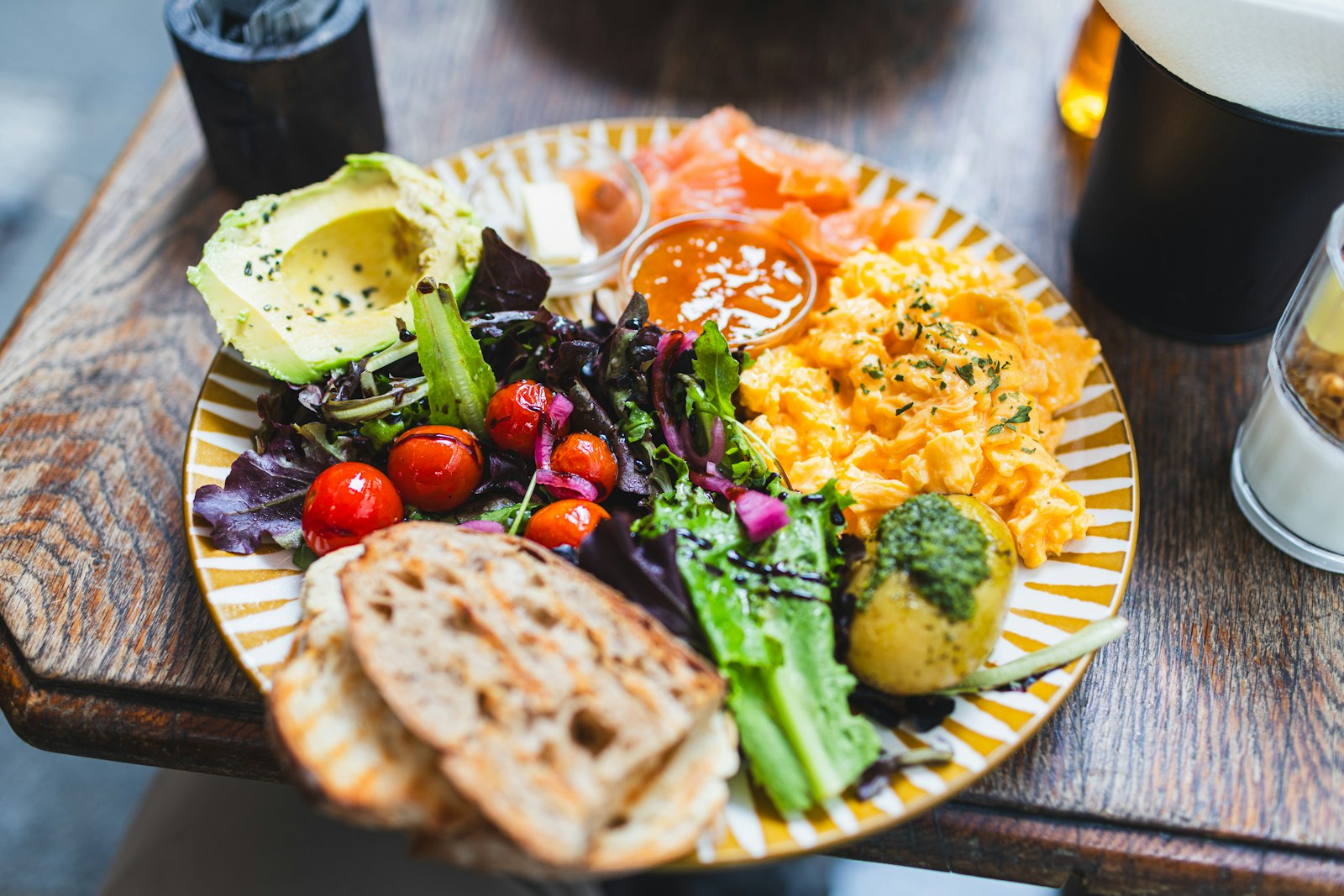
The classic plate: eggs + avocado + berries. Two or three eggs (protein and fat in one), half an avocado, a handful of berries for fiber and a little sweetness. It’s the prototype break-fast meal for a reason: protein-forward, naturally slow-digesting, genuinely filling, and about five minutes of effort. Add a slice of whole-grain toast if you want the carb.
The no-cook option: Greek yogurt + nuts + fruit. A bowl of plain Greek yogurt (protein), a small handful of nuts (fat and crunch), and some fruit or berries (fiber, flavor). Zero cooking, travels well, and it’s the move when your window opens at work or you simply can’t be bothered. Skip the pre-sweetened flavored tubs — that’s the sugar bomb wearing a health-food costume.
The proper meal: chicken or tofu rice bowl with veg. A palm-sized portion of chicken or a slab of tofu, a fist of rice, and a generous pile of vegetables. This is the template when your window opens at lunch and you want a real meal, not a snack. The protein anchors it, the veg brings fiber, and the rice is balanced by both — exactly the company refined carbs need.
The balanced any-time plate. No recipe required: pick a protein, add a vegetable or salad, include a healthy fat, add a modest carb. A chicken-and-salad bowl, salmon with roasted veg, a tofu stir-fry over a small scoop of rice. The shape matters more than the specifics — protein-forward, fiber present, fat included, carbs reasonable.
Notice what’s not on this list: juice, pastries, sugary cereal, a giant bowl of plain white rice or noodles by itself, or a sweetened coffee drink standing in for a meal. None of those are forbidden forever — they’re just a terrible first thing after sixteen empty hours. Need ideas beyond the usual suspects? Here’s a longer list of high-protein foods that aren’t just chicken.
Eat at a sane pace (and ease in after longer fasts)
You’ve been thinking about this meal for hours, so the temptation is to inhale it. Don’t. Eating slowly is genuinely useful when you break a fast, for two reasons.
First, fullness signals lag behind your fork — it takes a little while for your body to register that food has arrived. Eat fast and you’ll blow past “satisfied” into “uncomfortably stuffed” before the signal catches up, which is one more way the break-fast meal balloons past what you actually needed. Slow down, and you give yourself the chance to stop at enough.
Second — and this matters more the longer your fast ran — your digestion has been idling, and shocking it with a huge meal can leave you bloated, crampy, or queasy. For a standard 16:8 this is usually mild. After a longer 20-hour or OMAD-style fast, ease in deliberately: a moderate portion first, eat slowly, and add more after twenty minutes if you’re still genuinely hungry. You’ll almost always find you needed less than the panic-hunger told you. (Weighing how tight to run your window? Here’s 16:8 vs 18:6 vs OMAD compared.)
What to drink when you break a fast
Drinks are where a careful break-fast meal quietly goes wrong, because liquid sugar is the fastest sugar there is. A large juice, a sweetened iced coffee, or a soda delivers a fast hit of carbs with nothing to slow it and barely any fullness in return — the definition of a blood-sugar bomb in a cup.
Better options: water is the obvious first move. Black coffee or plain tea are fine right up to and through the meal — and if you took them during the fast, they didn’t break it. If you want something with your meal, water or unsweetened tea alongside real food is the steady choice. Save the sweet drink, if you want one at all, for after you’ve eaten a proper protein-forward meal — at that point it’s a treat landing on a settled stomach, not a spike landing on an empty one.
The special case: you trained fasted
A huge number of people run 16:8 and train in the morning before eating — and if your eating window opens right after a fasted workout, that first meal is doing double duty. It breaks your fast and it’s your recovery meal. That raises the stakes in a good way: it’s exactly the meal you don’t want to phone in with a token handful of nuts.
The good news is that the break-fast rules and the recovery rules point the same direction. Lead with protein to give your muscles the raw material to rebuild, and lean a little more into the carbs than you otherwise would, because you’ve just emptied the tank and refilling it is part of recovery. A proper plate of eggs, toast, and fruit, or a solid rice-and-protein bowl, lands far better here than a snack would. The one thing to watch is the “I earned it” overshoot — it’s easy to let a post-workout plate double in size and quietly cancel the deficit the session built. The meal should refuel the session, not erase it. The full playbook for eating around training is in what to eat before and after a workout.
Don’t let the first meal erase the deficit
This is the quiet trap that ties the whole thing together. You can pick the perfect break-fast meal — protein-forward, balanced, beautifully sequenced — and still undo your fast by eating too much of it. Fasting works by trimming your total intake across the day; the window is just the tool that gets you there. If the meal that opens the window is enormous, the deficit never shows up, no matter how clean the macros were.
So portion matters as much as composition. A balanced plate at a reasonable size keeps you steady, full, and in a deficit. The same plate at double the size keeps you full and erases the entire point of the morning. This is the through-line from every fasting mistake: the schedule isn’t magic, the math is — and the break-fast meal is where the math most often slips. If you’re just getting started with all this, the gentle on-ramp is laid out in the beginner’s guide to intermittent fasting.
How OgamicX helps you nail the break-fast meal
The two hard parts of breaking a fast well are timing the window and staying honest about the meal — and both are exactly the kind of attention that’s easy to lose right when you’re hungriest. That’s the gap OgamicX is built to close.
The fasting tracker ships with 16:8, 18:6, 20:4, and OMAD presets plus custom windows, and tracks the active session start to finish — so you can start, monitor, and cleanly end the fast on a tap instead of running a clock in your head. The moment you end it is the moment this whole post applies.
Then the break-fast meal becomes something you can actually see rather than guess at. Snap a photo and MealScan estimates the calories and macros of what’s on the plate, or log it manually when you want precision — either way you can check that your first meal hit its protein and didn’t quietly blow the day’s calorie target. That’s how you catch the “I think I ate normally” overshoot before it costs you the deficit. You set a daily protein and calorie target; the meal fills the bar in real time.
And because OgamicX runs a unified streak, ending a clean fast or logging that break-fast meal keeps the same chain alive that your workouts feed — any tracked action counts. If you’d rather just ask “is this a good way to break my fast?”, Ogi, the in-app AI coach, is there for exactly that, and the Care Plan checks in when life gets in the way. It’s free to start, no card needed.
The bottom line
Breaking a 16-hour fast isn’t complicated, but it’s the part that quietly decides how the rest of your day feels. Skip the refined-carb sugar bomb that spikes your blood sugar and leaves you crashing an hour later. Lead with protein and a healthy fat, bring in fiber, and let carbs ride along instead of arriving solo. Eat at a sane pace, ease in after longer fasts, keep your drinks unsweetened, and keep the portion reasonable so you don’t erase the deficit the fast just built. If you trained fasted, treat that first meal as your recovery meal too.
Pick a protein-forward plate, eat it slowly, and let the steady afternoon — not the noon-time crash — tell you that you got it right. Start the timer, log the meal, and break your next fast like you meant to.
Keep going:

Written by
The OgamicX Team
Tips, guides, and insight on fitness, nutrition, fasting, and building habits that last — from the team behind OgamicX.
About OgamicXFound this useful? Share it.