
How to Stop Snacking at Night Without Willpower
How to stop snacking at night without willpower: use better dinners, more friction, and simple if-then plans so evening eating stops running the show.
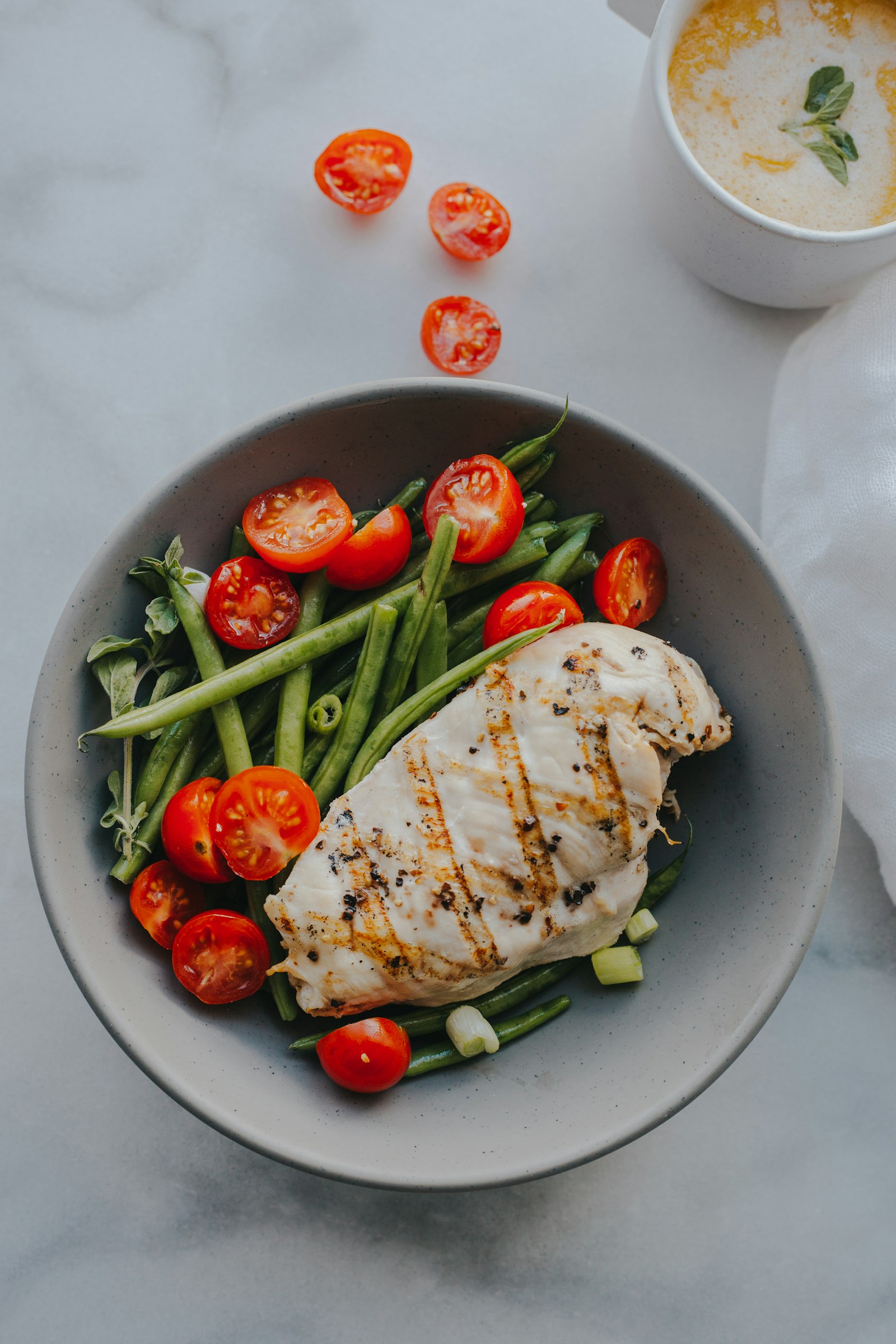
You know the moment. The kitchen is technically closed, you already ate dinner, and you’re not even that hungry — but somehow you’re standing in front of the freezer with the door open, telling yourself this little bite doesn’t count.
If you’re trying to figure out how to stop snacking at night without willpower, the honest answer is this: don’t make willpower do the whole job. Late-night snacking is usually less about character and more about setup — how much you ate earlier, what food is visible, how tired you are, and what your evening routine quietly trains you to do. Research on implementation intentions suggests that specific plans can help people follow through on healthier eating behaviors, especially when the plan is concrete enough to survive real life, not just written as a vague promise in your notes app.
Why night snacking feels so hard to stop
Night snacking has a weird advantage: it shows up when your day is basically over. By evening, the practical problem is simple — you’ve already made a hundred decisions, and the snack is right there.
There’s also a cue problem. If your nightly pattern is sit down → open streaming app → look for something sweet, your brain starts linking those actions together. Over time, the snack stops feeling like a fresh decision and starts feeling like part of the scene.
And sometimes you really are underfed. If dinner was tiny, low in protein, low in fiber, or eaten too early, the 10 p.m. “craving” may be partly plain old hunger. A review in Advances in Nutrition notes that snacks and foods with more protein, fiber, or complex carbohydrates may support satiety better than the usual ultra-easy options (review on snack quality and satiety).
The first fix: make sure it isn’t just delayed hunger
Before you build an anti-snacking routine, check the boring stuff first:
- Did you eat enough at dinner?
- Did that meal include protein?
- Was there any fiber-rich food in it?
- Are you going 5–6 hours after dinner before bed?
If the answer is “not really,” start there. A better dinner often does more than a heroic promise to never snack again.
A practical test: for one week, make dinner a little more complete. Think protein + something high-volume or fiber-rich + carbs you actually enjoy. You’re not trying to engineer a perfect plate. You’re trying to remove one obvious reason the snack attack keeps showing up.
Use friction, not force
If you only remember one line from this post, make it this one: the easier the snack is to grab, the more likely you are to eat it at night.
That sounds obvious, but it’s the part most people skip. They keep the cookies on the counter, chips at eye level, ice cream in the front of the freezer, then expect a tired 11 p.m. version of themselves to behave like a nutrition podcast host.
Try these friction moves instead:
1. Make the default snack harder to reach
Put repeat-trigger foods out of immediate sight or out of the house entirely if they’re a real pattern problem.
Good friction looks like:
- single portions instead of giant bags
- freezer instead of countertop
- top shelf instead of eye level
- “not in the apartment” instead of “I’ll resist it”
2. Create a visible evening alternative
If you do want something at night sometimes, decide that in advance. Don’t freestyle it in front of an open cupboard.
Examples:
- Greek yogurt and fruit
- tea and a piece of toast
- a planned protein snack
- popcorn portioned before you sit down
The goal is not “never eat after dinner again.” The goal is to stop the unplanned, disconnected, standing-in-the-kitchen kind of snacking.
3. Close the kitchen on purpose
Not in a punishing way. In a cue way.
Pick a small shutdown ritual after dinner:
- load the dishwasher
- wipe the counter
- make tea
- brush your teeth
- turn off the kitchen light
That sequence becomes a cue that eating is done for the night.
The best tool here is an if-then plan
This is where the evidence gets usefully practical. Implementation intentions are basically prewritten if X happens, then I do Y plans. Research suggests they can help translate good intentions into action, including around healthier eating choices and stress-related snacking. They’re not magic, and they work better when the situation and response are specific, but they’re still a lot more useful than “I’ll try harder tonight.”
For night snacking, that means writing the plan before night happens.
Good if-then plans for late-night snacking
- If I want something sweet after dinner, then I’ll make tea and wait 10 minutes first.
- If I’m still genuinely hungry at 9 p.m., then I’ll eat the snack I chose earlier, not whatever is open.
- If I walk into the kitchen out of boredom, then I’ll drink water and sit back down before deciding.
- If I start scrolling and want snacks, then I’ll keep my hands busy with tea, gum, or fruit.
- If I want a second snack, then I’ll ask: am I hungry, tired, stressed, or just avoiding bedtime?
The key is specificity. “I’ll try to snack less” is too fuzzy. “If I want chips while watching TV, I’ll eat the bowl I portioned earlier or nothing” is concrete enough to survive a real Tuesday.
Find the real trigger, not the fake one
A lot of night snacking gets mislabeled as hunger when it’s actually one of four things:
Tired
You don’t want food so much as a softer landing into the end of the day.
Bored
The snack is something to do with your hands while your brain half-watches something.
Stressed
Food becomes the transition out of work mode.
Understimulated but not ready for bed
This is the “I deserve a little treat because today was annoying” zone.
Try a quick note on your phone for a few nights:
- time
- what you ate
- what you were doing
- what you were feeling
Not forever. Just enough to spot the pattern. If the answer is always “Netflix + tired + sweet,” you don’t have a mysterious lack of discipline. You have a routine.
Give yourself a smaller win than perfect
This is where people usually make the whole thing harder than it needs to be. They decide the new rule is no food after dinner ever, break it once, and then turn one snack into a full whatever-I’ve-already-ruined-it session.
That basic lapse-spiral idea shows up in relapse-prevention research: treating one slip like total failure tends to make the next slip more likely, which is why good relapse-prevention frameworks focus on recovery instead of drama. One snack is one snack. It is not proof that the plan failed.
A better goal is:
- fewer unplanned snacks
- smaller portions
- more nights with a plan
- faster recovery after a slip
That’s real progress. And it’s how habits actually stick.
What to do tonight, specifically
If you want the shortest possible version, do this tonight:
Before dinner
Decide whether you’re allowing a planned evening snack. Pick it now if yes.
At dinner
Eat a real meal, not an “I’ll be good” meal.
After dinner
Do a kitchen shutdown ritual:
- put food away
- brush teeth
- make tea or sparkling water
- leave the kitchen
If the urge hits later
Use this script:
“If I’m truly hungry, I can eat the snack I planned. If I’m not, I’m just having an urge, and urges pass.”
Then wait 10 minutes before deciding.
When night snacking may be something more than a habit problem
Most people searching this are dealing with normal habit-and-environment stuff, not a disorder. But if nighttime eating feels frequent, distressing, or hard to control — especially if you’re waking up to eat — it may be worth talking with a qualified professional. Reviews describe night eating syndrome as involving recurrent evening hyperphagia and/or eating after waking from sleep, not just the very common “I snack too much while watching shows” pattern.
The honest tradeoff
Yes, you can reduce night snacking with environment changes and better planning. No, you probably won’t become a person who never wants snacks again.
That’s the tradeoff. The urge may still show up. The win is that it stops running the whole evening.
And if you live with other people, keep junk food in the house, work late, or use food as your main decompression tool, this will take more setup than a single mindset shift. That’s normal. The problem usually isn’t you. It’s the strategy.
Where OgamicX can actually help
This is one of those topics where an app only helps if it reduces friction instead of becoming another chore.
If your late-night snacking happens because the day gets messy and you stop paying attention after dinner, OgamicX can fit the problem pretty naturally. You can log meals manually or use MealScan to quickly estimate calories and macros from a photo. And because OgamicX tracks workouts, meals, and fasting in one place, it’s easier to see the whole day instead of treating nighttime eating like an isolated moral failure.
More importantly for this specific problem, the streak side can help with consistency without turning one imperfect night into a meltdown. And Ogi’s Care Plan can check in when you’re drifting, which is useful if your pattern is less “I need more nutrition theory” and more “I keep slipping when the day gets long.” That’s not the same as the app magically adjusting your plan. It’s just a more supportive nudge than silence.
If that sounds useful, fine. If not, the core fix still stands: make dinner more complete, make nighttime snacking less automatic, and write the if-then plan before the craving shows up.
One simple experiment for the next 7 nights
Don’t try ten tactics. Run one clean experiment:
- eat a more complete dinner
- pick a kitchen shutdown ritual
- write one if-then plan
- decide your backup snack in advance
- track only whether the snack was planned or unplanned
That’s enough to learn something.
If you want the bigger nutrition picture underneath this — how meals, hunger, and logging fit together across the day — read calorie deficit explained. Night snacking usually makes more sense once you zoom out from the snack itself.
And if the real issue is that one off night turns into three, what to do when you miss a workout day gets at the same recovery skill from the habit side: one slip is annoying, not identity-shattering.
Keep going:

Written by
The OgamicX Team
Tips, guides, and insight on fitness, nutrition, fasting, and building habits that last — from the team behind OgamicX.
About OgamicXFound this useful? Share it.