
What to Do When You Don’t See Workout Results Yet
What to do when you don’t see workout results yet: why early progress often feels invisible, what to track instead, and how to stay consistent long enough to see it.
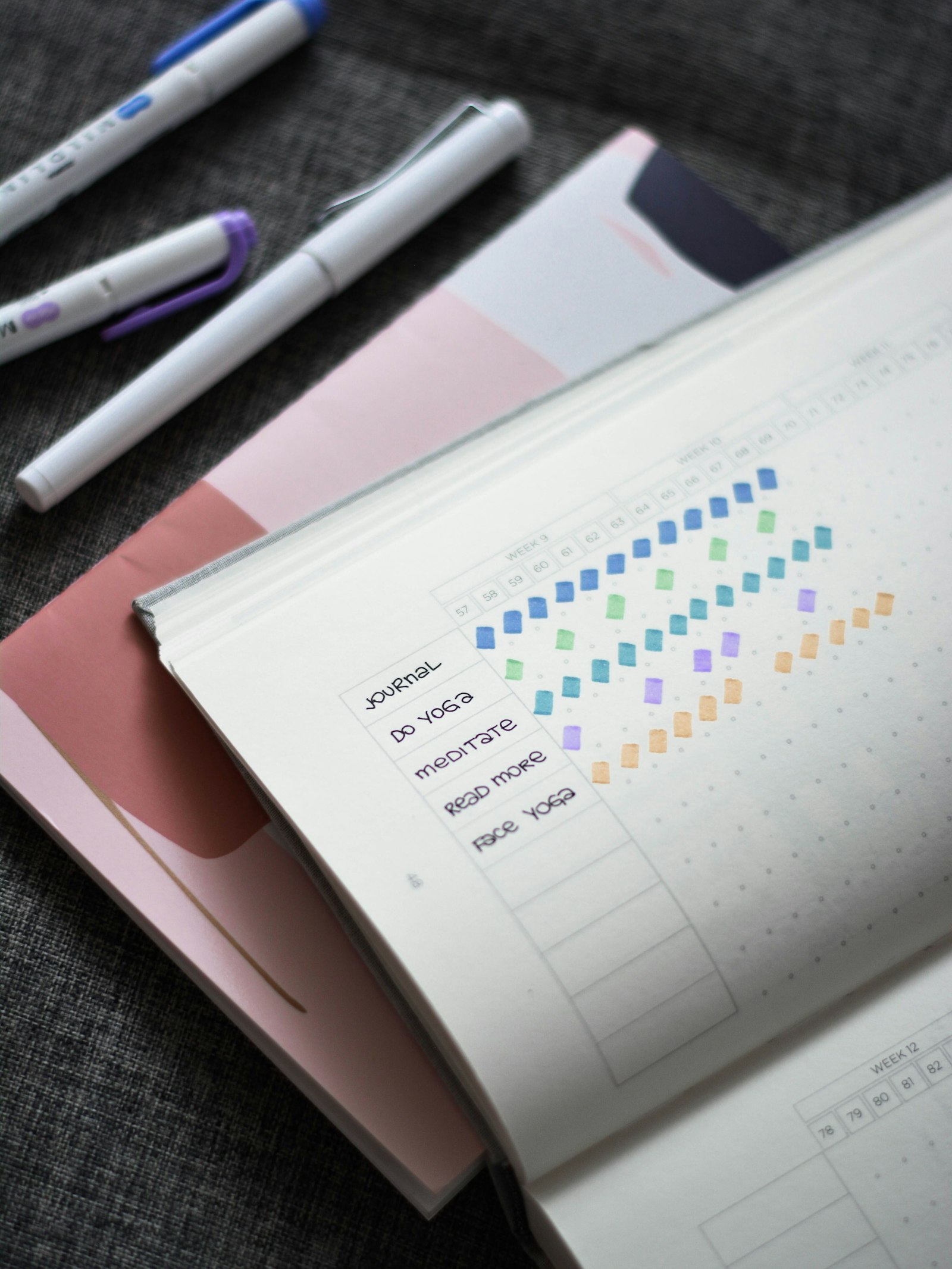
You know the moment. You catch your reflection in the bathroom mirror after two or three solid weeks, do the quick scan, and think: wait, that’s it? You’ve been showing up, your legs are sore in weird places, your water bottle suddenly has a personality, and somehow your body looks… basically the same.
If that’s where you are, the answer is not “try harder.” Usually, it’s this: you are in the invisible phase — the stretch where effort is real, adaptation is happening, but the payoff is not obvious yet.
Early progress often shows up first in less glamorous ways: the movement feels less awkward, you recover a little faster, you stop negotiating with yourself for 40 minutes before you start. On the strength side, early gains often reflect neuromuscular adaptation — your body getting better at recruiting muscle and coordinating the task — before visible physique changes become obvious, especially in beginners, as this recent systematic review on neuromuscular adaptations explains. And on the habit side, repetition in stable contexts is part of how exercise starts to feel more automatic over time, not in one motivational lightning strike, as this review on affect and exercise habit formation lays out.
The invisible phase is real
A frustrating thing about working out is that the earliest useful changes are often the least photogenic.
In the beginning, your body can get better at coordinating movement and producing force before obvious visual change shows up. That’s one reason beginners sometimes notice exercises getting smoother or stronger before they notice much in the mirror. Again, the neuromuscular-adaptation review is helpful here: early strength development is not just about size.
That doesn’t mean visible changes never happen. It means the timeline is usually slower and messier than your expectations. Most training research measures adaptation across weeks and months for a reason. Your week-three bathroom-lighting review is not a scientifically valid progress check. It is a panic ritual.
So if you’re looking for a sane answer to “what do I do now?”, here it is:
- Don’t panic.
- Check whether your definition of “results” is too narrow.
- Make sure your plan is repeatable.
- Give it more time than your impatient brain wants to give it.
Not sexy. Very useful.
First, broaden what counts as progress
If the only result you’re allowing yourself to count is “I visibly look different already,” you’re setting yourself up to quit during the exact phase when consistency matters most.
Look for these early signs instead:
- workouts feel slightly less chaotic
- you recover faster between sets
- you can do a little more than last week
- your form is less all-over-the-place
- you dread the workout less
- getting started takes less negotiation
- missing one day no longer turns into missing six
Those are not fake consolation prizes. They’re often the first signs that training is working and that a habit is starting to stick. A 2023 systematic review of habit-formation interventions for physical activity found that habit-focused interventions can improve physical activity behavior and automaticity, though the authors are also clear that the evidence base is still developing.
Progress you can miss because you weren’t measuring it
A lot of people say “nothing is happening” when what they really mean is “I only checked one thing.”
Try a short list:
- How many push-ups, squats, or minutes can you do now compared with week one?
- Are you taking fewer extra breaks?
- Are you more consistent across the week?
- Does the workout feel more familiar?
- Are you spending less mental energy convincing yourself to begin?
If two or three of those are moving in the right direction, you are not stuck. You are early.
Why results often feel delayed
There are a few boring reasons this happens, and boring reasons are usually the true ones.
1) Your body is adapting before it’s advertising
Early strength gains often reflect neuromuscular changes, not just visible muscle size changes. In plain English: your body is learning the movement, recruiting muscle better, and getting less clumsy at the task. That’s the same pattern described in this systematic review on strength training and neuromuscular adaptation.
That’s why a movement can feel easier before you look different. It’s not imaginary. It’s just not Instagram-friendly.
2) Your expectations were set by highlight reels
Most people compare their week-three reality to someone else’s month-18 highlight reel. Bad trade.
Research measures adaptation over prolonged training blocks because change is usually gradual. Internet content, meanwhile, loves to compress reality into neat little timelines your actual life did not agree to.
3) You’re inconsistent in ways that feel small but add up
This is the painful one. You might feel like you’ve “been working out for a month,” but in practice that can mean:
- one strong week
- four missed days
- a random illness
- two workouts that became phone-scrolling with dumbbells
- one weekend that vaporized your routine
That is normal. It also means the clock is not as far along as you think.
4) You may be changing behavior before identity
For a while, workouts can still feel like something you’re trying to do rather than something you just do. That middle zone matters.
Habit research suggests repeated behavior in stable contexts helps automaticity build, and positive feelings around the activity seem to help too, which is one reason tiny, doable sessions often beat heroic ones you resent. This review on affect and exercise habit formation makes that case well.
So if your current win is “I’m becoming a person who trains on Tuesdays without a dramatic internal debate,” that counts for more than it looks like.
What to do when you don’t see workout results yet
Here’s the practical part.
1) Stay with one simple plan long enough to judge it
A common mistake is switching plans every 10 days because the current one hasn’t “worked” yet. That makes it almost impossible to know what’s happening.
Pick something simple and repeatable. Then run it long enough to collect an honest sample. In most cases, that means thinking in weeks, not days.
If your plan changes every time your mood changes, you’re not evaluating training. You’re speed-dating routines.
Good signs your plan is worth keeping
- You can actually recover from it
- You can fit it into normal life
- You’re doing it most weeks
- You can see small performance improvements
- It doesn’t require hero-level motivation every session
If those are true, don’t blow it up just because the mirror is being rude.
2) Track performance, not just appearance
If you want less panic, give yourself better data.
Pick 3 to 5 things you can measure once a week:
- reps on a few core moves
- total workout sessions completed
- walking time or cardio minutes
- how hard the workout felt
- how quickly you recovered between efforts
Visible change is lagging data. Performance and consistency are often leading data.
This also helps emotionally. Adherence is a known challenge in physical-activity interventions, and people are more likely to drift when the routine stops feeling manageable or rewarding enough to continue; sticking with the plan is not the easy part.
A small measurable win gives your brain a reason to come back before the bigger payoff arrives.
3) Make the next workout easier to start
When people don’t see results fast, they often respond by making the plan harder. Usually the better move is making the plan easier to repeat.
That can look like:
- laying out clothes the night before
- deciding the exact time in advance
- shortening the session instead of skipping it
- starting with one familiar movement
- keeping a “minimum version” for low-energy days
That lines up with the habit-formation literature too. The 2023 systematic review of physical-activity habit interventions points toward repetition and habit-building strategies as useful levers, even if the exact effect size still varies across studies.
The goal is not to prove how tough you are. The goal is to reduce the friction between “I should work out” and “I’ve started.”
If that’s the part you keep losing, read how to make working out automatic next. It’s the same problem from a different angle.
4) Audit whether you’re underestimating recovery, food, or sleep
Not in a dramatic, clinical way. Just in the ordinary-human way.
Sometimes “I’m not seeing results” means:
- your workouts are random
- you’re not recovering well
- you’re training hard twice and disappearing for five days
- your eating is more chaotic than you realized
- you’re expecting training to overpower an unsustainably messy routine
You do not need to become a spreadsheet. But you do need enough stability that your body has something to adapt to.
If your workouts are consistent but the rest of the week is complete roulette, the signal gets muddy.
5) Stop checking for proof every 48 hours
This one sounds soft. It is not soft. It is strategy.
Constantly checking for visible change can make you miss the slower evidence that would have kept you going. It also turns your attention toward outcomes you can’t force on command.
A better rhythm:
- do the workouts
- note a few objective markers once a week
- review after several weeks, not every morning
This is especially helpful during the early phase, when improvement may be happening in ways you can feel during training before you can clearly see it — again, exactly the kind of early adaptation described in the neuromuscular review.
6) If you’re doing too much, do less better
There’s a version of “no results” that actually means “I keep flaming out.”
If every workout leaves you feeling wrecked, behind, or weirdly resentful, the problem may not be effort. It may be dosage.
A plan you can complete four weeks in a row beats a perfect plan you abandon on day nine.
That’s not lowering the standard. That’s finally choosing one you can survive.
The honest timeline
This is the part generic blogs love to blur. So let’s not blur it.
If you’re expecting clear, satisfying, obvious results almost immediately, you’re going to think something is wrong when nothing is wrong.
A useful rule: don’t confuse “not dramatic yet” with “not working.”
Those are very different situations.
If you want the bigger frame, read how long to form a habit. A lot of this frustration is really a timeline problem.
When you should actually change something
You do not need infinite patience. If several weeks have gone by and you can’t point to any change in consistency, performance, confidence, or recovery, then yes, review the setup.
Change something if:
- the plan is so hard you keep avoiding it
- you’re inconsistent enough that there’s no real training pattern
- nothing is being tracked, so every week feels like a guess
- you dread every session and never settle into it
- you’re chasing novelty instead of repetition
Usually the first fix is not “go harder.” It’s one of these:
- simplify the plan
- reduce the session length
- make the schedule more realistic
- repeat the same core movements longer
- define smaller success markers
The emotional part nobody says cleanly enough
Not seeing results yet can feel embarrassing. You start wondering if everyone else got a manual you missed.
They didn’t. A lot of people quit in this exact stretch because the evidence is still quiet and their expectations were loud.
So if you’re here, try this reframe: your job right now is not to be impressed. Your job is to keep giving the process enough repetitions to become visible.
That’s it.
Not forever. Just long enough.
If you want a little more structure
You do not need an app to understand this article. But if your real issue is that you keep losing the thread between workouts, meals, and ordinary life, some structure can help.
OgamicX is built for that consistency problem more than the hardcore-tracking problem. It keeps workouts, meal logging, fasting, and streaks in one place, and Ogi can check in when you’re drifting. The free version is free to download, no card, and the free tier includes 3 MealScans a day.
But the bigger point is simpler than the tool: don’t quit during the invisible phase. Early progress is often quiet. Quiet progress still counts.
And if all you can say this week is, “I’m still showing up,” that might be more of a result than you think.
Keep going:

Written by
The OgamicX Team
Tips, guides, and insight on fitness, nutrition, fasting, and building habits that last — from the team behind OgamicX.
About OgamicXFound this useful? Share it.