
Why Fitness Apps Don’t Stick — What Does
Why fitness apps don’t stick comes down to friction, app-juggling, and fragile motivation. Here’s what actually keeps a fitness app part of real life.
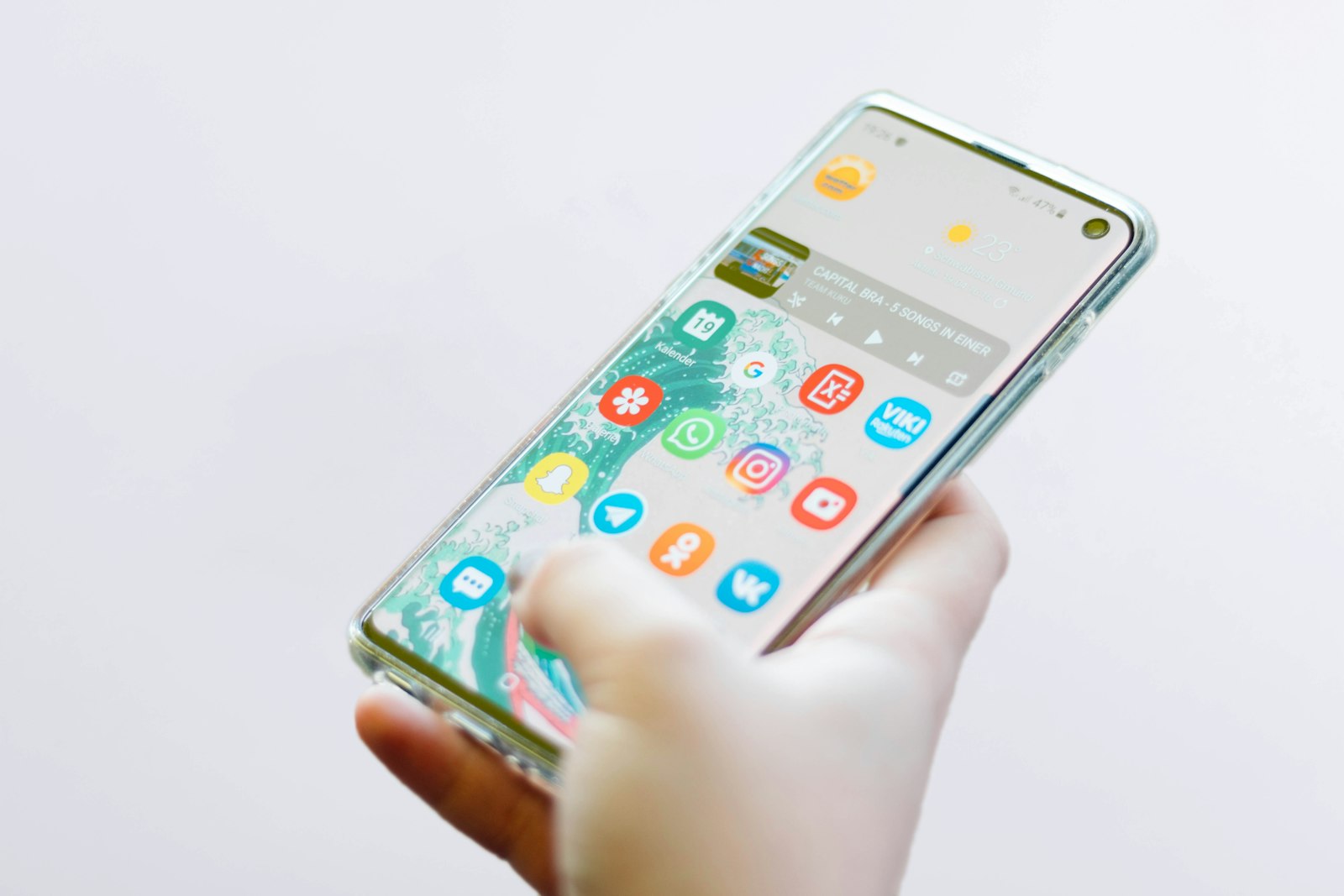
Open your phone and count the icons in your health folder.
One app logs workouts. One counts calories. One runs a fasting timer. One sends push notifications you’ve learned to swipe away without reading. For about nine days, this feels like a fresh start. Then life gets noisy, you miss two check-ins, and the whole system starts feeling like a part-time job.
That’s the short answer: fitness apps usually stop sticking when they ask for too much setup, live in only one slice of your day, or quietly assume your motivation will stay high forever. The ones that do stick tend to make the next action obvious, reward repeat behavior, and keep being useful after the first burst of enthusiasm wears off. A 2024 systematic review of strategies to improve engagement in digital health interventions and a systematic review on behavior change techniques and engagement in mobile health apps point in the same broad direction: engagement is fragile, and the features most often linked with better engagement include goal setting, self-monitoring, feedback, prompts, rewards, and social support.
Why fitness apps don’t stick in real life
Most people don’t quit because they suddenly stopped caring about their health. They quit because the app stopped fitting the texture of an ordinary Tuesday.
A lot of fitness apps are good at one moment and bad at the whole day. A workout app assumes you’ll remember to open it before training. A nutrition app assumes you’ll patiently log lunch when you’re busy. A fasting app assumes you want another timer living on your lock screen. Each tool may be fine on its own. The friction shows up when you have to stitch them together yourself.
That matters because engagement in health apps is fragile. The review of mobile health app engagement and behavior change techniques notes both the importance of engagement and the fact that the field still measures it in inconsistent ways, which tells you something useful on its own: lots of people fade out early enough that retention is still a messy research problem.
The first week lies to you
Week one is a terrible predictor of week six.
At the start, novelty does half the work. New interface, new plan, new little spike of “this time I’m serious.” But novelty is not the same thing as a system. Once the app becomes familiar, all the boring parts get exposed: too many taps, too many separate tools, too much thinking, too much guilt when you fall behind.
That’s one reason habit research matters here. In an app-based habit-building study, repeated performance predicted greater automaticity over time, while motivational conflict and interference fell as the habit became more automatic. Different domain, yes, but the principle travels well: what sticks is what becomes easier to do without needing a pep talk first.
The three big reasons fitness apps fail to keep people
1. They make logging feel heavier than doing the habit
If recording the workout feels more annoying than the workout, that’s a problem. Same for meals. Same for fasting. Same for any app that turns “I’m trying to get my life together a bit” into a bunch of admin.
The user-experience problem is simple: every extra step is a chance to bail. Search, type, estimate, categorize, save, repeat. For highly motivated people, that can be fine. For normal people on a lunch break, it’s where the habit quietly dies.
2. They rely on motivation instead of reducing friction
A lot of apps are still built like your motivation will show up every day at 6:30 p.m. wearing a headband and excellent intentions.
But the evidence points more toward support structures than vibes. The mobile health app engagement review repeatedly ties engagement to behavior change techniques like prompts, cues, self-monitoring, feedback, rewards, and social support. In plain English: people do better when the app helps them act, notice progress, and feel a reason to come back.
3. They break the minute your routine breaks
This is the sneaky one.
A lot of apps work only in ideal conditions: perfect week, stable schedule, same gym time, same meals, same energy. Then you travel, get busy, sleep badly, skip a session, or eat dinner later than planned. Suddenly your “routine app” has nothing useful to say except that you missed the thing.
That’s not retention. That’s attendance-taking.
What actually makes a fitness app stick
If you want the useful version, here it is: a sticky fitness app usually does four things well.
It lowers the activation energy
The next action should be obvious and easy. Open app, know what to do, do small thing, log done. Not “design your whole new life from scratch.”
This is where many people confuse depth with usefulness. A very configurable app can be powerful, but if it takes ten decisions to get started, it’s asking for executive function you may not have on a low-energy day.
It rewards repeat behavior, not perfect behavior
Perfect weeks are rare. Repeat behavior is where the win lives.
A review of behavior change with fitness technology in sedentary adults found that features like goal setting, feedback, rewards, and social factors show up again and again in fitness technology, and the newer mobile health engagement review points to that same family of ingredients. The pattern is pretty consistent even if the exact effect sizes vary by study and app type.
That doesn’t mean points and badges magically fix everything. It means people are more likely to come back when effort gets acknowledged and progress is visible.
It helps build a habit, not just track an event
There’s a difference between “I completed a workout” and “I’m becoming someone who opens this app and does the next small thing.”
Habit formation research suggests repetition in context matters because behavior gets more automatic over time. That’s useful framing for app design. The best apps are not just diaries; they are scaffolds. They help you repeat the behavior in a way that asks a little less effort each time. That’s the practical takeaway from the app-based habit automaticity study, even if we should be honest that it studied study habits rather than fitness directly.
It supports the whole loop
Not just workout. Not just calories. Not just fasting. The whole loop.
This is where a lot of retention dies. If your workout app has no relationship to what you ate, how your day went, or whether you’re trying to keep momentum with something smaller than a full session, the app becomes easy to ignore. Best-at-one-thing often loses to best-at-the-whole-day.
If you’ve hit that wall, stop juggling 5 fitness apps is the cleaner version of this same argument.
The honest tradeoff: sticky is not always “most advanced”
If you’re an advanced lifter who wants deep programming controls, detailed exercise analytics, and highly granular performance data, the app that sticks for you may look different from the app that sticks for a beginner.
Same if you love spreadsheets. Some people genuinely enjoy high-precision logging. They are not wrong. They are just not most people.
For the average app-tired person, “sticky” usually means:
- fewer decisions
- fewer separate apps
- faster logging
- clearer next steps
- some form of accountability
- a reason to come back tomorrow even if today was messy
That’s a different product philosophy from “maximum control.”
Why all-in-one usually beats app-juggling
If you’ve ever tried to keep a workout streak while also logging meals and maybe fasting, you already know the problem. Separate apps create separate little failures.
You can do a good job moving your body and still feel “off track” because your food app is empty. You can log meals and still feel behind because your workout app thinks the day never happened. Five tools create five broken chains.
This is where the all-in-one angle earns its place. Not because one app is automatically better at every feature, but because reducing handoffs matters. Less switching. Less re-entering the same life into multiple systems. Less chance that one missed tap turns into a dropped habit.
That’s also why the question isn’t really “which app has the most features?” It’s “which app keeps helping when your day stops being neat?”
So what does stick?
Usually, apps that stick have some version of this stack:
- One obvious next action
- Fast logging
- Visible progress
- Prompts that feel useful, not spammy
- Rewards for consistency
- A forgiving system when life gets weird
And yes, “forgiving” matters.
One of the biggest retention killers is the feeling that a missed day means you’ve blown it. The app doesn’t literally say that, but the design says it for you: blank spaces, broken chains, scolding reminders, dead silence after you fall off. People don’t need more proof that they’re imperfect. They need a system that still has a next step.
That’s also why what makes a fitness app stick should not stay an orphan in this cluster.
The evidence is useful — and limited
A quick honesty beat, because this topic gets oversold fast.
The research is pretty good at telling us broad patterns: engagement is hard, attrition is common, and certain behavior-change features show up repeatedly in better-designed interventions. It is much worse at giving one clean universal formula for retention across every fitness app and every kind of user. The 2024 systematic review of engagement strategies specifically looked at digital health interventions targeting nutrition, physical activity, and overweight or obesity, and the mobile health engagement review also makes clear that engagement is defined and measured in different ways across the literature.
So if someone tells you they’ve solved retention with one trick, be suspicious.
The more honest answer is simpler: fitness apps stick when they reduce friction, support repetition, and make consistency feel emotionally survivable.
What this means if you’re choosing an app
Don’t ask, “Is this app impressive?”
Ask:
- Can I tell what to do in under 10 seconds?
- Can I log a normal meal without turning lunch into homework?
- If I miss a day, does the app help me restart?
- Does it support more than one part of my routine?
- Do the notifications feel like help or nagging?
- Would I still use this on a tired Wednesday?
Those questions are better predictors than glossy feature lists.
Where OgamicX fits, if this is your problem
If the specific problem is app-juggling — workouts in one app, food in another, fasting in a third, and motivation in none of them — then this is the kind of problem OgamicX is built for.
Not because it promises magic. And not because it auto-adjusts your life for you; it doesn’t. The value is simpler than that. It puts workouts, nutrition, fasting, streaks, and an AI coach in one place, so the system survives real days a little better.
You can log meals with MealScan by snapping a photo, with 3 scans a day on the free tier and unlimited scans on Premium. Fasting includes 16:8 on free, with more protocols on Premium. And instead of acting like a silent tracker, Ogi can also check in through the Care Plan when you’re drifting, missing activity, or at risk of losing momentum. That’s a support layer, not an auto-adjusting plan. OgamicX is free to download, with core features available free forever and Premium unlocking things like personalized plans, unlimited MealScans, and all fasting protocols.
That said, the honest tradeoff is the same one I mentioned earlier: if you want ultra-granular specialist tools for one narrow thing, a single-purpose app may still go deeper. But if your real issue is that your routine falls apart at the handoff between five different tools, all-in-one tends to win.
The bottom line
Fitness apps don’t stick when they mistake tracking for behavior change.
What does stick is less glamorous: low friction, clear next steps, repeatable actions, useful prompts, visible progress, and a system that doesn’t act like one messy day is a moral failure. The best app is not the one that looks most disciplined on paper. It’s the one you’ll still open when motivation is gone and life looks normal again.
Keep going:

Written by
The OgamicX Team
Tips, guides, and insight on fitness, nutrition, fasting, and building habits that last — from the team behind OgamicX.
About OgamicXFound this useful? Share it.