
Bodyweight Strength Milestones for Beginners
Bodyweight strength milestones for beginners give you clear targets to chase, from your first push-up to your first pull-up, so progress feels real.
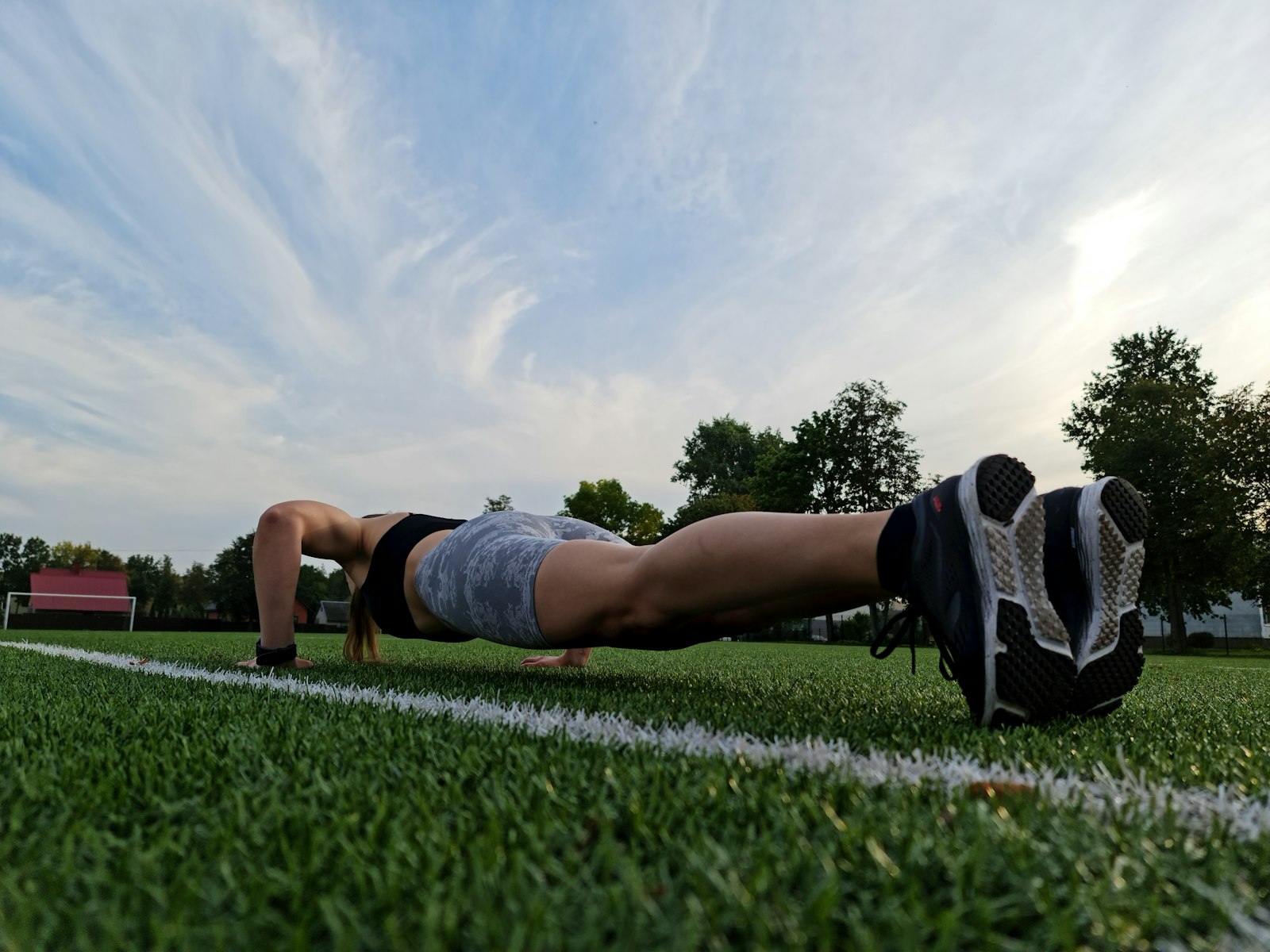
If you’re new to strength training, “get stronger” is too vague to be useful. What works better is having a few clear bodyweight strength milestones to chase: your first clean push-up, your first pull-up, your first controlled squat, your first solid plank. Those give you a target, a way to measure progress, and a reason to keep showing up on the boring middle weeks when motivation disappears. Adults are advised to do muscle-strengthening work at least 2 days per week anyway, so the game is not finding some perfect program. It’s picking milestones you can actually train toward and sticking with them. The CDC’s adult activity guidance says exactly that.
The good news: beginner bodyweight strength milestones are supposed to feel simple. You do not need a barbell, a smartwatch, or a hyper-optimized split. You need a short menu of moves, a progression that matches your current level, and enough consistency to let the reps add up. Think of milestones as checkpoints, not identity tests.
Why bodyweight strength milestones work so well
Beginners quit when the goal is fuzzy. “Tone up” is fuzzy. “Do one full push-up from the floor with good control” is not.
That matters because strength training responds well to progressive overload and repeat exposure. The ACSM position stand on progression models in resistance training recommends progressive resistance training and includes both single- and multiple-joint exercises as part of effective strength programs. In plain English: you get better by practicing the movement at the right difficulty, not by picking the fanciest method.
Milestones also help you notice progress before your brain starts lying to you. If last month you needed hands on a countertop for push-ups and now you can do them on a bench, that counts. If you went from a 10-second plank to 30 seconds with a steady torso, that counts too. Strength usually arrives as “that felt a bit easier than last week” long before it feels dramatic.
The best beginner bodyweight milestones to chase
For most beginners, you do not need 20 milestones. You need four or five good ones that cover the main patterns.
Here’s the clean starter menu:
- Push milestone: first full push-up
- Pull milestone: first pull-up, chin-up, or solid assisted pull-up
- Leg milestone: first controlled bodyweight squat to full comfortable depth
- Core milestone: first strong front plank
- Optional full-body milestone: first 10-minute beginner circuit without falling apart
That menu works because it covers pushing, pulling, squatting, bracing, and general work capacity. It’s enough variety to build real strength, but not so much variety that you turn your week into a scavenger hunt.
Milestone 1: Your first full push-up
For a lot of beginners, the first push-up is the big one. It feels obvious, measurable, and a little mythic.
A real beginner-friendly push-up milestone is not “do 30 ugly reps.” It is one to five controlled reps with a straight body line, chest moving toward the floor, and no worming your way up. If you cannot do that yet, you are normal. The path is usually:
Push-up progression for beginners
- Wall push-up
- Counter or kitchen-bench push-up
- Couch or sturdy bench push-up
- Knee push-up or eccentric-only floor push-up
- Full floor push-up
This progression works because you can gradually change the angle and difficulty while keeping the same movement pattern.
A good first push-up benchmark:
- 1 clean rep = first milestone
- 5 clean reps = you are out of the absolute-beginner phase
- 10 clean reps = now you have room to build volume
If your hips sag or your neck reaches for the floor like it’s trying to escape the rest of you, the movement is still too hard. Lower the variation and win there first.
Milestone 2: Your first pull-up or chin-up
The first pull-up is slower for most people, and that is fine. Pulling your entire bodyweight is just a bigger ask than people think.
Also: if you do not have a bar yet, that does not mean your back work has to wait forever. But if a first pull-up is on your list, you do eventually need a place to hang.
What counts as a beginner pull milestone?
Pick the highest honest version available to you:
- 1 chin-up from a dead hang
- 1 pull-up from a dead hang
- 3 to 5 band-assisted reps
- 3 to 5 controlled negatives with a slow lower
A chin-up is usually easier for beginners than a pull-up because the grip gives you a little more help from the biceps. So if your “first rep” goal is mostly about building momentum, start there.
Pull-up progression for beginners
- Dead hangs
- Scapular pulls
- Ring rows or table rows
- Band-assisted chin-ups or pull-ups
- Negative reps
- First full rep
The honest tradeoff: this milestone takes time. It is common for push-up and squat progress to arrive first while pull-up progress crawls. That is not a sign that the program is broken. It is just a higher-skill, higher-strength movement.
Milestone 3: Your first controlled bodyweight squat
Squats are basic, but not always easy. A lot of beginners technically bend their knees and call it a squat while shifting all the work into whatever joint is least ready for it.
Your first squat milestone is not depth at all costs. It is a controlled bodyweight squat you can repeat for 8 to 10 reps without collapsing, tipping forward, or feeling like every rep is a near-death negotiation.
For many beginners, the best on-ramp is the chair squat or sit-to-stand variation, where the chair gives you a target and some confidence while you learn the pattern.
Squat progression for beginners
- Sit-to-stand from a chair
- Box or chair squat with light control
- Bodyweight squat to comfortable depth
- Paused bodyweight squat
- Higher-rep bodyweight squat sets
A practical squat milestone ladder:
- 10 clean chair squats
- 10 bodyweight squats to comfortable depth
- 20 smooth bodyweight squats
- 30-second paused squat hold near the bottom, if mobility allows
If your heels pop up or every rep turns into “good morning with bent knees,” treat that as feedback, not failure. Use a chair, slow the movement down, and own the pattern first.
Milestone 4: Your first strong plank
Planks get weird online because somebody always wants to turn them into a suffering contest. For beginners, the plank is mostly a bracing milestone.
A useful beginner goal is 20 to 45 seconds with good position: ribs down, glutes on, normal breathing, and no lower-back sag. That range is a coaching target here, not a universal law. Research on plank testing shows wide variation in hold times and what those times actually mean, which is exactly why chasing absurd durations is not that helpful for beginners. A is a good reminder that longer hold times do not automatically map cleanly onto better outcomes.
Plank progression for beginners
- Incline plank on a bench or countertop
- Front plank from knees
- Full front plank
- Longer holds or harder variations
Simple plank milestones:
- 20 seconds clean
- 30 seconds clean
- 45 seconds clean
- 60 seconds clean
Once you can hold a solid 45 to 60 seconds, you usually get more from making planks harder or moving on to other core work than from trying to become a statue for five minutes.
Milestone 5: Your first “I can actually finish a session” circuit
This one matters more than people admit. Strength is not just whether you can do one heroic rep. It is also whether you can complete a short session consistently.
A good beginner conditioning-strength milestone is finishing a 10-minute circuit of easy bodyweight movements without your form disintegrating. Something like:
- 5 incline push-ups
- 8 squats
- 20-second plank
- 30 seconds rest
Repeat for 4 to 6 rounds.
There is good evidence that time-efficient strength sessions should prioritize big, simple movements. A review on time-efficient resistance training recommends prioritizing bilateral, multi-joint exercises when time is limited, which is part of why bodyweight basics work so well for beginners.
How to choose the right milestone for your current level
Do not pick milestones based on what looks coolest. Pick them based on what you can realistically train 2 to 4 times per week for the next 8 to 12 weeks.
A simple rule:
- Too easy: you can breeze through it with no focus
- Too hard: you cannot do a single clean rep or hold
- Just right: you can do a few solid reps or a short hold, and there is room to grow
That middle zone is where beginners usually make their best progress. It also matches the basic spirit of ACSM’s resistance-training guidance: choose difficulty levels you can perform with control, then progress from there.
A simple beginner milestone plan
If you want a no-drama way to train these, use this template 3 days per week:
Day A
- Push-up progression: 3 sets
- Squat progression: 3 sets
- Front plank: 3 holds
Day B
- Pull-up progression or row variation: 3 sets
- Squat progression: 3 sets
- Front plank: 3 holds
Day C
- Push-up progression: 3 sets
- Pull variation: 3 sets
- Short circuit finisher: 5 to 10 minutes
Keep most sets in the zone where you finish knowing you had maybe 1 to 3 decent reps left. You do not need to hit failure every time to improve, and beginners often do better when they leave a little in the tank and come back fresh next session.
If you want a simple next read after this, how to do your first push-up and how to start working out at home are the natural follow-ons.
How long do beginner bodyweight milestones usually take?
Annoying answer: it depends. Honest answer: count in weeks and months, not days.
A first push-up might come fairly quickly if you already have some baseline strength. A first pull-up usually takes longer. Squat control often improves early because the movement is more available to beginners, while the plank tends to improve as technique and confidence improve together.
The better question is not “How fast can I get there?” It is “Can I train this pattern enough times to let progress happen?” Most beginners get more out of showing up consistently for 8 to 12 weeks than from obsessing over whether they are behind some imaginary timeline.
The mistake that slows everything down
Most beginners make one of these mistakes:
- training the hardest version too early
- changing exercises every week
- measuring effort by soreness
- treating a missed session like the whole plan is dead
The problem usually is not you. It is the strategy.
Milestones work when they are close enough to feel possible. If you miss a session, the answer is not to restart your identity from zero. It is to do the next rep, the next set, the next short session. Strength is very boring that way. Which is good news, because boring things can be repeated.
The honest tradeoffs
Bodyweight milestones are great for beginners, but they are not magic.
If you become more advanced, you may eventually need extra loading, more specific programming, or more exercise variety to keep building strength efficiently. And if your goal is highly technical skill work, bodyweight basics are the floor, not the whole house.
But for a beginner, they are enough. More than enough, really. A first push-up, first pull-up, first controlled squat, and first solid plank will tell you a lot about where you are and give you a clear next step.
Make the milestones feel like a game, not a test
This is where beginner strength gets easier to stick with. Instead of seeing milestones as pass or fail, treat them like checkpoints:
- first 20-second plank
- first 5 incline push-ups
- first 10 chair squats
- first assisted pull-up set
- first full rep
That kind of structure is why gamified training works for some people better than vague motivation speeches.
If you like that kind of setup, OgamicX fits naturally here. The app gives you bodyweight templates to follow, and the gamified side — XP, tiers, streaks, weekly tasks — turns these first-rep goals into something you can actually keep chasing without juggling five different tools. The point is not that an app does the reps for you. It doesn’t. The point is that structure makes it easier to keep showing up. OgamicX is free to download, with no card needed.
Start with one milestone this week. Not five. One.
Then earn the next one.
Keep going:

Written by
The OgamicX Team
Tips, guides, and insight on fitness, nutrition, fasting, and building habits that last — from the team behind OgamicX.
About OgamicXFound this useful? Share it.