
Track Calories Without Weighing Every Food
Track calories without weighing every food by using hand portions, repeat meals, and photo logging—close enough to keep the habit alive.
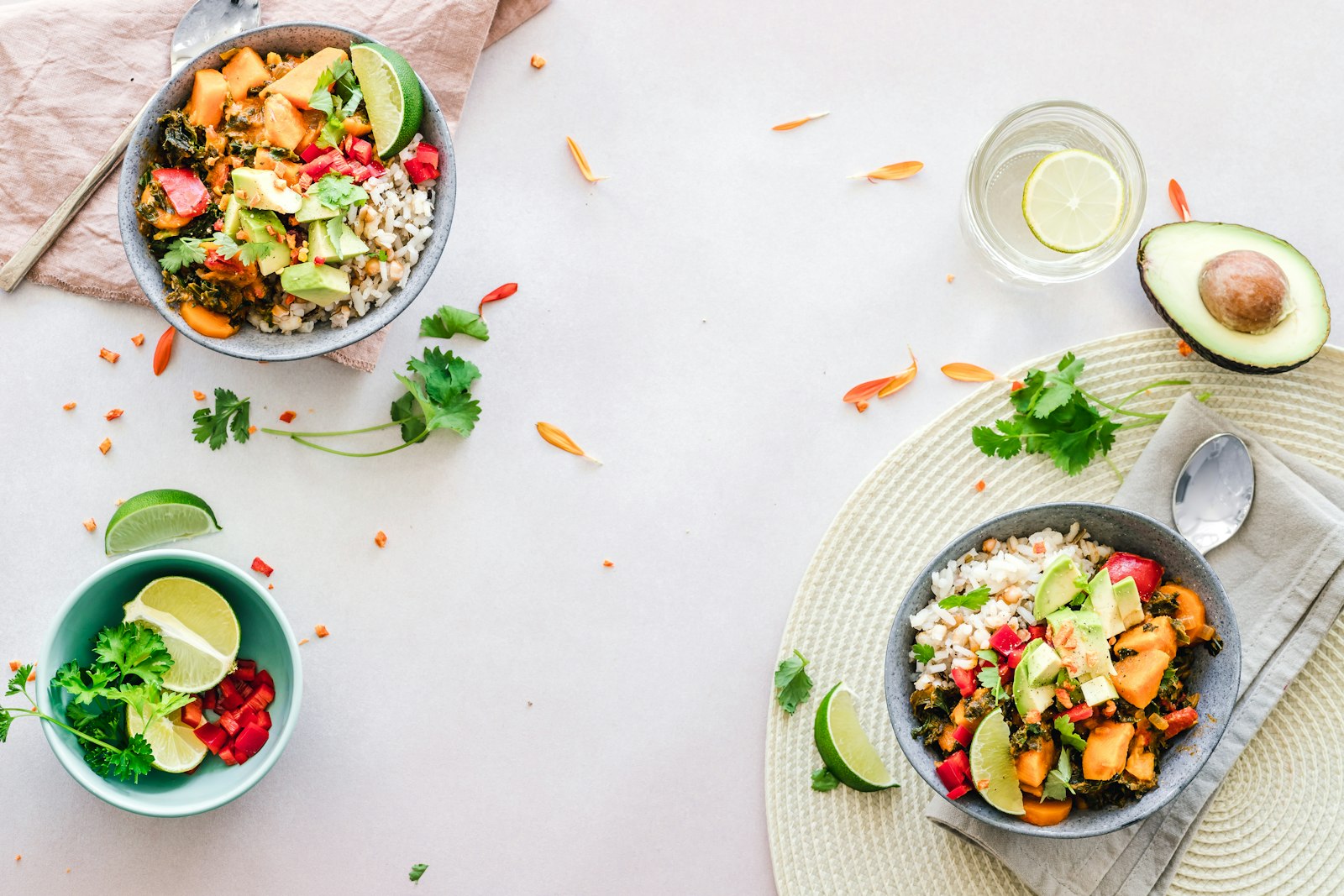
You know the moment. The kitchen scale is out again, you’re balancing a bowl on it, zeroing it out for the third time, and suddenly the whole thing feels ridiculous. Not eating well. Not tracking. Just doing tiny math chores before lunch.
If weighing every gram is making you want to quit calorie tracking entirely, the fix usually is not “try harder.” It’s to use a lower-friction method you can actually keep up. You do not need a food scale to track usefully. You need a system that gets you close enough, often enough, that the habit survives.
Research on dietary self-monitoring consistently finds that logging itself is tied to better follow-through, and one study found that people who were most successful at self-monitoring did it regularly without spending huge chunks of time on it every day, as shown in this study on electronic dietary self-monitoring.
How to track calories without weighing every food
The short version: estimate on purpose, use the same shortcuts repeatedly, and stop treating every meal like a lab test.
A number you’ll log every day beats a perfect number you abandon in a week. That’s the whole game here.
What “good enough” actually means
No-scale tracking is less precise than weighing ingredients. Your estimates will drift. Restaurant meals are messy. Mixed dishes are harder than plain foods. Photo-based methods and portion-size guessing both come with real measurement error, as shown in research on portion-size estimation with food images and text.
But single-day perfection is not the point. If your breakfast is logged the same way most mornings, your usual lunch is estimated the same way most weekdays, and your higher-calorie meals are captured instead of skipped, you’ve built something much more useful than occasional precision. Consistency creates a trend line; disappearing every time tracking gets annoying does not. That tradeoff is less glamorous, but it works in real life.
Use hand portions as your default no-scale method
This is the easiest place to start because your hand is always with you, and it travels better than a kitchen scale.
Health sources use simple visual guides for portion sizing, including a palm as a rough visual for about 3 ounces.
A simple hand-portion cheat sheet
Use this as a repeatable estimate, not a sacred formula:
- Palm = a serving of protein like chicken, tofu, fish, Greek yogurt, or eggs
- Fist = roughly 1 cup of foods like rice, pasta, oats, fruit, or vegetables
- Half fist = roughly 1/2 cup for denser foods
- Thumb = a small portion of fats like peanut butter, butter, mayo, or oil-heavy dressings
The exact calories depend on the food, obviously. A fist of broccoli and a fist of granola are not remotely the same thing. The win here is that hand portions give you a fast starting point for quantity, which is usually the part people freeze on.
How to make hand portions more accurate
A few rules help:
- Estimate protein first
- Be more careful with calorie-dense foods like oils, nuts, dressings, cheese, nut butter, granola, and desserts
- Be more relaxed with low-calorie, high-volume foods like leafy veg and watery fruit
- If you eat the same meals often, log the same portion the same way every time
That last one matters more than people think. Repeatability beats sophistication.
Reuse the same bowls, mugs, and plates as built-in measuring tools
This is one of the most underrated ways to track calories without weighing every food.
If you always use the same cereal bowl, smoothie glass, rice bowl, coffee mug, or yogurt cup, those containers become your rough measuring system. After a week or two, you stop asking “how much is this?” and start thinking “this is my usual bowl.”
Make your kitchen do the measuring for you
Pick 3 to 5 containers you use all the time:
- your oatmeal bowl
- your rice bowl
- your smoothie cup
- your soup mug
- your snack plate
Then learn what they roughly hold in real-world terms: about 1 cup, about 2 cups, about a standard single-serving yogurt, and so on. You’re not trying to memorize the entire nutrition universe. You’re building your own shortcuts.
Round, don’t obsess
If you’re trying to track calories without a scale, rounding is your friend.
A meal does not need five decimal places. It needs a believable entry you can recreate tomorrow.
A practical rounding system
Try this:
- Log a small splash of milk as a small splash, not as a precision chemistry problem
- Round a medium homemade meal to a clean estimate
- If you’re between two entries, pick the one that’s closest and move on
- For restaurant meals, choose the nearest equivalent instead of hunting for an exact clone
The mistake most people make is not imperfect logging. It’s giving up halfway through the day because lunch was complicated.
Log repeated meals once, then reuse them forever
If you eat the same breakfast four times a week, stop rebuilding it from scratch.
Create a repeated meal entry for things like:
- your usual overnight oats
- your normal turkey sandwich
- your standard protein bowl
- your default coffee order
- your weekday snack combo
Once you have a “close enough” version, reuse it. If the meal changes a little, that’s okay. Again: the goal is a habit you can keep.
Repetition is a feature, not a failure
People sometimes feel weird about logging the same lunch every day, like it’s lazy. It is lazy. That’s why it works.
Tracking gets easier when fewer decisions are required. If your normal breakfast is “Greek yogurt, berries, granola,” and you log basically that same combo most mornings, you’ve removed friction without losing the signal.
Use pre-portioned foods when life is busy
Pre-portioned packaging is not the most romantic nutrition advice, but it is practical.
Single-serve yogurts, soup cups, snack packs, frozen meals, protein bars, ready rice cups, and individually packaged nuts all come with built-in portion boundaries. That makes them easier to log than a family-size bag you’re eyeballing over the sink.
This is especially useful for two situations
-
Workdays when you have no attention left
The easier the portion is to identify, the more likely you are to log it. -
Foods that are easy to underestimate
Nuts, cereal, chips, peanut butter, trail mix, and dressings can drift fast when you free-pour them.
You do not need every meal to be pre-packaged. Just use this trick where it saves the most friction.
Photo logging is one of the best no-scale shortcuts
If you hate weighing food because it turns every meal into admin, photo logging is probably the cleanest workaround.
Image-assisted dietary tracking is promising partly because it lowers user burden, but the evidence is also clear that image-based methods are not perfect and accuracy varies by food and method, as summarized in this review of image-assisted dietary assessment.
That makes photo logging useful for the exact person who is about to quit tracking: not because it’s magic, but because it removes enough friction that logging still happens.
How to make photo logging more useful
- Take the photo before you eat, not after you’ve forgotten half the meal
- Include the full plate, side items, sauces, and drink if you can
- Use it most for mixed meals and eating out, where weighing is unrealistic
- If a meal is homemade and familiar, pair the photo with your usual saved entry
Think of the photo as memory support plus portion support. It’s not about chasing perfect accuracy. It’s about not losing the whole meal.
The foods worth estimating more carefully
If you’re not weighing everything, don’t spread equal attention across every bite. Aim your effort where it matters most.
Be stricter with:
- oils and butter
- dressings and sauces
- nut butters
- nuts and trail mix
- cheese
- granola
- desserts
- restaurant sides and add-ons
Be looser with:
- leafy vegetables
- plain fruit
- broth-based soups
- lean proteins with obvious portions
- simple repeat meals you log all the time
This alone makes no-scale tracking much better. Most tracking errors don’t come from being slightly off on cucumbers. They come from forgetting the oil, underestimating the peanut butter, and pretending the handful of chips never happened.
How to handle eating out without giving up
This is where a lot of people break the habit. The meal looks impossible to estimate, so they log nothing.
Don’t do that.
A better restaurant rule
Use a three-part estimate:
- Protein: about how many palms?
- Carb/starch: about how many fists?
- Fat/sauce: light, medium, or heavy?
Then choose the closest database entry and move on. If the meal is clearly richer than the app entry, round up a bit. If you only know the main components, log those and accept the uncertainty.
Skipping the meal entirely because it isn’t exact is the one move that helps least.
The honest tradeoff: yes, your numbers will be off
They will.
Portion estimation by images and descriptions still produces measurement error, and self-reported intake in general is imperfect, as shown in this study on portion-size estimation error. That’s not a moral failure. That’s just the reality of nutrition tracking outside a lab.
Here’s the useful way to think about it:
- Precision matters if you enjoy precision
- Consistency matters if you want the habit to last
For most normal people, consistency is the limiting factor. Not knowledge. Not access to a better spreadsheet. Just whether they can keep doing it on a Wednesday when they’re tired.
A simple no-scale calorie tracking system
If you want a practical setup, use this:
For 2 weeks, do the following
- Hand-estimate most meals
- Use the same bowls and mugs
- Save your repeat meals
- Use packaged servings when convenient
- Photo-log the messy meals
- Round and move on
- Do not restart your whole system because one dinner was hard to estimate
That’s enough. Seriously.
By the end of two weeks, you’ll usually have a small personal library of “my usual breakfast,” “my normal lunch,” “my coffee order,” “my snack,” and “my takeout fallback.” Once that exists, tracking gets much lighter.
If you want the habit side of this, read how long to form a habit. If the thing that blows up your consistency is one messy meal turning into a skipped day, what to do when you miss a workout day carries the same never-start-over energy into the fitness side.
Where OgamicX fits, if weighing food is what keeps killing the habit
If the part you hate is the measuring, not the idea of being aware of what you eat, then the best tool is usually the one that removes the most friction.
OgamicX includes MealScan, which lets you snap a photo of a meal and log it fast instead of turning lunch into a measuring project. The free version includes 3 MealScans per day, and Premium unlocks unlimited scans.
That’s the right reason to use a feature like this. Not because it makes nutrition effortless forever. Not because it turns estimation into certainty. Just because “snap and done so you keep logging” is a much better survival strategy than quitting because you’re tired of your food scale.
If you want the bigger picture behind calorie tracking itself, this post links naturally to calorie deficit explained next.
The bottom line on how to track calories without weighing every food
You do not need to weigh every bite to track calories usefully.
Use hand portions. Reuse the same bowls. Save repeated meals. Lean on packaging when it helps. Take photos when weighing would make you skip the log entirely. Accept that some entries will be approximate.
The problem usually isn’t you. It’s the strategy. If your current system is so precise that you can’t stick with it, it’s not actually precise in the only way that matters. It’s fragile. A simpler method you’ll still be using next month is the better one.
Keep going:

Written by
The OgamicX Team
Tips, guides, and insight on fitness, nutrition, fasting, and building habits that last — from the team behind OgamicX.
About OgamicXFound this useful? Share it.