
I Tracked Every Meal for 30 Days With an AI Food Photo App
I tracked every meal for 30 days with an AI food photo app — and the camera caught what manual logging never does: oils, portions, in-between bites.
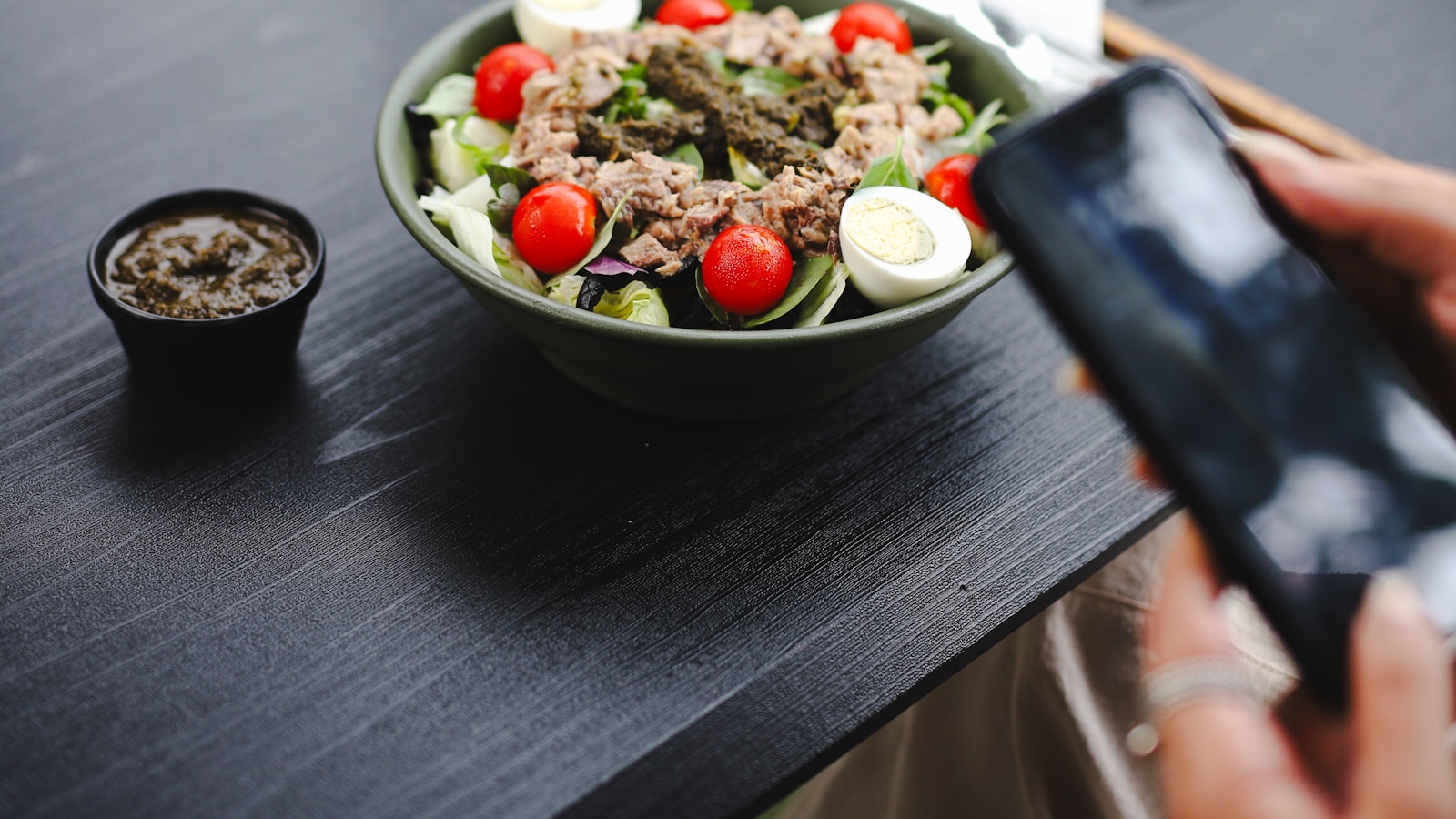
I have a photo of every meal I ate for 30 days. Two-hundred-and-something pictures of bowls, plates, sandwiches, snacks, and one slightly embarrassing 11 p.m. handful of crackers eaten directly over the sink.
I didn’t do this for Instagram. I did it because I’d been quietly losing an argument with myself about what I was actually eating, and I wanted the receipts. I had a vague sense my numbers were “fine” — and a vaguer sense that “fine” might be doing a lot of work in that sentence.
Here’s what 30 days of meal photos turned up. Some of it I expected. A surprising amount of it I really, really didn’t.
Why I picked AI food photo tracking instead of manual logging
I’ve tried manual food logging maybe six times in my life. It always dies the same way. Day one is religious. By day four, I’m rounding “a couple of crackers” to zero. By day seven, the app is on my phone but unopened, and I’ve quietly decided I “know what I eat.”
The thing logging asks of you — weigh, search, pick the right database entry, estimate the oil the cook used, do the math on the second helping — is the kind of thing that’s easy for one meal and impossible for ninety. Especially when “ninety” includes a Tuesday lunch where you ate the leftovers of a friend’s curry whose ingredients you do not actually know.
So I went the other way. Instead of trying to harden the logging discipline, I shrunk the input to one action: point a camera at the plate before you eat. The AI handles the identification and the estimates. If it’s wrong, I correct it. If it’s a guess, I take the guess. The point isn’t a precision spreadsheet. The point is seeing the month.
Specifically, I used OgamicX’s MealScan — point the phone at the plate, it identifies the foods and estimates calories and macros. It’s not perfect (we’ll get to that), but it solves the only part of food tracking I’ve never been able to outlast: the friction.
5 things 30 days of AI meal photos taught me
1. The sauce, oil, and dressing are most of the math
This is the single biggest thing the camera caught.
The salad I ate on day three looked like a 350-calorie salad — leafy greens, half an avocado, some chickpeas, grilled chicken. When MealScan estimated it at 680 calories, I assumed it was glitching. Then I scrolled through the photo and counted: tahini dressing, olive oil drizzle, a sprinkling of feta, a handful of seeds. None of those felt like a meal. Each one of them quietly added 80–150 calories.
This pattern repeated all month. The pasta dish where the calories came from the oil the noodles were tossed in. The “healthy” stir-fry where most of the energy was in the sauce, not the vegetables. The bowl-style lunch I’d been thinking of as “basically just vegetables” — actually, basically the dressing on the vegetables.
If you’ve ever logged a meal manually and forgotten to log the cooking oil, the salad dressing, the sauce, or the cheese, you’re undercounting by 30–50% on the days where those show up. And those days are most days. This isn’t a personal failing — it’s well documented: a classic study of people who were sure they ate modestly found they were under-reporting their actual intake by close to half once their food was measured against what they remembered.
Until I started photographing meals, I would have sworn I knew what was on my plate. The photos were the first time I was forced to look at the whole plate, not just the protein.
2. The “healthy” portions are 2 to 3x what you think
This was the second one that knocked me over.
I always thought of myself as a moderate snacker — a handful of almonds, a spoonful of peanut butter, a glass of orange juice in the morning. Civilized. Restrained.
The photos said otherwise. My “handful” of almonds was about 35–40 nuts, which is 250 calories, not the 100 I had in my head. My “spoonful” of peanut butter — and I am being honest here, this hurt — was closer to three tablespoons. The orange juice glass I’d been pouring without thinking was about 12 ounces, not 4.
Nutrition researchers call this the “health halo” effect, and it’s been shown in the lab that once a meal feels “healthy,” people lowball its calories and then over-order side dishes to “compensate” for the supposedly-low main. Avocado, nuts, olive oil, granola, smoothies — all of these get the halo at home, too. All of them are also genuinely calorie-dense.
This was painfully visible in 30 days of photos. I never over-portioned chocolate. I over-portioned olive oil, granola, smoothies, and trail mix every single time.
3. There are meals you don’t think of as meals
Roughly two weeks in, I started a side experiment: photograph everything, even the things I didn’t think counted.
The bite of my partner’s croissant. The fries I “tried” off a friend’s plate. The cream in two coffees. The cookie someone brought to a meeting. The post-dinner spoonful of ice cream straight from the container, eaten while putting it back in the freezer.
Total: somewhere between 200 and 500 calories per day, depending on the day, that I had been silently writing off as zero.
This is the most important lesson of the whole month. The food you remember as “a meal” — breakfast, lunch, dinner — is maybe 70–80% of what you eat. The other 20–30% is the stuff that doesn’t get its own plate, doesn’t get sat down for, doesn’t feel like an event. Photograph it for a week and you’ll see the gap.
If you’ve ever wondered why you “eat so healthy” and aren’t seeing the result you expected, this is usually where the answer is. Not the meal. The in-betweens.
4. Restaurant meals are almost always higher than they look
When researchers actually measured the calories in restaurant dishes, they found a meaningful share of menu items packed noticeably more than the stated number, with the gap tending to run higher for sit-down dishes heavy on oil or cheese.
The MealScan estimates for my restaurant meals routinely came in higher than what I’d have guessed by the menu, and the lift was usually exactly where you’d expect it: oils, butters, dressings, and serving sizes scaled to people-want-value rather than to nutritional guidelines.
A “grilled chicken bowl” at the place near my office is listed as roughly 550 calories on their site. The photo of the actual bowl, with the cheese that comes standard and the dressing it ships with, sat at around 780 on MealScan. That’s not a scandal — it’s a portion thing. It’s also a 230-calorie surprise five lunches a week.
The takeaway isn’t to avoid restaurants. It’s that “I ordered the healthy thing” is a much weaker signal than you think. Restaurant kitchens optimize for taste and consistency, and both of those line up with more fat and bigger portions than the printed numbers suggest.
5. You eat the same things, way more than you think you do
This was the one I didn’t see coming.
I would have told you, before the experiment, that I have a varied diet. I cook. I eat out. I try new things. Mid-month, when I scrolled back through the photos, the truth was almost funny: my mornings were nearly identical for 21 of 30 days. My lunches rotated between four or five core meals. Dinners were more varied, but even there, a handful of dishes did most of the work.
This is actually really useful. Because it means the diet you have isn’t built from 90 daily choices — it’s built from maybe 8 to 12 default meals on rotation. Improve those defaults and the average improves automatically.
I changed my breakfast default after the experiment (added more protein, dropped one carb-heavy thing I was eating because it was easy, not because I liked it). Because that breakfast happens five days a week, that one swap propagated to ~150 meals over the next month. I never had to think about it again.
This is the single most actionable thing I took away from 30 days of photos. Don’t try to fix every meal. Find your top eight repeats and fix those — same logic as stacking tiny wins in week one: small, repeating defaults do most of the work.
Where MealScan got it wrong: mixed dishes, hidden oil, tiny snacks
I want to be honest here, because I think most app reviews aren’t.
MealScan was excellent at single-component meals. A piece of grilled salmon with rice and broccoli? Spot on, within reason. A bowl of overnight oats with berries and a known protein powder scoop? Close enough.
It struggled with three categories:
Mixed dishes from non-Western cuisines. A Thai green curry, a Vietnamese pho with the toppings I added, a Malaysian nasi lemak with multiple side dishes — these are hard to estimate from a photo because the AI is guessing at sauce composition, broth fat content, and what’s in the protein. Sometimes it nailed it. Sometimes it was off by 25%+ and I had to manually correct.
Hidden ingredients. Anything where the calorie load is from something invisible — oil absorbed by the noodles, butter in the rice, sugar in the marinade — the AI is guessing from the visual signal. It’s usually closer than my own guess. It’s not a lab measurement.
Portion estimation on small things. A “handful of nuts” is hard for the AI to size against a photo with no reference object. The bigger the plate, the more accurate the estimate. The smaller and snackier the food, the more I had to nudge the count.
The way I came to think about this: the AI isn’t replacing a food scale. It’s replacing the zero you would have logged otherwise. A 720-calorie lunch estimated as 680 is still vastly more accurate than a 720-calorie lunch you never logged because you were too tired to find it in a database.
For the in-between food — the bite, the snack, the splash of milk — it’s also the only practical option, because no one was ever going to weigh that on a kitchen scale. (For more on the milk-in-coffee question specifically, here’s what actually breaks a fast.)
Four things I changed about how I eat
This is the part I genuinely didn’t expect.
I thought 30 days of meal photos would make me eat less. Mostly, it didn’t. What it did was move the attention — away from what I cut and toward what I cooked. Specifically:
- I cook with less oil now. Not because I’m avoiding fat, but because I saw — across 30 days — that “a glug” was somewhere between two and four tablespoons, and that one change to my home cooking moved my average meaningfully without me feeling restricted.
- I went heavier on protein at breakfast. I had no idea how low-protein my mornings were until the macro estimates lined up across a week.
- I stopped pretending the in-between calories didn’t exist. Photographing them killed the fiction. Some I kept. Some I dropped. The point was the choice was real instead of invisible.
- I doubled down on my eight default meals. Once I saw how much of my week they made up, optimizing them felt like the highest-leverage move I could do.
The actual eating felt the same. The information was just suddenly there.
The emotional thing nobody mentions
There’s a thing that happens around day 10 of any food-tracking exercise. You see a number you don’t like. You feel a bit of shame. You start eating slightly differently — performatively, even — because you know the app is going to log it.
I felt that. Then it passed.
By day 18, I’d seen enough average days that the bad days lost their drama. A 2,400-calorie day on a Friday doesn’t feel like a failure when I can see seven 1,800-calorie days on either side of it. The story isn’t “I ate too much on Friday.” The story is “Friday is a 2,400-calorie day for me and the week handles it.”
That shift, from per-meal guilt to month-scale pattern, was the most valuable mental change I got from the photos. It’s also the part you genuinely can’t get from a one-day log. You need enough days that no single day matters too much.
Should you do this?
Honest answer: only if you’ve ever found yourself confused about why your effort and your results don’t match.
If you’re already happy with how you eat — keep going. Don’t introduce friction for fun. But if you’ve ever had the feeling I started this experiment with — that the numbers in your head and the numbers on your plate are quietly disagreeing — 30 days of photos will resolve it faster than any other tool I’ve tried.
The reason photo-based tracking works where manual logging dies, for me at least, is that it’s the lowest-friction version of the question “what did I actually eat?” Point. Snap. Move on. Look at the month at the end.
If you want to try this, the bar is genuinely low. MealScan is on the free tier of OgamicX, no card needed. The food log is the same place your fasting window lives, so the data sits in one timeline instead of three apps. Photo a week of meals — even just the ones that get a plate — and you’ll see your own version of the patterns above within seven days.
The streak does the rest. The first week is awkward; by the second, photographing is just a thing you do before you eat, like sitting down. That’s exactly the same mechanic that makes streaks beat willpower — the friction drops, the habit takes the wheel, and the data quietly accumulates while you’re busy living.
The takeaway
Thirty days of photos taught me that the food I underestimate isn’t junk food. It’s the dressing, the oil, the “healthy” portion, the in-between bites, and the menu items that don’t match the menu.
It also taught me that my diet isn’t 90 daily decisions — it’s eight repeating defaults plus noise. The defaults are the only thing worth optimizing.
And the most useful thing it gave me wasn’t a number. It was the shift from imagining what I ate to actually seeing it — and reviews of the research on self-monitoring keep landing on the same thing: the simple act of keeping track tends to line up with better outcomes than not tracking at all.
Point the camera. Look at the month. The diet you have is probably 80% of the one you think you have. The 20% gap is where everything interesting lives.
Keep going:

Written by
The OgamicX Team
Tips, guides, and insight on fitness, nutrition, fasting, and building habits that last — from the team behind OgamicX.
About OgamicXFound this useful? Share it.